



Kinshasa, October 5, 2026 – A major initiative aimed at revitalizing the primary education landscape in the Democratic Republic of the Congo (DRC) concluded this week, marking a significant milestone in the country’s efforts to balance mass access to schooling with academic quality. The project, which targeted the N’Sele 1 and N’Sele 2 districts of Kinshasa, has set a new benchmark for infrastructure development and pedagogical support through a tri-party collaboration between the Congolese government, UNICEF, and the Korea International Cooperation Agency (KOICA).
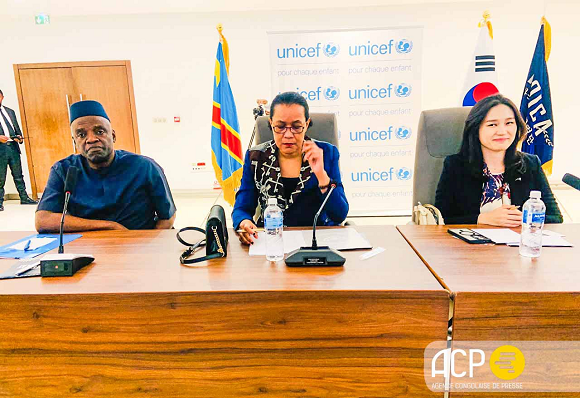
The closing ceremony, held on Monday, served as a platform for government officials and international partners to evaluate the results of the 36-month intervention. Launched in October 2022 with a funding commitment of seven million US dollars, the “KOICA Project” sought to address the systemic challenges brought on by the rapid expansion of free primary education, a policy prioritized by the Head of State.
Raïssa Malu, Minister of National Education and New Citizenship, reaffirmed the government’s commitment to building upon the project’s foundational gains. “Our responsibility now is to ensure that this achievement translates into effective learning, improved conditions for receiving pupils, as well as continued efforts on teaching resources, teachers’ practices, supervision, and support for pupils experiencing difficulties,” Minister Malu stated.
Beyond the construction and rehabilitation of classrooms, the project’s scope emphasized the modernization of the Congolese school system. Minister Malu highlighted several key areas of convergence, including the digital transformation of educational management, the integration of artificial intelligence in classroom settings, and a renewed push toward strengthening science, technology, and vocational training at the secondary level.
UNICEF Representative in the DRC, John Agbor, underscored the human impact of the seven-million-dollar investment. He noted that the project was not merely about bricks and mortar, but about providing thousands of children with the fundamental skills necessary to navigate their future. “Behind every classroom that has been built or rehabilitated, behind every strengthened educational activity, there are thousands of children who now have a chance to learn, succeed and build their future,” Agbor said, acknowledging the generosity of the Republic of Korea and KOICA in supporting these children.
As the project transitions from the implementation phase to long-term operational maintenance, experts are calling for a shift in strategy. Woosung Lee, President of the Korea-based Research Institute for Future Strategies (RISTIS), addressed the imperative of sustainability during the closing session. He argued that the longevity of the results hinges on systemic maintenance and evidence-based decision-making.
“To sustain these results, schools will need regular support, clearly defined management responsibilities, and data that can be used to determine support priorities,” Lee emphasized. He noted that while infrastructure and school kits were essential immediate deliverables, the future stability of the schools would depend on the consistent strengthening of teacher capacities and a robust administrative framework.
The conclusion of the N’Sele project serves as a pilot model for future educational interventions across the DRC. By aligning international funding with national educational priorities, the partnership has demonstrated a potential path forward for addressing the dual challenges of overcrowding and educational quality. As the Ministry of National Education prepares for the next phase of its strategic plan, the lessons learned from the N’Sele 1 and N’Sele 2 project—particularly the need for ongoing school support and data-driven management—are expected to inform future policies aimed at ensuring that every Congolese child has not just a place in a classroom, but a high-quality environment conducive to learning.
Disclaimer: This content is auto-generated for informational purposes only.
Source: Read Original News