







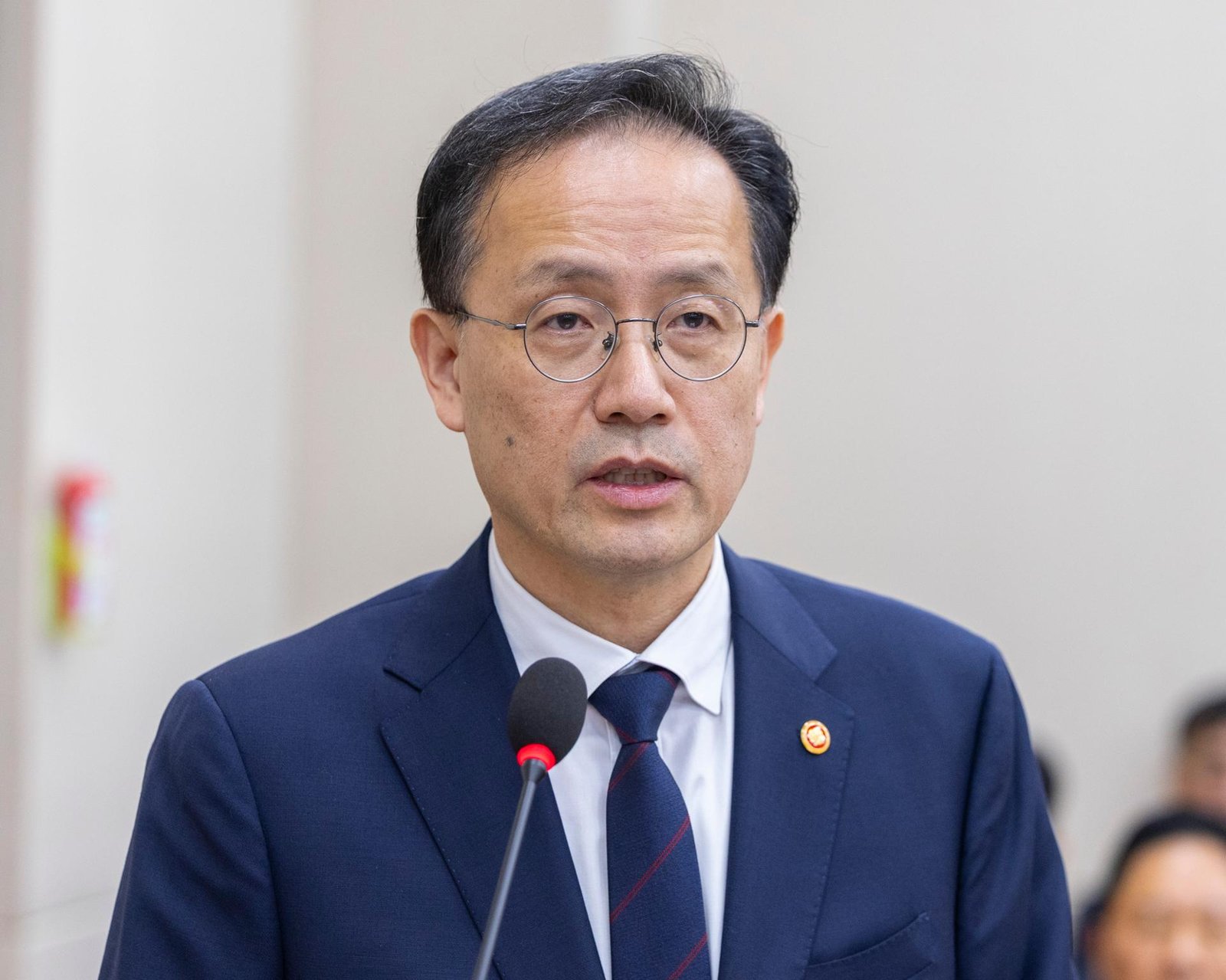
As South Korea navigates a shifting global economic landscape, the government is intensifying its focus on structural reforms to bolster long-term sustainability. Finance Minister Lee Hyoung-il emphasized this strategy during a high-level consultation on Wednesday with leaders from the nation’s six major business lobbies, including SK Group Chairman Chey Tae-won, who serves as the head of the Korea Chamber of Commerce and Industry (KCCI).
The meeting centered on a dual objective: capitalizing on the current semiconductor-led recovery while systematically dismantling the structural barriers that threaten future productivity. Minister Lee acknowledged that while the economy has regained momentum, it remains vulnerable to persistent challenges, notably a rapidly aging working-age population and a stagnation in national productivity.
“While the global semiconductor upcycle has provided a much-needed boost, we cannot afford to be complacent,” Lee stated during the opening session. “Structural headwinds, coupled with disparities across various sectors and the strain of rising consumer prices on the general public, require a more cohesive strategy between the public and private sectors.”
The Finance Minister outlined a roadmap for economic revitalization that hinges on deregulation and strategic technological investment. Central to this approach is the government’s “three-megaprojects” initiative, which prioritizes the rapid development and integration of artificial intelligence (AI) across key industries. By fostering an ecosystem for AI innovation, the administration aims to offset labor force shrinkage through technological efficiency, effectively attempting to decouple economic growth from traditional demographic constraints.
The dialogue between the government and industry leaders served as a platform for identifying regulatory “friction points.” Minister Lee pledged to establish a more responsive administrative framework, promising that if corporations continue to provide transparent data on the hurdles they face, the government would synchronize efforts across relevant ministries to provide immediate relief.
From the business perspective, the primary concern remains the speed of infrastructure deployment. Industry representatives urged the government to expedite the permitting process and provide necessary utilities, such as power and water, in direct alignment with company-specific investment schedules. They argued that for capital-intensive sectors—such as high-end manufacturing and AI infrastructure—delays in government-backed logistics can render major investment projects unviable in an increasingly competitive global market.
The government’s shift toward a “support-first” policy reflects a broader realization that the traditional model of economic growth is reaching its limits. By lifting what officials describe as “unnecessary regulations,” the administration hopes to invite private capital to lead the charge in decarbonization and digital transformation.
However, the path forward remains complex. The government must balance the demands of large-scale industrial growth with the ongoing need to address economic inequality and the rising cost of living that continues to dampen domestic consumption. Whether the government’s plan to prioritize AI-driven growth and deregulatory measures will successfully offset the contraction of the domestic workforce remains a critical question for South Korea’s fiscal future.
For now, the commitment from the Finance Ministry to serve as an active partner to the private sector suggests a more interventionist, collaborative approach. By streamlining the interaction between policy-making bodies and corporate boardrooms, the government aims to create an environment where private innovation can flourish, ensuring that the current semiconductor momentum translates into a durable, multi-sector economic expansion.
Disclaimer: This content is auto-generated for informational purposes only.
Source: Read Original News