






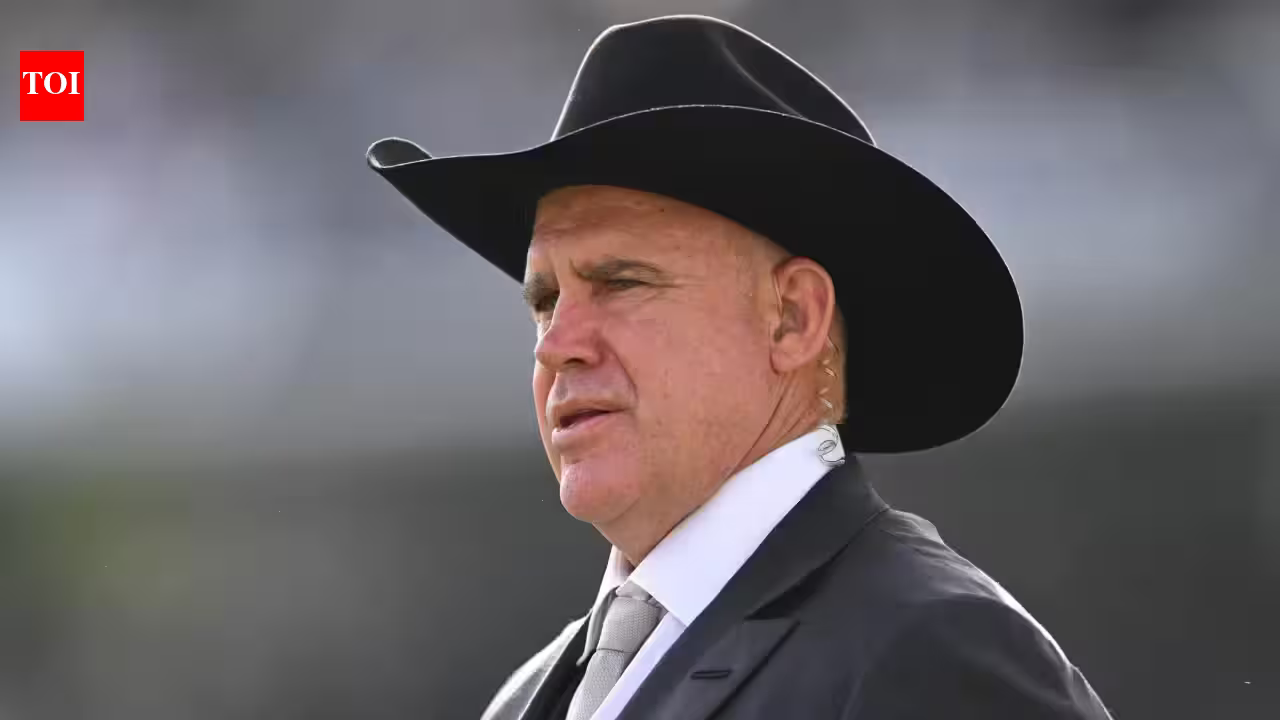
“Greatest pile of mediocrity” is how former Australian Test opener Matthew Hayden has characterized the current state of national selection, launching a blistering attack on the panel following the shock recall of Nic Maddinson for the upcoming three-Test series against South Africa.
As Australia prepares for the series opener in Durban on October 9, the squad has been thrown into disarray by a deepening injury crisis. With wicketkeeper Josh Inglis sidelined by a fractured finger and the availability of star all-rounder Cameron Green hanging in the balance, selectors were forced to scramble for reinforcements. Their solution—drafting the 34-year-old Maddinson—has ignited a firestorm, with Hayden leading the charge against what he perceives as a fundamental failure in developmental strategy and player meritocracy.
A Selection Process Under Fire
Maddinson’s return to the national fold comes nearly a decade after his last Test appearance, a dismal 2016-17 home summer where he managed a mere 27 runs across three matches. His career first-class average of 37.11 is, according to critics, nowhere near the benchmark required to compete at the highest level against a formidable South African attack.
Speaking candidly on the All Over Bar The Cricket podcast, Hayden did not mince his words when addressing chief selector George Bailey and panel member Tony Dodemaide.
“Where we are at is that we are promoting the greatest pile of mediocrity that we’ve seen in a generation of cricket,” Hayden stated. “And if we continue to lay that out and expect that a bloke averaging 35 is going to average 55 in Test match cricket, George Bailey and Tony Dodemaide, you are dreaming. I will just put it that simply. You are frigging dreaming. You are piling up this dog s*** explanation, and you are, in my opinion, disrespecting first-class cricket.”
Hayden’s argument hinges on the belief that the selection panel has abandoned the traditional criteria of rewarding consistent performers in the Sheffield Shield, opting instead for quick-fix solutions that he believes are destined to fail on the world stage. He maintained that the hierarchy should be prioritizing batters who boast averages of 45 or higher—a standard he feels is being ignored.
The “Franchise” Problem and the Shield Crisis
The criticism extended beyond the immediate decision to recall Maddinson, touching upon a systemic issue plaguing the Australian game: the shift in player priorities toward global T20 leagues. Hayden pointedly scrutinized the case of Mitchell Marsh, a cornerstone of the current setup who has seen his red-ball domestic output dwindle significantly as his franchise commitments have soared.
While Test captain Pat Cummins has publicly defended Marsh’s position and his value to the team dynamic, Hayden remains unconvinced. He argued that the lack of commitment to domestic red-ball cricket reflects a growing apathy toward the traditional five-day format.
“I don’t care what Pat Cummins said about Mitch – if he doesn’t want to play Shield cricket, it’s a desire to front up,” Hayden said. “They don’t want to play this version of the game. Mitch is a good example. He is making millions of dollars playing cricket all over the world for franchises. This is the fundamental problem we have.”
For Hayden, the issue is not merely one of individual selection, but one of culture. If elite players view the Sheffield Shield as an inconvenience to their broader financial interests, he suggests that the Australian national team will inevitably face a talent drought that no amount of emergency call-ups can solve.
Alternative Pathways Ignored?
As the frustration continues to simmer, observers have noted that there were alternative candidates who had demonstrated form in the lead-up to the South African tour. Hayden specifically highlighted the case of Sam Harper, the wicketkeeper-batter who made a compelling case for inclusion with a stellar performance during Australia A’s recent tour of India, where he notched a century against high-quality opposition.
Instead, the selectors opted for the experience of Maddinson, a choice that acknowledges his personal resilience—having successfully navigated treatment for testicular cancer in recent years—but remains statistically hard to justify for those who prioritize the sanctity of first-class averages.
As the touring party arrives in Durban, the pressure on the selection panel has reached a boiling point. The decision to recall Maddinson is no longer just a roster move; it has become a litmus test for the integrity of the Australian selection policy. Should the team struggle in the opening Test, Hayden’s fiery assessment of “mediocrity” is likely to become a recurring theme in the media coverage of this high-stakes series.
For now, the focus shifts to the nets, where Maddinson must prove that his recent form is irrelevant compared to his veteran grit. Whether he can silence the critics, including one of the game’s greatest openers, remains one of the most compelling subplots of the 2025 Test season.
Disclaimer: This content is auto-generated for informational purposes only.
Source: Read Original News