






The Architect of Lunar Navigation
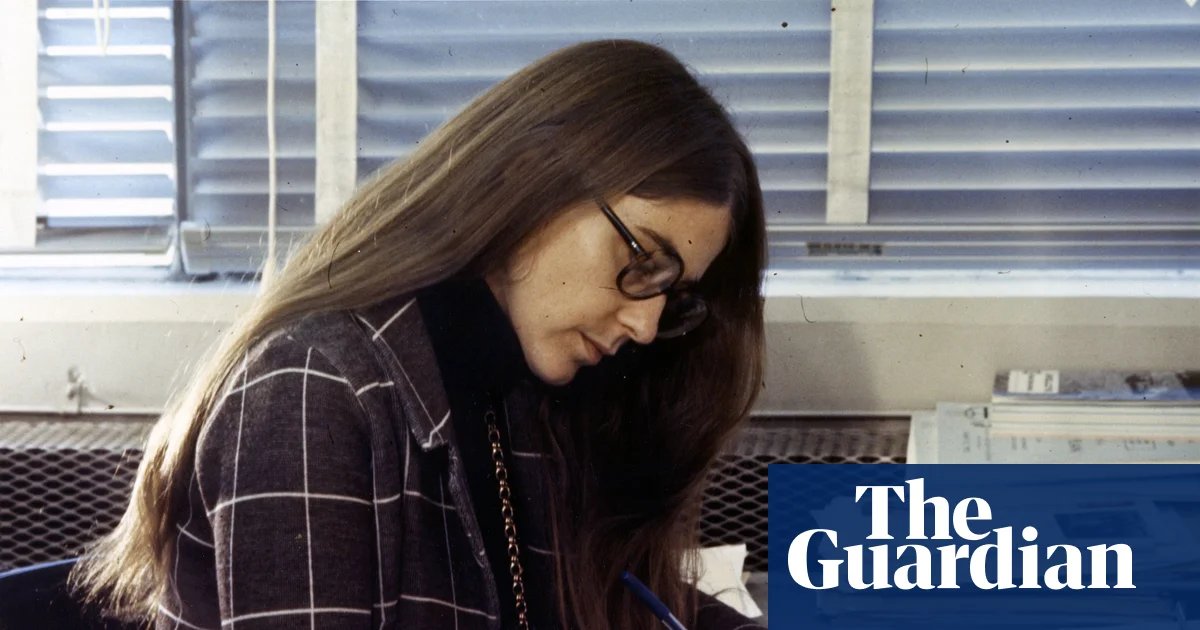
Margaret Hamilton, the pioneering software engineer whose code guided the Apollo missions to the lunar surface, has passed away at the age of 90. Her legacy remains foundational to modern computing, marking the transition of software engineering from an obscure academic pursuit to a mission-critical discipline. While history often highlights the hardware of the Saturn V rocket or the physical bravery of the astronauts, it was Hamilton’s work at the Massachusetts Institute of Technology (M.I.T.) Instrumentation Laboratory that ensured the Lunar Module could navigate the complexities of spaceflight.
In the mid-1960s, Hamilton was tasked with leading the team responsible for the Apollo Guidance Computer (AGC) software. At the time, the concept of “software engineering” did not exist in the professional lexicon. Hamilton effectively invented the terminology and the rigorous testing standards required to manage the massive, unreliable systems of that era. Her leadership ensured that the AGC could handle real-time calculations, allowing the spacecraft to maintain its trajectory even when hardware failures occurred during the critical descent to the moon.
Engineering Reliability Through Asynchronous Design
The core innovation of Hamilton’s software lay in its ability to handle asynchronous tasks. During the Apollo 11 moon landing, the AGC faced a critical test of this architecture. As the lunar module approached the surface, the computer became overloaded with data from radar sensors that had been left in the wrong mode. In a lesser system, this input stream would have crashed the guidance computer, forcing a manual abort.
Hamilton’s software design utilized a priority-based, preemptive scheduling system. When the computer realized it was processing too much data, it discarded lower-priority tasks to focus exclusively on guidance and navigation. The system would trigger a restart, clear the memory, and prioritize the landing maneuver within milliseconds. This robust design saved the mission, proving that software could act as a safety net for mechanical systems. Her insistence on including “error detection and recovery” protocols within the flight code became the industry standard for aerospace programming, where a single bug can result in the catastrophic loss of a multi-billion dollar asset.
The Dawn of Rigorous Software Testing
Before Hamilton’s tenure at M.I.T., software development was largely performed by hardware engineers who treated code as an afterthought. Hamilton introduced a culture of testing that involved the construction of elaborate simulation environments. She insisted that code must be tested against “what-if” scenarios, pushing the limits of the hardware to see how the system responded to edge cases and unexpected inputs.
She recognized early on that human error was a significant threat to machine operations. She famously recounted that her young daughter, while playing with the Apollo simulation software, accidentally triggered a system crash by selecting a command during the pre-launch phase. This led Hamilton to advocate for software guards that prevented user-initiated commands from causing system-wide failures. This philosophy of “system robustness” eventually permeated the entire field of computer science, influencing everything from flight control systems in commercial aviation to the fail-safe mechanisms in modern autonomous vehicles.
Defining a New Discipline
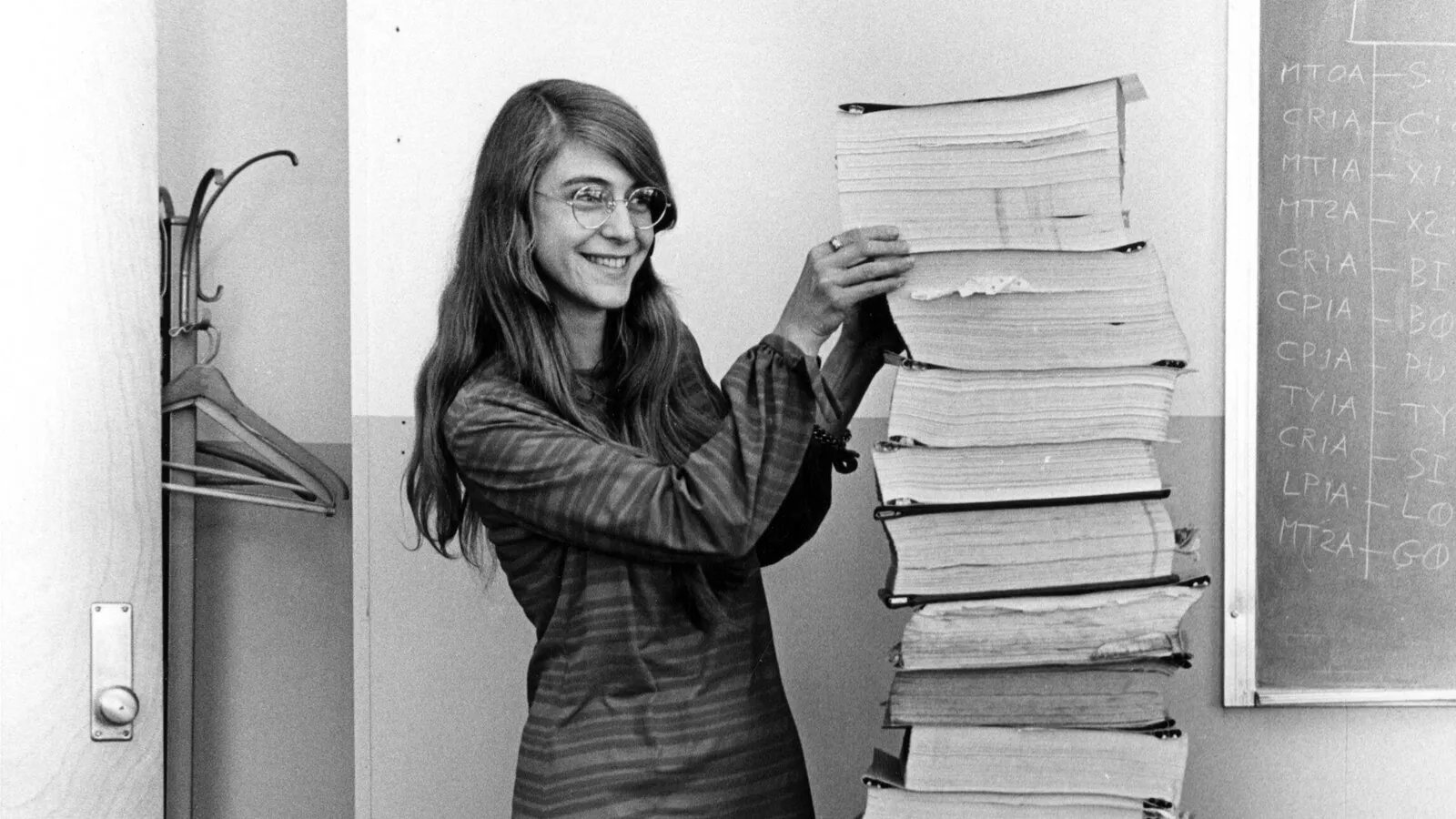
Hamilton’s contributions extended beyond the lines of code she authored; she was instrumental in elevating software engineering to a recognized professional field. During the Apollo project, she managed a team of developers who manually wrote the code, which was then “woven” into memory by hand using magnetic core ropes. This process, often called “LOL memory” or “Little Old Lady memory,” required extreme precision. Hamilton’s management style integrated strict documentation, peer reviews, and configuration management—processes that are now the bedrock of modern software development life cycles (SDLC).
Her work in the 1960s anticipated the modern reliance on modular code. By treating software as a collection of interacting, replaceable components, she allowed developers to isolate and fix errors without needing to reconstruct the entire program. This modularity was not merely a design choice; it was a necessity driven by the severe memory limitations of the AGC, which operated with only 72 kilobytes of read-only memory and 4 kilobytes of erasable memory.
The Lasting Impact on Modern Computing
The ripples of Hamilton’s work can be felt in every piece of modern technology. When a smartphone manages background tasks without crashing, or when a modern aircraft uses fly-by-wire controls to remain stable, the principles of asynchronous prioritization and modular error handling are at play. Hamilton demonstrated that software is the “brains” of any advanced machine, and that it must be treated with the same rigorous engineering standards as structural steel or aerospace alloys.
In 2016, she received the Presidential Medal of Freedom, an acknowledgment of her role in opening the door for future generations of women in science, technology, engineering, and mathematics (STEM). Yet, beyond the accolades, her greatest achievement remains the silent, invisible efficiency of the guidance code she authored. The moon landings were not just a triumph of rocket science; they were the first successful demonstration that humanity could entrust its survival to a machine-coded logic system. Margaret Hamilton’s career provides a blueprint for how to approach complexity, emphasizing that the most important part of any system is the set of rules that governs it when things go wrong. As the industry looks toward the next generation of space exploration, the methodologies established by Hamilton at M.I.T. continue to serve as the benchmark for reliability in an uncertain, digital world.
Disclaimer: This content is auto-generated for informational purposes only.
Source: Read Original News