







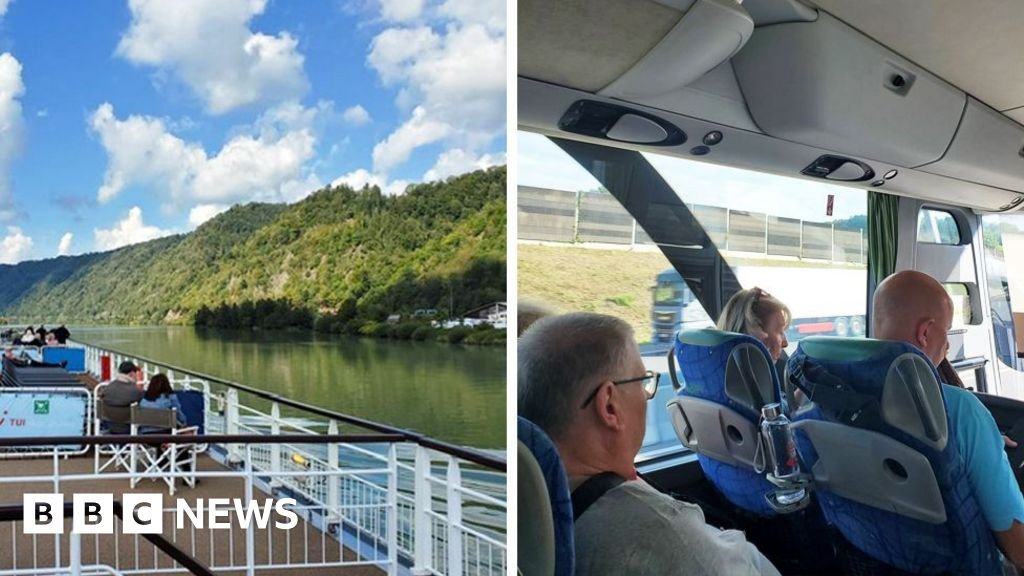
Tui customers booked on river cruises departing mid-September have found themselves caught in a modern travel dilemma, highlighting the ongoing tension between traditional tourism and the unpredictable nature of environmental logistics. Passengers on the Tui Isla sailings scheduled for September 14 and 21 were notified of significant itinerary shifts just days before embarkation, as water levels along the Danube necessitated a pivot from river navigation to land-based logistics.
While travelers may have expected a seamless cruise experience, Tui’s response underscores a growing reliance on hybrid travel models—blending water-based voyaging with synchronized coach and hotel operations. As the travel industry increasingly integrates complex data analytics to manage such disruptions, these events provide a case study in how large-scale tour operators are adapting to climate-induced uncertainty.
The Digital Shift: How Data-Driven Planning Manages Disruption
In an era where travelers rely on real-time updates via mobile apps and instant notifications, Tui’s ability to communicate these changes rests on sophisticated backend systems. Managing a sudden transition from a river-bound cruise to a complex itinerary involving hotel transfers and synchronized coach transport requires massive computational coordination.
The travel industry has seen a massive influx of AI-driven logistics platforms designed to optimize these specific “Plan B” scenarios. By utilizing predictive analytics, companies can forecast river flow rates and potential navigational hazards weeks in advance. When the Tui Isla was forced to skip sections of its route, the company’s internal travel-tech infrastructure likely worked to recalibrate thousands of bookings simultaneously. This level of digital orchestration is a far cry from the manual booking adjustments of the past, representing a wider industry trend where the software behind the scenes is just as critical as the ship itself.
AI and the Future of Travel Logistics
The reliance on coach transfers and secondary accommodations in cities like Budapest, Vienna, and Bratislava is more than just a logistical workaround; it is a preview of how AI will govern the “resilient travel” sector. Developers are currently testing machine-learning models that can calculate the most efficient re-routing for thousands of passengers in seconds.
For the average consumer, these technological advancements appear as push notifications, but for the company, it represents an investment in algorithmic management. As companies like Google continue to expand their travel offerings—integrating Google Maps data with real-time transit alerts and flight status tracking—the expectation for a “connected” travel experience has never been higher. When a cruise ship is diverted, the modern tourist expects the same seamless integration of data that they receive when checking traffic on Waze. The ability to push these updates to mobile devices ensures that the passenger’s experience, while altered, remains as frictionless as possible.
Beyond the River: Tech-Enabled Passenger Communication
Effective communication remains the primary barrier between a frustrated customer and a satisfied one. Tui’s decision to proactively inform guests before travel—rather than upon arrival—is a testament to the importance of data transparency. In the digital age, customer sentiment is heavily influenced by how quickly a brand can relay information via digital channels.
As search engines and platforms like Google Travel continue to refine how they display “travel advisories” and disruption alerts, the pressure on cruise lines to keep their own systems updated is mounting. Consumers are increasingly searching for real-time status updates directly through their browsers or voice assistants. For Tui, and indeed all travel giants, the infrastructure of the future is not just the engine room of a ship, but the server room that powers the communication network. By shifting toward an AI-supported model of itinerary management, Tui is attempting to turn a potential travel disaster into a manageable, albeit modified, holiday. For the industry at large, the lesson is clear: in the face of environmental volatility, the most valuable tool a cruise operator can deploy is a robust, data-informed communication framework.
Disclaimer: This content is auto-generated for informational purposes only.
Source: Read Original News