









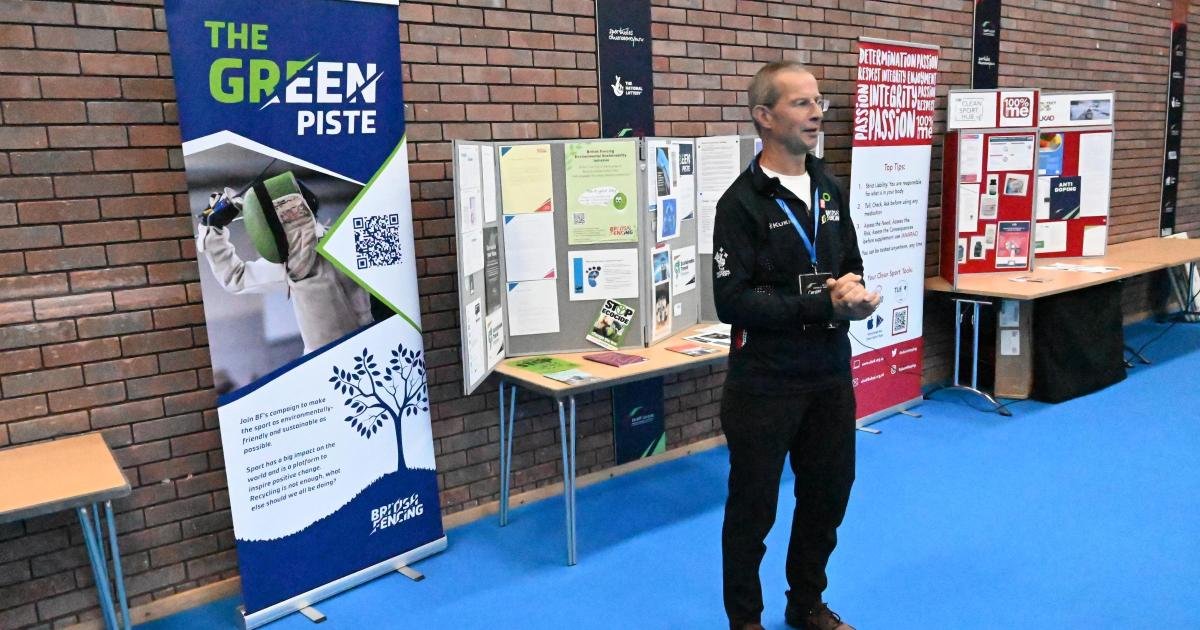
British Fencing is taking a proactive stance on environmental stewardship with the launch of “The Green Piste,” a comprehensive sustainability initiative designed to integrate eco-conscious practices across all levels of the sport. As the national governing body, British Fencing has embedded this program into its wider “BF 2030” vision, aiming to reduce carbon emissions and foster a culture of sustainability among athletes, coaches, officials, and clubs.
At the heart of the initiative is a data-driven approach to environmental impact. The organization has conducted a formal carbon footprinting process to identify the most significant sources of waste and emissions within the sport. A primary focus has been the reduction of single-use plastics at fencing events. To combat this, British Fencing has implemented a policy of phasing out single-use plastic bottles, providing volunteers and participants with reusable alternatives to ensure that large-scale events do not become sources of unnecessary waste.
Neil Brown, Project Officer at British Fencing, has been instrumental in spearheading the program. He emphasizes that the governing body is acknowledging the inherent environmental costs associated with managing a national sport and is taking systematic steps to mitigate them.
“We’re trying to keep single-use plastic off the field as far as we can—we’re really trying to make a difference,” Brown said. “There are some things we have to do because we’re a sports governing body, and there is therefore a carbon footprint associated with that. So we’re taking actions that we can in our own ways.”
Beyond waste management, British Fencing is aligning its operations with the sustainability objectives set by UK Sport and Sport England. This includes a strategic effort to lower emissions linked to travel and event logistics. One of the most notable and industry-leading aspects of the strategy is the introduction of a Sustainable Travel Leave policy. This program allows staff members to receive two extra days of leave per year if they commit to non-flying travel for their holidays.
British Fencing claims to be the first governing body in the UK to introduce such a policy, and its success has garnered attention from other organizations. According to Brown, the British Association for Sustainability in Sport (BASIS)—which oversees sustainability standards for various governing bodies—has adopted a similar model after observing the success of the British Fencing program.
The initiative extends beyond internal policy, aiming to influence the broader fencing ecosystem. This includes engaging external suppliers and venue hosts to adopt sustainable practices, as well as providing educational resources to the fencing community. By utilizing its influence on an international stage, British Fencing intends to advocate for systemic change within the sport, encouraging global partners to prioritize climate action alongside competitive excellence.
With a dedicated page on its website outlining key environmental dates and progress reports, British Fencing is maintaining transparency as it navigates the transition toward becoming a more environmentally responsible organization. Through these measurable goals and innovative employee policies, the governing body is setting a new benchmark for how national sports organizations can address their ecological footprint.
Disclaimer: This content is auto-generated for informational purposes only.
Source: Read Original News