







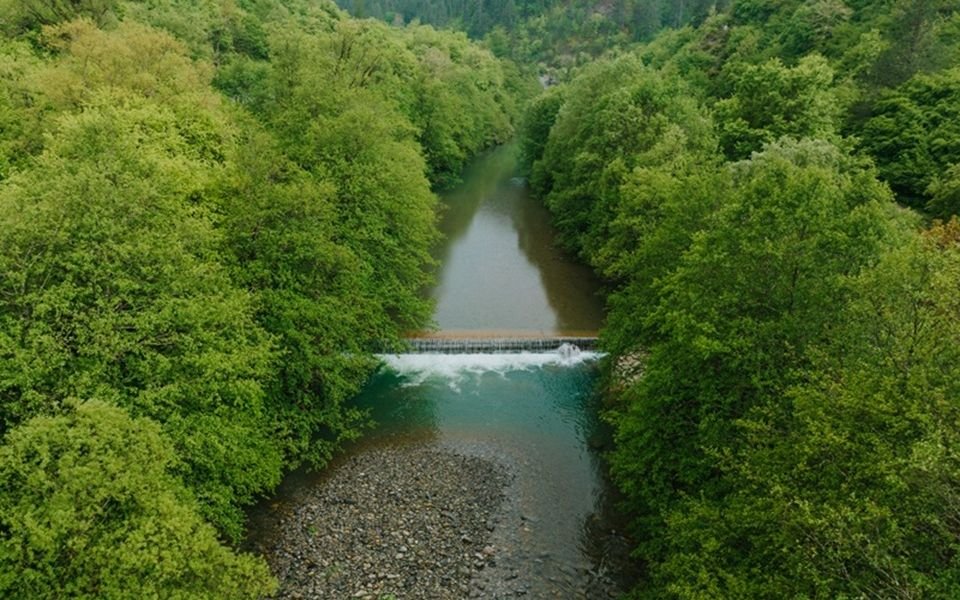
While Europe celebrates a banner year for river restoration, Greece finds itself at a crossroads. As the continent marked Dam Removal Day by toppling over 600 artificial barriers in 2025—restoring the free flow of 3,740 kilometers of waterways—Greece remains in the early stages of addressing its own fragmented river networks. Despite an estimated 22,500 artificial structures disrupting its aquatic ecosystems, the country has yet to implement a coordinated national strategy for the removal of these obsolete barriers.
The disparity between Greece and the broader European trend is stark. Scientific data, including a 2020 study published in the journal Nature, estimates that tens of thousands of dams, weirs, and other physical obstructions dot Greek rivers. However, official records account for only about 1,000 of these structures. This lack of comprehensive documentation is a primary hurdle in meeting the European Union’s ambitious Nature Restoration Law, which mandates the restoration of at least 25,000 kilometers of free-flowing rivers by 2030.
Environmental advocates at MedINA, a non-profit organization, argue that while a formal state-led initiative is missing, recent localized projects are laying the necessary groundwork. Through the “MapStream” project, MedINA has successfully identified and cataloged more than 200 barriers within the Sarantaporos River network in northwestern Greece. This data-gathering effort has paved the way for the “START” project, a collaboration involving the National Technical University of Athens, MedINA, and funding from the Natural Environment and Climate Change Agency (NECCA). Researchers are currently conducting rigorous hydrological and hydraulic modeling to determine which of these barriers are suitable for removal and to predict the potential environmental benefits.
The impact of these structures is significant. Even small barriers—which account for approximately 68% of the estimated 1.2 million dams documented across Europe—wreak havoc on river health. They act as physical blockages for fish migration, prevent the natural downstream flow of sediment, and fragment aquatic habitats. This degradation directly affects water quality and the survival of threatened species. In the Peloponnese, MedINA is currently evaluating the removal of an inactive dam on the Vathyrema stream, a tributary of the Evrotas River. Preliminary findings from the organization’s “ReFlow” project suggest that the structure could be dismantled safely without increasing flood risks, potentially offering a blueprint for future deconstruction efforts.
However, environmental experts caution that technical and ecological assessments are only one piece of the puzzle. A major systemic challenge remains: Greece lacks a clear legal and administrative framework for barrier removal. Currently, there is no defined authority responsible for the planning, permitting, or execution of such projects. Without streamlined regulations, the process of removing even a single obsolete dam involves navigating a complex web of bureaucratic hurdles, from environmental impact assessments to inter-agency coordination.
As pressure mounts from the European Union to reconnect Europe’s fragmented waterways, the gap between scientific capacity and legal implementation in Greece remains the primary obstacle. With over 9,680 barriers now removed across the continent, the movement to “let rivers run free” is gaining global momentum. For Greece, the path forward involves shifting from pilot projects and mapping initiatives to establishing a robust national policy that treats the restoration of its waterways as a critical component of climate resilience and biodiversity protection. Until such a framework is established, thousands of obsolete barriers will continue to impede the natural pulse of Greece’s river ecosystems.
Disclaimer: This content is auto-generated for informational purposes only.
Source: Read Original News