









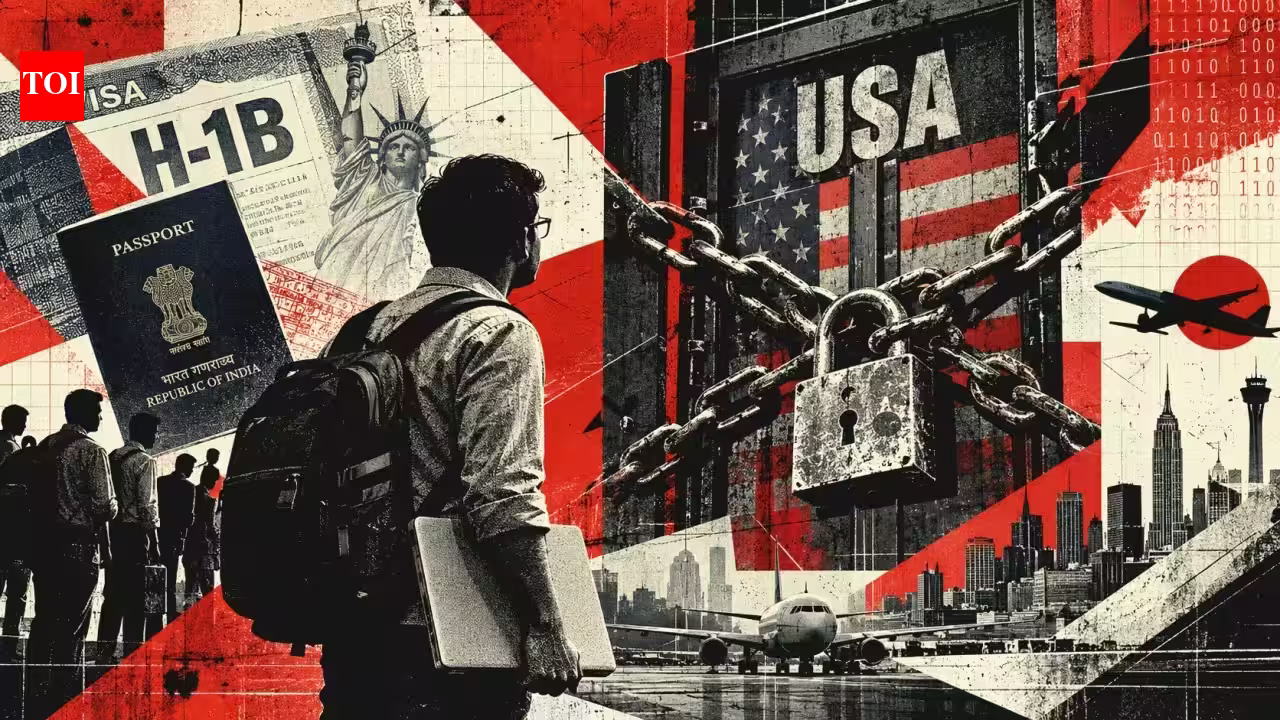
The H-1B visa program has long served as the backbone of the symbiotic relationship between the United States technology sector and the Indian IT workforce. However, a wave of restrictive policies and shifting administrative priorities under the current US landscape has placed this traditional mobility pipeline under intense pressure. For Indian IT professionals and the firms that deploy them, the era of relying on high-volume H-1B visa approvals is undergoing a structural transformation, forcing a re-evaluation of global delivery models and long-term career strategies.
Systemic Tightening of the H-1B Landscape
The core of the issue lies in a multifaceted regulatory crackdown. The US administration’s approach is not merely an adjustment of existing rules but a comprehensive challenge to the operational mechanisms that have defined Indian-US IT services for decades. Key proposals—ranging from significant fee increases for H-1B and OPT/STEM-OPT applications to the implementation of wage-weighted lotteries—collectively aim to prioritize senior-level, high-wage talent while discouraging the volume-based hiring models typically favored by large outsourcing entities.
This strategy is deeply rooted in a desire to address domestic labor market concerns. By scrutinizing the “right to control” principle—which examines who dictates the nature, timing, and location of an employee’s work—the US government is tightening oversight on third-party staffing arrangements. These investigations often focus on whether foreign workers are being utilized in ways that undercut American wages or bypass competitive hiring processes. Consequently, the H-1B visa is no longer just a legal document; it has become a barometer for the broader, more aggressive push to ensure that local labor markets are prioritized in the face of rapid technological displacement.
Impact on Indian IT Professionals
Indian nationals remain the primary recipients of H-1B visas, accounting for approximately 70% of total approvals. Because of this concentration, any policy change disproportionately affects the Indian technology ecosystem. While senior engineers and highly compensated specialists in major US tech firms may remain insulated due to their specialized skill sets and salary levels, the segment of early-career professionals and those working within the traditional IT-services staffing model faces a harsh reality.
The wage-weighted lottery mechanism, in particular, creates a significant hurdle for firms that traditionally rely on a model of deploying large teams at competitive price points. When the cost of entry rises—driven by both increased fees and administrative complexity—the business case for shifting talent to the US diminishes. The data reflects this clearly: recent cycles have seen a drastic reduction in H-1B registrations from major Indian IT service providers, marking a retreat from the “body-shop” deployment model that dominated the early 2000s.
The Evolution of the Global Delivery Model
The decline in visa applications does not necessarily equate to a collapse in demand for Indian expertise; rather, it signals a fundamental shift in how work is delivered. As the cost and difficulty of relocating talent increase, Indian IT companies are aggressively pivoting toward a hybrid model. This model prioritizes the hiring of local US staff for client-facing and on-site roles, while simultaneously expanding the offshore footprint in India.
This transition is bolstered by the maturation of global technology platforms and the widespread adoption of remote collaboration tools. The industry is moving toward a structure where client engagement and project leadership remain localized in the US, but the heavy lifting of software development, systems analysis, and data engineering is increasingly centralized in Indian technology hubs. By strengthening the offshore engine, Indian firms are effectively turning the “death by restriction” of the H-1B program into a catalyst for operational efficiency and increased local capacity.
Navigating Alternatives and Legal Realities
While industry observers frequently point to alternative visa pathways such as the L-1 for intra-company transfers or the O-1 for extraordinary ability, these are not universal substitutes. The L-1 requires a specific corporate structure and prior employment history, while the O-1 demands a high evidentiary threshold that many standard IT roles cannot meet. Furthermore, the persistent backlog for employment-based green cards remains a structural, and largely permanent, obstacle that prevents the H-1B from being a viable long-term solution for professional stability in the US.
The recurring litigation surrounding these visa restrictions highlights the instability inherent in the current system. Because these pathways are subject to political shifts and shifting administrative priorities, businesses are increasingly viewing the US visa route as a high-risk investment. This uncertainty is pushing major firms to diversify their presence into other talent-rich jurisdictions, including Canada, the UK, Australia, and the Middle East, effectively de-risking their reliance on any single country’s immigration policies.
The Unexpected Advantage for India
Ultimately, the restrictive climate surrounding the H-1B program may yield an unexpected benefit for the Indian economy. As physical relocation becomes less feasible, the demand for high-value, complex work—such as AI development, cloud engineering, and cybersecurity—is increasingly being satisfied within India. This trend is further accelerated by the growth of Global Capability Centres (GCCs) owned by multinational corporations, which are choosing to establish deep research and development roots in Indian cities rather than shipping talent to the US.
This transformation suggests that the future of Indian IT is not tied to the number of engineers who can physically step onto US soil, but rather to the quality and depth of the work performed from within India. By focusing on remote delivery and high-value project management, the industry is redesigning its business model to be more resilient against protectionist policies. While the H-1B dream may be growing harder to achieve, the professional relevance of the Indian workforce appears set to grow in the context of a globally distributed, tech-first economy. The challenge for stakeholders will be to ensure that these evolving delivery models continue to provide the necessary flexibility to compete on a global scale.
Disclaimer: This content is auto-generated for informational purposes only.
Source: Read Original News