









India Grapples with Energy and Agricultural Crisis Following Decade’s Driest Monsoon
India has concluded its most parched monsoon season in 11 years, triggering a cascade of challenges that span from agricultural devastation to an intensifying energy shortfall. Between June and September, the nation recorded 759.4 mm of rainfall, falling significantly short of the long-term average of 868.6 mm. This 12.6% deficit marks the fourth driest monsoon of the 21st century, leaving the country vulnerable to both immediate economic strain and long-term climate instability.
Climate Drivers and Future Risks
The primary culprit behind this meteorological anomaly, according to experts, is the robust El Niño phenomenon. Madhavan Nair Rajeevan, a prominent climatologist and former secretary of the Ministry of Earth Sciences, warned that the current shortfall is symptomatic of a broader trend. As global temperatures continue to climb, India faces the daunting prospect of increasingly frequent dry spells punctuated by volatile, unpredictable rainfall patterns, which threaten to disrupt the traditional agrarian calendar.
A Strain on Resources and Power
The lack of adequate precipitation has had a tangible impact on the nation’s infrastructure. Data from the Central Water Commission reveals that the 178 reservoirs monitored across India currently hold 132.7 billion cubic meters of water. This is a stark decline from the 10-year average of 151.1 billion cubic meters, signaling an impending water crisis in the coming months.
The consequences of this deficit extend into the energy sector. Grid India reported that hydropower generation plummeted by nearly 16% in September compared to the same period last year. This resulted in an electricity deficit of 560 million kilowatt-hours, representing the largest monthly shortfall in over three years. The situation is particularly precarious during the post-sunset hours when solar energy production ceases, leaving grid operators with few alternatives to bridge the gap.
While coal-fired power plants have attempted to compensate for the lost hydropower, their efforts are hindered by supply chain constraints. The Central Electricity Authority has noted that approximately 40% of these plants are operating with critically low fuel reserves—holding less than 25% of the mandatory requirement. To mitigate blackouts, the government has been forced to mandate that private industrial power plants operate at full capacity to channel surplus electricity back into the national grid.
The Human Cost: Farmers and Families
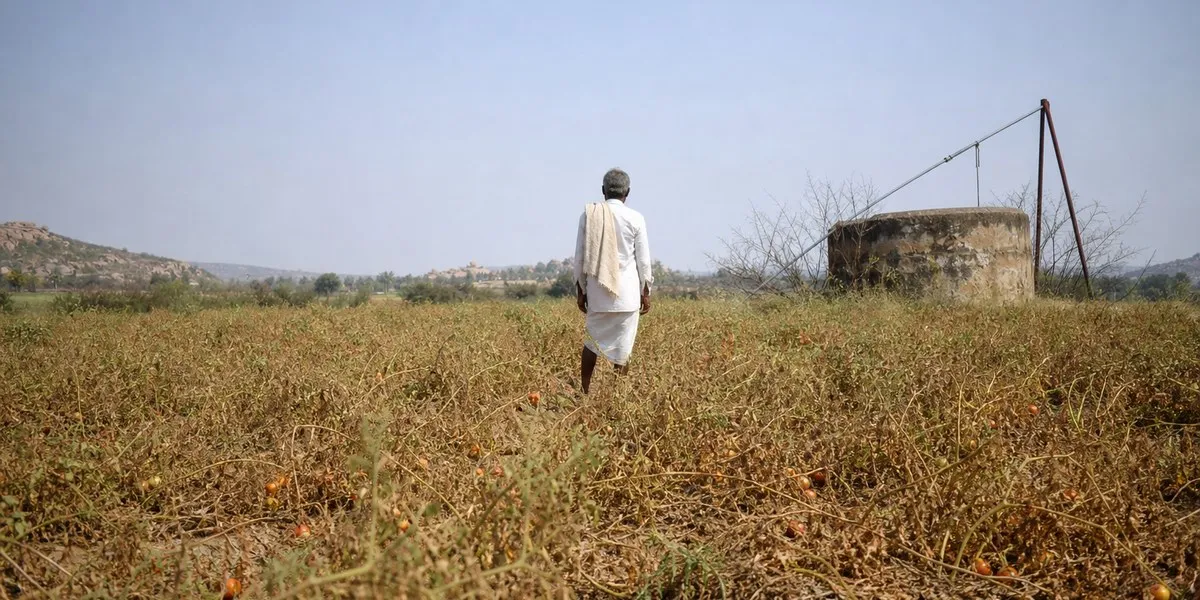
Beyond the industrial sector, the human toll is most visible in rural communities. For farmers like Ramesh Reddy in Karnataka’s Kolar district, the failed monsoon has been catastrophic. After investing heavily in tomato crops—often financed by high-interest loans and personal assets—the drying up of irrigation wells led to total crop loss.
Economist Himanshu of Jawaharlal Nehru University describes the current state of rural India as a “double blow.” Households are suffering from the dual pressure of plummeting agricultural incomes and the skyrocketing cost of living. Inflationary pressures have hit the food basket hard; recent statistics indicate that onion prices have surged by 93% compared to last year, with sugar and rice prices climbing by 28% and 8% respectively.
As the country looks toward the winter planting season, the outlook remains uncertain. The successful sowing of staple crops like wheat, mustard, and chickpeas will depend heavily on the residual soil moisture left by the recent monsoon, leaving farmers anxious about their prospects for the coming cycle.
Disclaimer: This content is auto-generated for informational purposes only.
Source: Read Original News