






The Return of an Iconic Mechanical World
Seventeen years have passed since Amanita Design first introduced players to the rusting, atmospheric metropolis of Machinarium. The original title became a landmark in the point-and-click genre, celebrated for its unique visual language and the silent, expressive journey of Josef, a small robot navigating a city of scrap metal and sinister machinery. Now, the Czech studio has officially confirmed the development of a direct successor, Machinarium 2. This announcement serves as a major milestone for independent game development, signaling a return to one of the most recognizable aesthetic identities in modern interactive media.
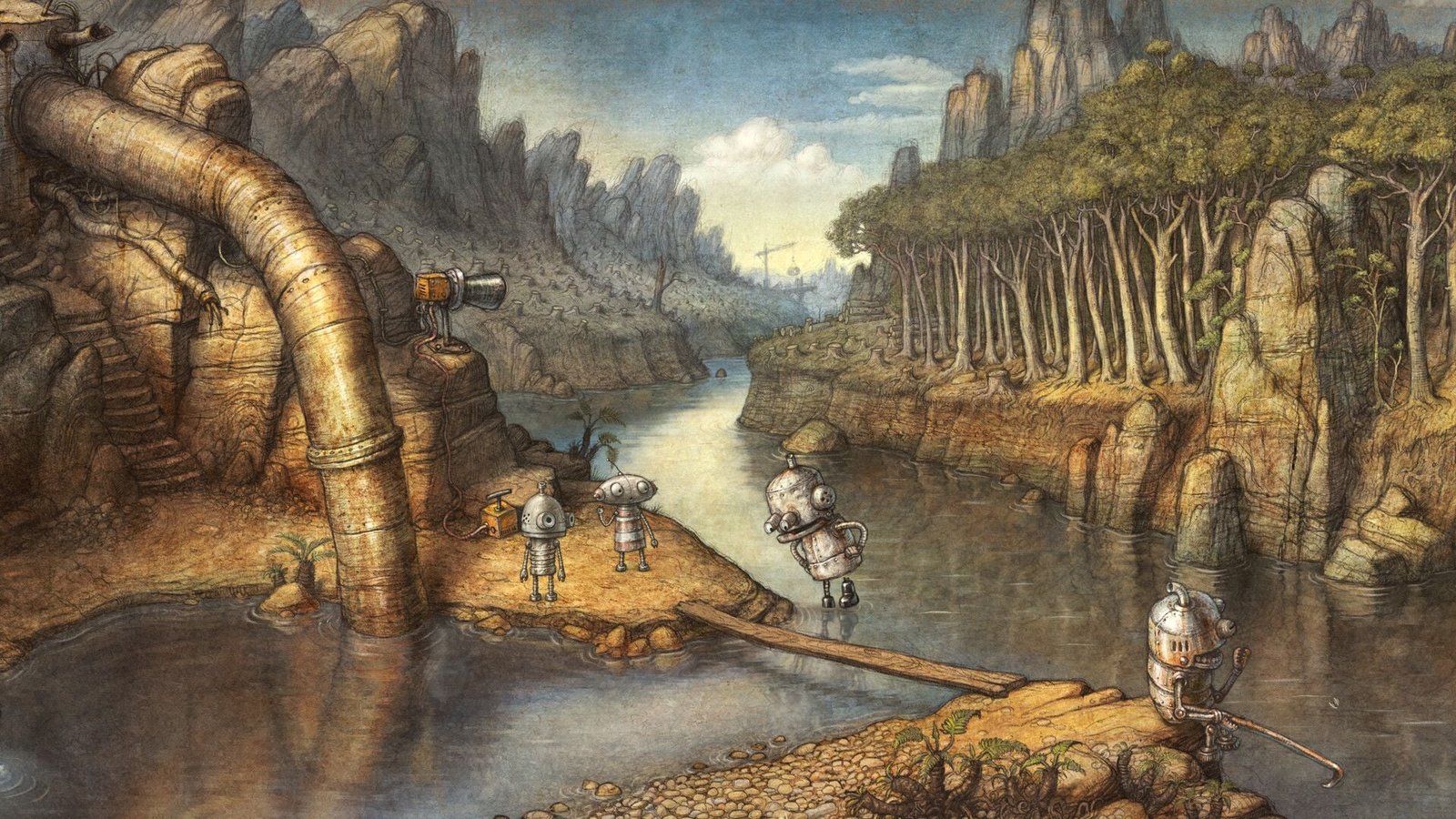
The announcement was accompanied by a brief promotional video that displays the studio’s signature hand-drawn style. While the industry has shifted toward high-fidelity 3D rendering and ray-tracing technology, Amanita Design remains committed to the meticulous, frame-by-frame artistry that defined their early success. The transition from the original game to this new project demonstrates a evolution in technical maturity while retaining the grounded, tactile quality of its predecessor.
New Narrative Horizons in the Barrens
Machinarium 2 picks up immediately following the conclusion of the first title. Josef and his companion, Berta, having successfully fled their home city, find themselves in a precarious position after a crash landing in a region known as the Barrens. This setting serves as the primary stage for the sequel, moving away from the industrial density of the original city toward a more diverse environment.
The plot introduces a complex ecosystem centered around a lush, hidden valley. Within this territory, two distinct robot tribes reside in a state of precarious survival. One group occupies an elevated monastery, while the other navigates the terrain of the valley floor. The core conflict is rooted in a dwindling power supply, which forces players to engage with the environmental and societal limitations of these robotic inhabitants. By shifting the focus from individual survival to the collective needs of these tribes, the narrative structure expands, offering a broader range of logic-based challenges than the first game.
Collaborative Mechanics and Dual-Character Control
A significant technical update in Machinarium 2 is the shift to a dual-character control system. Players will no longer navigate the world solely as Josef; instead, they can toggle between Josef and Berta at will. This transition introduces a layer of cooperative puzzle design that alters how the player interacts with the environment.
In the original game, puzzles were largely self-contained tasks focused on singular mechanical manipulation. In the sequel, the ability to switch characters allows for multi-stage puzzles where the unique physical characteristics of each robot are required to progress. This mechanic requires players to analyze the screen from two distinct perspectives, coordinating movements and interactions to bypass obstacles that one robot could not handle alone. Despite this added complexity, the game maintains the studio’s hallmark communication system: the use of thought-bubble pictographs. By eschewing written dialogue, the developers ensure that the mechanics of the game remain universal, relying on visual logic and context clues rather than linguistic interpretation.
The Technical Artistry of Amanita Design
The visual identity of Machinarium is arguably its most enduring trait. Amanita Design relies on a workflow that merges traditional drawing techniques with digital animation, creating an aesthetic that feels organic despite the mechanical subject matter. The sequel promises to build upon this foundation with higher resolution assets and more fluid animation states.
Complementing the visuals is the return of Tomáš “Floex” Dvořák, the composer whose work on the original title was instrumental in establishing its lonely, atmospheric tone. The sound design in Amanita games functions as a narrative pillar, providing emotional cues in the absence of spoken language. The technical integration of this audio with the environment—ensuring that metallic clanks and whirring servos react dynamically to the player’s actions—is essential to the immersion that the studio strives to create. By focusing on consistent art direction and a cohesive musical score, the studio reinforces the distinctiveness of the Machinarium franchise in a crowded gaming landscape.
Legacy and the Future of Independent Titles
Amanita Design has a history of reviving long-dormant intellectual properties, most notably with the release of Samorost 3 after an eleven-year hiatus. This patterns suggest that the studio prefers to return to established worlds only when there is a technical or narrative evolution to justify the sequel. The decision to revisit Machinarium implies that the team has developed a new technical approach to puzzle design that would have been unfeasible in 2009.
While no release date has been finalized, the appearance of a dedicated store page suggests that the project has moved well beyond the conceptual stage. For the studio, this release is not merely a reboot but an opportunity to re-engage with a global audience that has grown alongside the medium. As the industry continues to prioritize technical performance, Machinarium 2 stands as a reminder of the value of art-led development. It serves as a case study in how to expand a legacy franchise by refining core mechanics—such as the character-switching system—while staying true to the unconventional, silent storytelling that made the original work a classic. The project remains a testament to the longevity of high-quality, independent creative visions.
Disclaimer: This content is auto-generated for informational purposes only.
Source: Read Original News