








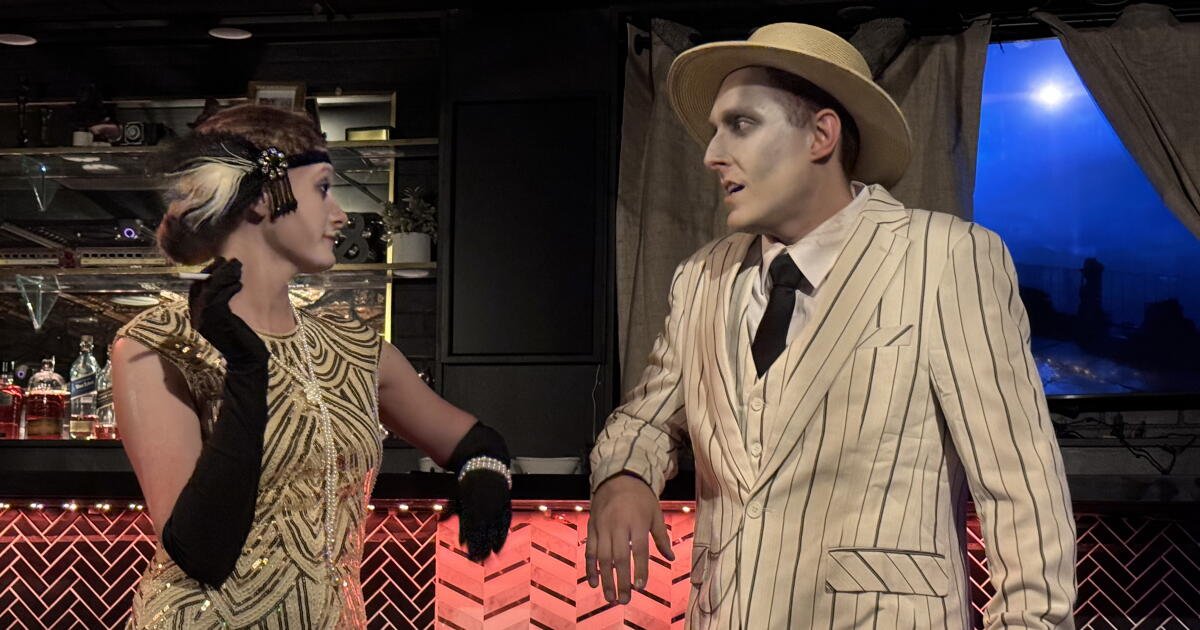
From college dorm hobbyists to professional experience designers, three UC Irvine graduates are rewriting the script on seasonal entertainment. What began in 2023 as a grassroots haunted house inside a friend’s living room has evolved into “OC Fright Nights,” a professional venture now setting up shop at major Orange County venues.
Nolan Zweig, 22, along with partners Srihas Payidiparty, 22, and Cameron Romeis, 24, have launched their most ambitious project yet: The Phantom Tavern: Haunted Speakeasy. Located at Playground Mini Golf in Huntington Beach, the 21-and-over event marks a transition for the trio from “home haunters” to a legitimate business entity capable of scaling immersive storytelling for commercial partners.
Scaling Immersive Narratives Through Tech and Talent
The jump from a residential haunt to a professional, location-based entertainment (LBE) operation requires more than just costumes and fog machines. The founders, who bring diverse skill sets in mechanical engineering, digital marketing, and data science to the table, have leveraged these professional backgrounds to build a business model focused on custom-designed, venue-specific experiences.
Unlike traditional jump-scare attractions, the Phantom Tavern relies on a blend of lighting, audio sequences, and live performance. By integrating these practical effects into an existing commercial space, the team is proving that pop-up experiences can be sophisticated, story-driven, and highly repeatable. Their work highlights a growing trend in the experiential economy: the demand for hyper-local, high-quality, and interactive entertainment that traditional theme parks often struggle to provide at such an intimate, personal level.
The Intersection of Digital Strategy and Real-World Interaction
While the team holds full-time roles in engineering, finance, and design, they are actively applying modern business tactics to keep OC Fright Nights competitive. Their digital infrastructure—including a streamlined online reservation system and sophisticated social media marketing—is designed to reach an audience that lives online but craves real-world, “IRL” experiences.
The integration of their Halloween Mini Golf and Arcade, running alongside the Phantom Tavern, creates a diversified revenue stream that appeals to both families during the day and thrill-seekers at night. By analyzing booking patterns and utilizing customer feedback loops, the team is effectively treating their physical venue as a dynamic software product, constantly iterating on the “user experience” of the haunt itself.
Future Projections: Beyond the Halloween Season
The trio’s vision extends well beyond the month of October. With their transition from volunteer-led projects to a professional services model, they are positioning themselves to consult for other businesses that need “seasonal overlays.” Their goal is to help retailers or entertainment centers transform their spaces throughout the year, using their expertise to design events that drive foot traffic.
The team has already begun prototyping ideas for a holiday-themed event this winter. By treating “themed entertainment” as a modular, scalable service, they are tapping into a broader market trend where venues rely on external agencies to breathe new life into their physical assets. Whether through high-tech lighting rigs or complex, scripted storylines, the founders of OC Fright Nights are proving that when it comes to the future of entertainment, the most effective “artificial intelligence” is still the human ability to craft a truly compelling, immersive story.
Disclaimer: This content is auto-generated for informational purposes only.
Source: Read Original News