








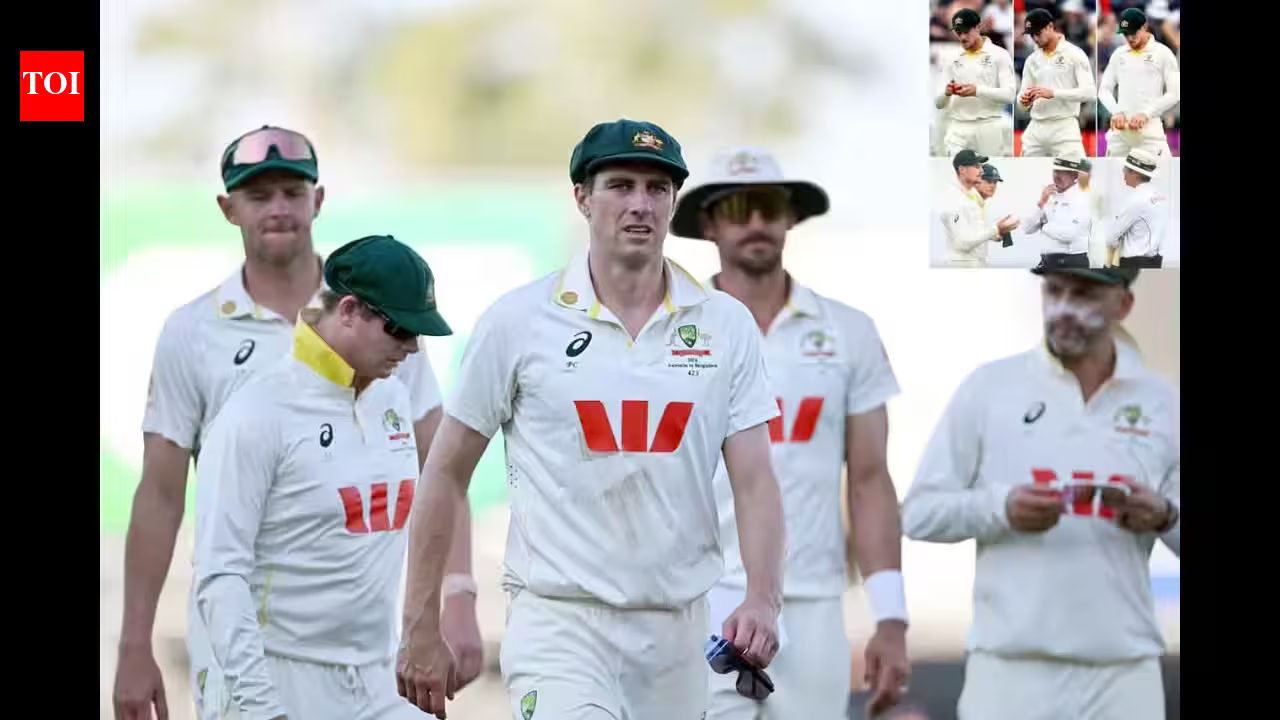
SYDNEY – As the Australian cricket team touches down in South Africa for a highly anticipated three-Test series, the ghosts of 2018 have begun to stir. Yet, amid the rising anticipation and the inevitable media scrutiny surrounding the return to the site of one of the sport’s greatest controversies, captain Pat Cummins has maintained a posture of unwavering composure.
The focus of much of this renewed attention is not merely the upcoming battle on the pitch at Kingsmead, but the imminent release of an autobiography by veteran batter Usman Khawaja. With the book expected to pull back the curtain on the internal dynamics of the national side during the fallout of the infamous “Sandpapergate” scandal, the Australian skipper has issued a blunt, almost nonchalant response: “Tell your story.”
Cummins says the team has moved on
The 2018 Cape Town Test remains a dark chapter in the annals of Australian cricket. It was there that the world witnessed the shocking image of Cameron Bancroft attempting to alter the condition of the ball using sandpaper—a moment that triggered a systemic crisis for Cricket Australia. The subsequent investigation resulted in long-term bans for captain Steve Smith, vice-captain David Warner, and Bancroft himself.
While Cummins, along with fellow bowlers Mitchell Starc, Josh Hazlewood, and Nathan Lyon, were present during that tour and have consistently denied having knowledge of the ball-tampering plot, their return to South African soil serves as a visceral reminder of that turbulent period.
Despite the weight of history, Cummins insists that the current iteration of the Australian squad is far removed from the climate of 2018. Speaking to the press ahead of Friday’s series opener, the captain confirmed he had touched base with Khawaja regarding the book’s contents but maintained that the conversation was brief and devoid of anxiety.
“He just basically gave me the heads-up that he’s doing a book, and yeah, as always, no worries,” Cummins stated. “Tell your story. It’s fine.”
Khawaja’s book could revisit the scandal
Behind the scenes, the narrative surrounding the aftermath of the scandal has remained a point of friction. Reports in the Australian media have suggested that in the wake of the incident, Khawaja had urged the entire squad to accept collective responsibility for the cultural failings that led to the breach of integrity. Allegedly, that suggestion was dismissed by leadership at the time, leaving questions about internal accountability lingering to this day.
Whether Khawaja’s upcoming memoir will confirm these reports or offer a new perspective remains to be seen. When pressed on the specifics of what the batter might reveal, Cummins adopted a hands-off approach, shifting the responsibility to the author himself.
“You need to ask him,” Cummins noted. “It’s obviously a long time ago. All the investigations, everything was done back then. We answered every question a million times. So, yeah, it was dealt with then. Now all I can say is, as a group, we moved on, very happy with the last eight years, how we’ve been as a group and evolved.”
Cummins’ defense of the team’s evolution is backed by the results of the past decade. Since the dark days of Newlands, the Australian team has undergone a significant cultural overhaul, prioritizing integrity and conduct as much as the scoreboard. For the current leadership, the book is a reflection of the past, not a blueprint for their present identity.
Broadcaster takes a dig at Australia
It is not just the literary world that is looking backward; the media landscape is already stoking the fires of hostility. South African broadcaster SuperSport, which gained global notoriety in 2018 for the sharp-eyed camera work that exposed Bancroft’s actions, has already signaled that the Australians should expect no quarter.
In the lead-up to the series, SuperSport released a series of social media clips revisiting the 2018 scandal, featuring the exact moments the sandpaper was used and the subsequent reactions of the Australian dressing room. The broadcaster appended a wry, pointed warning to the promotional materials: “Our cameras will be sharp for this 3-match test series.”
While the jab is clearly designed to rattle the visitors, it also highlights the immense pressure and psychological warfare that characterizes international cricket. For Cummins, however, the message is clear: he is focused on the tactical challenge of the pitch, not the archival footage of a broadcast van.
As the series begins at Kingsmead, the narrative will inevitably pivot from the politics of the past to the realities of the present. Whether Khawaja’s book provides the catharsis he seeks or merely serves as fresh fodder for the local crowd, the Australian team appears determined to let their cricket do the talking.
“We are a different group now,” a source close to the team hinted. “The baggage of 2018 is there for those who want to carry it, but we have a series to win.”
For now, the sandpaper may be gone, but the spotlight, as sharp as ever, remains fixed firmly on the Australians. How they navigate this series—both on the field and in the media—will define the latest chapter of this proud, if occasionally fractured, cricketing nation.
Disclaimer: This content is auto-generated for informational purposes only.
Source: Read Original News