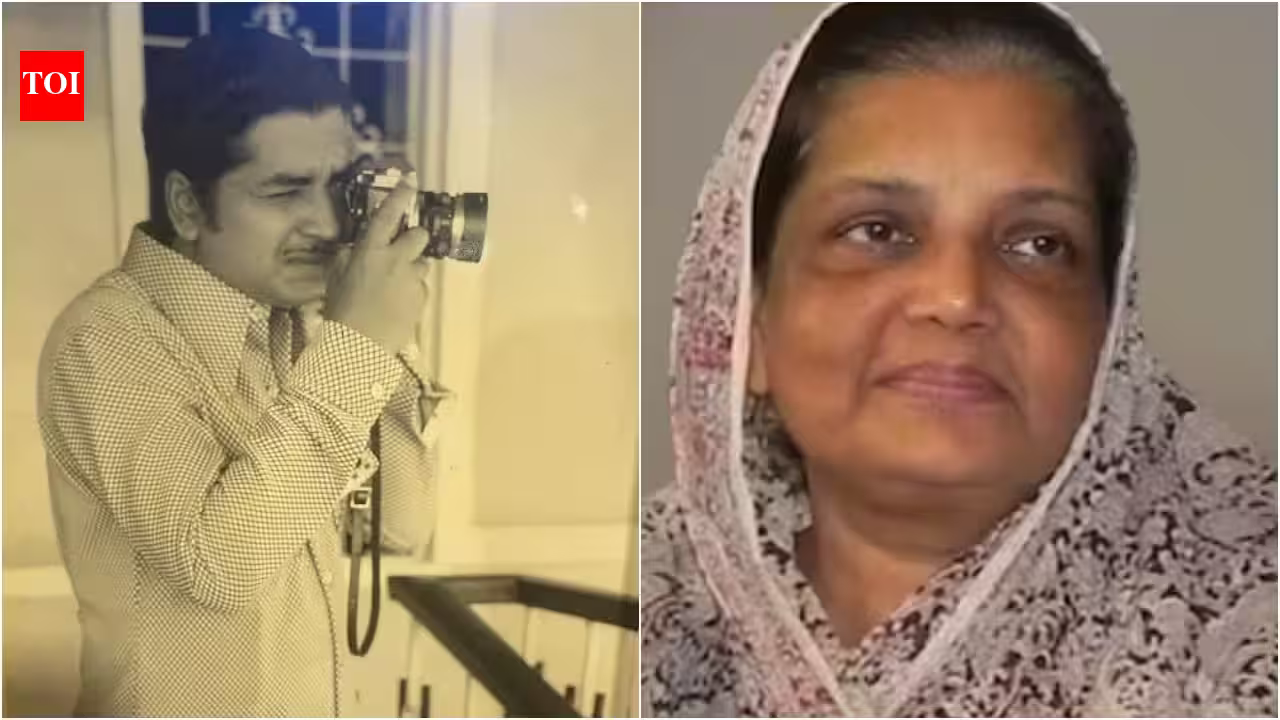








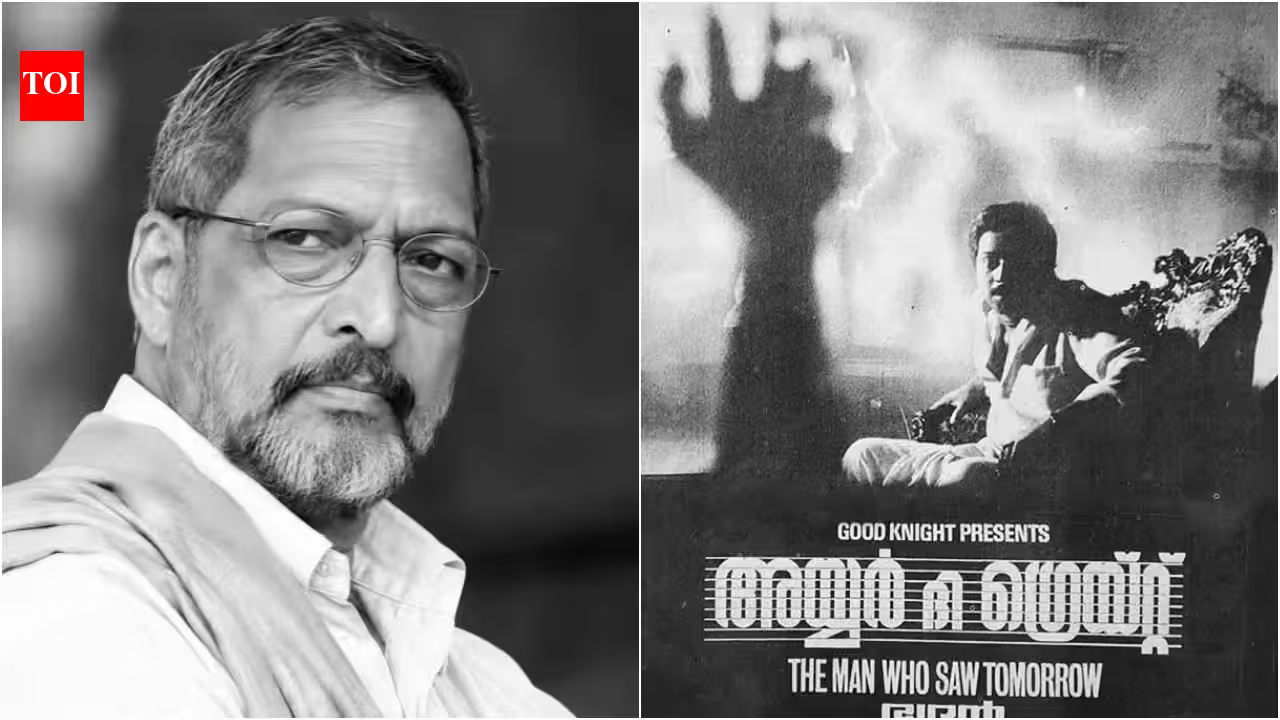
In the intricate tapestry of Indian cinema, history is often written not just by the films that hit the silver screen, but by the phantom projects—those “what-if” collaborations that promised magic but ultimately dissolved into the ether. One such captivating footnote in Malayalam cinema involves the powerhouse filmmaker Bhadran and the late, volcanic talent of Hindi cinema, Nana Patekar.
It is a pairing that, on paper, feels almost too intense for one frame. Bhadran, a director known for his grand visual storytelling and deeply textured characters, and Patekar, an actor who could command a screen with nothing more than a twitch of his eyebrow or a gravelly monologue. As it turns out, the two came tantalizingly close to redefining the boundaries of regional cinema through a planned Hindi remake of the cult thriller Iyer The Great.
Bhadran Imagined Nana Patekar as Soorya Narayanan
When Iyer The Great arrived in theaters, it was a striking departure from the standard commercial fare of the time. Featuring the legendary Mammootty as Soorya Narayanan—a man whose life is irrevocably fractured by a traumatic incident that grants him the unnerving ability to foresee the future—the film resonated far beyond Kerala, even finding a devoted audience in Tamil Nadu.
Bhadran, recognizing the universal weight of the narrative, began to dream bigger. He envisioned a version of the story tailored for the vast, demanding Hindi audience. In his mind, there was only one man who possessed the requisite intensity and visceral presence to step into Mammootty’s shoes: Nana Patekar.
Through the intervention of producer Goodknight Mohan, a close friend of the Bollywood stalwart, the pieces were set in motion. A meeting was arranged in Mumbai. Bhadran recalls the encounter vividly, describing a connection that was instantaneous. “There was no one else who I could envision to reprise Mammootty’s role in the Hindi version,” Bhadran shared. “Nana had the looks and the figure to make him the Soorya Narayanan in Hindi.”
The Scene That Almost Sparked a Cinematic Revolution
The chemistry between director and actor was not merely professional; it was artistic. During their discussion, Bhadran laid out the soul of the film: the pivotal moment where Soorya Narayanan’s world shifts. It is a deceptively simple sequence—a man climbing a tree to rescue a parrot, only to be paralyzed by vertigo and the sudden, terrifying onset of premonition.
Bhadran’s narration of the “new dawn” that followed this trauma hit a nerve with Patekar. The actor, known for his mercurial and deeply expressive nature, didn’t just listen—he experienced the story.
“I just told him, ‘The next day, it is a new dawn.’ He suddenly jumped up from the chair and hugged me, even biting my cheek,” Bhadran recounted. It was a classic Patekar moment, erratic and authentic. For a fleeting afternoon in a Mumbai office, the Hindi adaptation of Iyer The Great wasn’t just a concept; it was a palpable, throbbing reality.
The Reality of Unrealized Dreams
Cinema is often a cruel mistress, and the bridge between a passionate meeting and a greenlit project is frequently broken by logistical hurdles. While the enthusiasm was high, the momentum behind the Iyer The Great remake stalled. Bhadran, a director who never rested on his laurels, found himself pulled into the gravitational force of his next epic: the Mohanlal-starrer Spadikam.
As Spadikam ascended to its status as a permanent fixture in Malayalam cinematic folklore, the potential for a Hindi remake became a conversation piece rather than a production plan. Interestingly, even years later, the mutual respect remained. Bhadran admits that if Patekar had ever approached him about taking the reins of Spadikam for a Hindi audience, he would have handed over the keys without a second thought.
A Near Miss: The ‘Udayon’ Connection
The Iyer project was not an isolated incident. Bhadran’s admiration for Patekar ran deep. When the director was sculpting the characters for his 2005 Malayalam film Udayon, he once again sought to bring the Bollywood powerhouse into the fold. He cast his eyes on the character of Unni Vaidyan, a pivotal figure in the film’s narrative.
This time, the hurdle wasn’t just scheduling or production logistics—it was the uncompromising nature of the actor himself. Patekar was intrigued by the story, but he held a firm personal rule: if he were to act in a language outside his own, he insisted on dubbing his own lines. For a film rooted in the specific dialect and cultural nuances of Kerala, the linguistic barrier proved to be the final wall that neither could climb. The role ultimately went to the equally talented Nassar, but the “what-if” remained.
The Final Curtain Call
Last October, the Indian film industry lost one of its most idiosyncratic and compelling voices when Nana Patekar passed away at the age of 75. As the tributes poured in, anecdotes from filmmakers like Bhadran served as a poignant reminder of the actor’s reach.
There is a touching irony in the fact that during the 2023 International Film Festival of Kerala, Patekar remarked that he had never been approached for a Malayalam film. While he may have genuinely felt that way, Bhadran’s stories provide a different perspective. It wasn’t that the industry didn’t want him—it was that the stars, in their unpredictable alignment, simply never permitted the collaboration to ignite.
As we look back at the career of a man who was as much a force of nature as he was an actor, these unrealized projects stand as monuments to a “might-have-been” that would have undoubtedly changed the landscape of Indian regional cinema. Bhadran’s missed connection with Patekar isn’t just a story about a failed project; it’s a tribute to two artists who, for one brief, electric moment, saw the same vision in the dark and felt the same pulse of a story waiting to be told.
Disclaimer: This content is auto-generated for informational purposes only.
Source: Read Original News