








India’s AI Absence Will Soon Become a Strategic Advantage: CEA Nageswaran
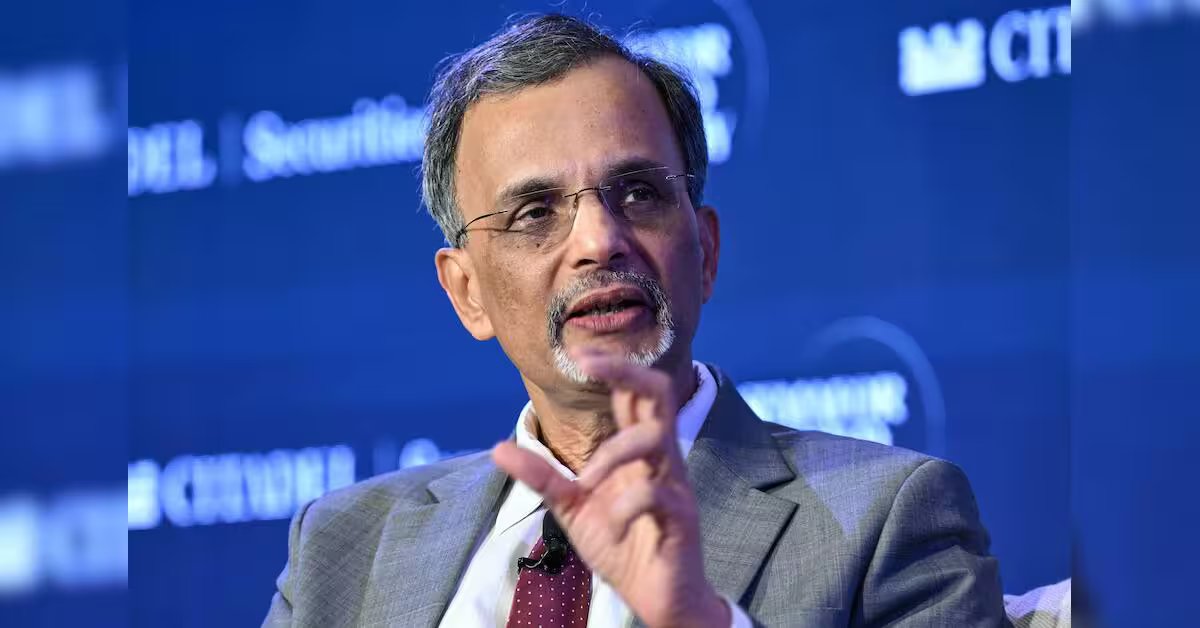
MUMBAI – In a strong defense of India’s current economic position, Chief Economic Advisor (CEA) V. Anantha Nageswaran asserted on Thursday that the nation’s lack of an artificial intelligence (AI) frenzy in its equity markets will soon transition from being perceived as a drawback to a core structural strength.
Speaking at the SBI-Amundi India Investor Seminar, the CEA addressed the recent exodus of foreign portfolio investors, which has exerted downward pressure on the Indian rupee as it approaches lifetime lows. While many global analysts have attributed this selloff to the absence of “AI-themed” growth stories in the Indian stock market, Nageswaran argued that this perceived disadvantage is actually a safeguard against future market volatility.
The ‘Second Mover Advantage’
Nageswaran categorized the current global obsession with artificial intelligence as a “borrowing story,” suggesting that the hype surrounding AI-related stocks may not be sustainable in the long run. He expressed confidence that when the global markets eventually undergo a “shake-off” or correction in the AI sector, international capital will aggressively seek stable, high-growth alternatives that are not tethered to speculative technological trends.
“If the AI boom stumbles, India is well placed to gain,” Nageswaran stated. “One year from now, we might find that the absence of an AI trade will turn out to have been India’s strength.” He further suggested that India is positioned to capitalize on a “second mover advantage,” benefiting from the maturity of AI applications rather than being caught up in the current, potentially inflated, speculative cycle.
Navigating Global Headwinds
The CEA acknowledged that the Indian economy is currently navigating a complex landscape of exogenous pressures. He identified four primary factors that have dampened foreign capital inflows and strained the rupee:
- Geopolitical tensions in West Asia leading to volatile oil prices.
- Persistent rate-tightening cycles by global central banks.
- The absence of an AI-driven trade in domestic equities.
- Complexities within the India-US economic and diplomatic relationship.
Despite these hurdles, Nageswaran maintained that the narrative surrounding India remains overwhelmingly positive. He highlighted that the domestic economy has consistently delivered growth exceeding 7%, even amidst repeated global economic shocks.
Strong Fundamentals Remain
Defending the resilience of the Indian market, Nageswaran pointed to several internal stabilizers that distinguish the current environment from previous cycles of volatility. He emphasized that the banking system is currently well-capitalized, corporate leverage is at historical lows, and the current account deficit remains within a manageable range.
Furthermore, the structural shift of domestic household savings moving into equity markets continues to provide a vital buffer against the whims of foreign institutional investors.
“The fundamentals are very, very different and healthier right now than what the exchange rate alone might tell you,” Nageswaran said. He concluded that as the global investment community reassesses its risk appetite, India’s consistent growth trajectory will naturally draw capital back into the country, proving that the current period of instability is merely a temporary phase in a much larger, robust growth story.
Disclaimer: This content is auto-generated for informational purposes only.
Source: Read Original News