








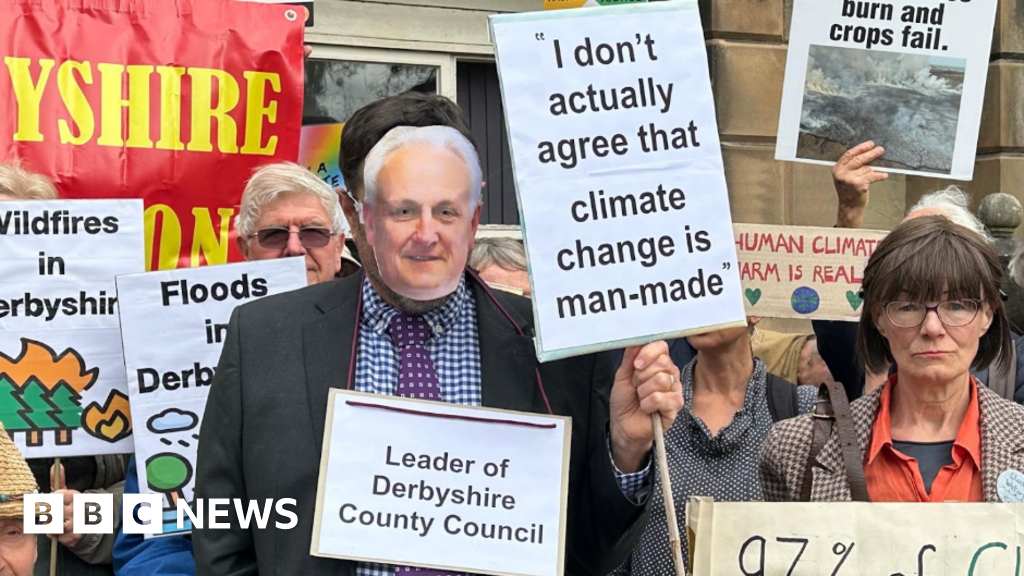
Tensions flared outside County Hall this week as Reform UK representatives, recently appointed to leadership positions within the local authority, were confronted by vocal public opposition regarding the council’s shifting environmental policies. The protest, which saw dozens of demonstrators gather with placards, underscored a growing divide over the county’s approach to climate targets and sustainability initiatives.
The unrest follows a series of policy statements from the new leadership, which have indicated a desire to reassess existing environmental commitments. Critics of the administration argue that the council is backtracking on long-standing goals, including net-zero carbon pledges and plans for expanded public transport infrastructure, which many consider essential for long-term ecological stability.
Inside the chambers, the atmosphere was equally charged. During a scheduled public question session, members of the Reform UK leadership were pressed on their plans regarding local biodiversity projects and the funding of green energy transitions. Responding to the concerns, the council leadership maintained that their primary objective is to balance environmental aspirations with economic pragmatism.
“Our duty is to ensure that the transition to sustainable infrastructure does not place an undue financial burden on the taxpayer,” a council spokesperson stated during the hearing. The leadership suggested that current environmental mandates need to be audited to ensure they are “cost-effective” and that they align with local economic growth. They expressed a preference for market-led solutions over state-funded green initiatives, arguing that bureaucratic regulations often stifle local innovation.
This stance, however, has drawn sharp criticism from environmental advocacy groups. Representatives from local conservation organizations expressed deep concern that “economic pragmatism” is being used as a rhetorical veil for abandoning essential climate action. Speakers at the protest emphasized that the costs of inaction—ranging from increased flood risks to the degradation of local ecosystems—far outweigh the initial capital required for sustainability projects.
“We are at a critical juncture,” said one attendee, representing a local climate action coalition. “Environmental protection is not a luxury or a line item that can be deferred for better economic conditions. If we cut funding for reforestation and renewable energy projects now, we are essentially borrowing against the future wellbeing of this county.”
The debate also touched upon the future of the county’s transport strategy. Reform UK leaders have signaled an intention to reconsider low-traffic neighborhood (LTN) schemes and other car-reduction measures, which they claim have negatively impacted small business logistics and public mobility. Protesters argued that these policies were vital for reducing carbon emissions and improving air quality, and that reversing them would be a significant step backward in the county’s public health goals.
The controversy highlights a broader national debate currently playing out in local government, where the pressure to meet international climate agreements intersects with local economic anxieties and shifting political priorities. As the council begins an audit of its environmental department, the impact on ongoing sustainability contracts remains uncertain. Several green-energy projects that were already in the planning stages face potential delays or cancellation as the administration reviews its budgetary priorities.
The protest concluded without significant incident, but the sentiment expressed at County Hall signals that environmental policy will remain a central point of contention for the remainder of the council’s term. As the leadership continues its review, stakeholders on both sides of the aisle are calling for greater transparency, with environmental groups promising continued oversight to ensure that the council remains accountable to its original commitments.
Moving forward, the council has pledged to release a revised strategy document in the coming months. Whether this new roadmap will appease the demands of environmentalists or solidify the shift in policy remains to be seen, but the public outcry this week serves as a stark reminder that ecological policy has become one of the most volatile and closely watched areas of local governance.
Disclaimer: This content is auto-generated for informational purposes only.
Source: Read Original News