








India Sees Nationwide Surge in Protests Over Election Row and Women’s Safety
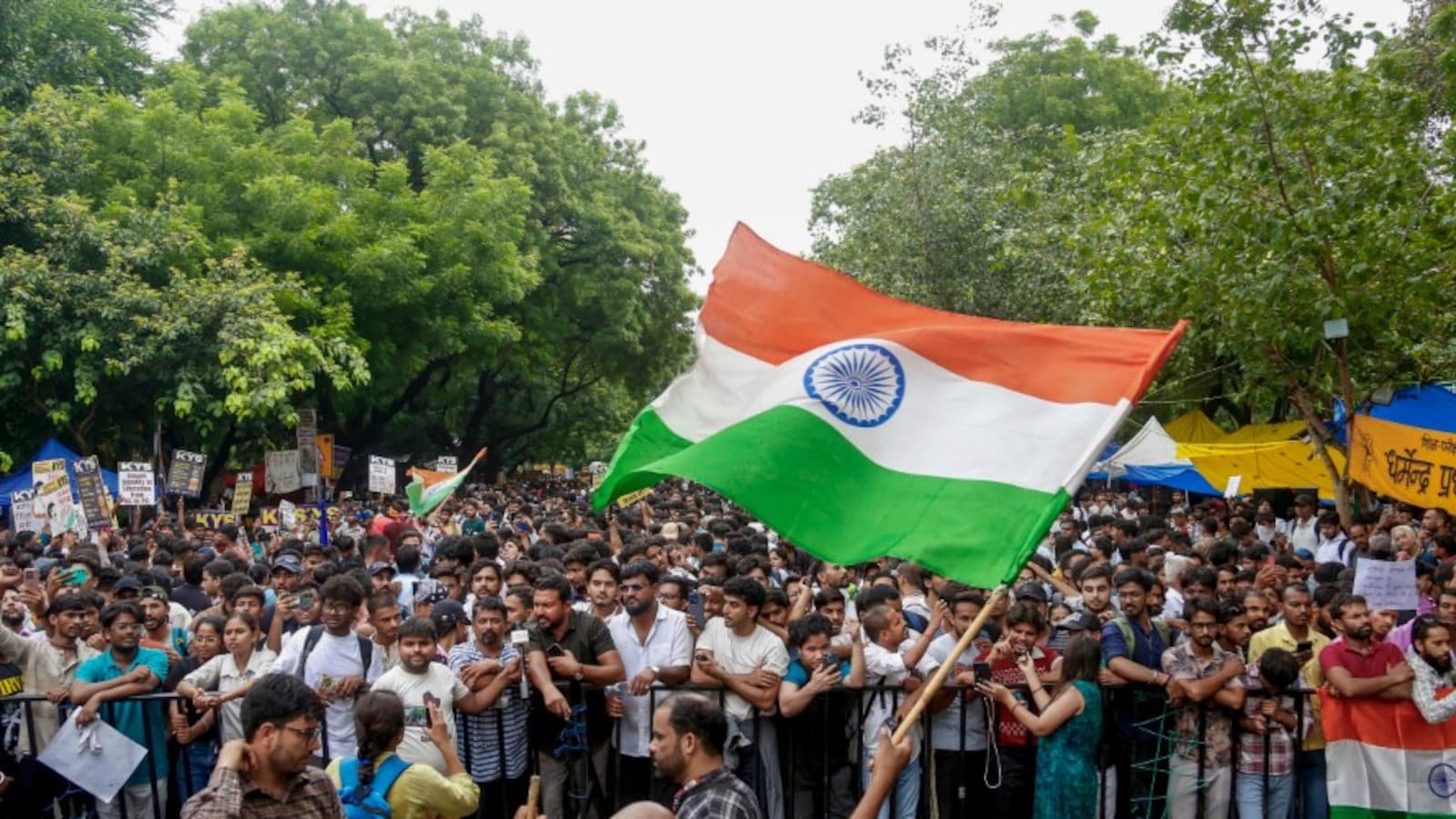
A wave of civil unrest swept across India between September 26 and October 5, as citizens from various backgrounds took to the streets to voice grievances ranging from institutional accountability to the pressing need for improved women’s safety. According to data tracked by the Armed Conflict Location & Event Data Project (ACLED), the country witnessed 60 significant demonstrations—each drawing crowds of over 100 people—during this intense 10-day period.
The Election Commission Controversy
The catalyst for much of this mobilization was a burgeoning controversy surrounding the Election Commission of India. Political factions, led primarily by the Congress party and various affiliated student wings, spearheaded a national campaign demanding the resignation of Chief Election Commissioner Gyanesh Kumar.
Data analysis reveals that the Congress party and its student organizations were the primary drivers of this movement, participating in 36 of the 60 recorded protests. These demonstrations were not localized to a single region; rather, they spanned the breadth of the nation, from the northern hubs of Delhi and Punjab to the southern states of Karnataka, Tamil Nadu, and the western reaches of Gujarat, as well as the eastern states of Assam and Tripura.
Campus Concerns and Women’s Safety
While election-related protests provided the backbone of the activity, the momentum was sustained by critical social issues, specifically the alarming reports of sexual violence against women.
Public outrage intensified following specific incidents of violence, which triggered widespread student participation. At Lovely Professional University, students organized significant demonstrations following the alleged rape of a female student. Simultaneously, in the national capital, students from Lady Shri Ram College held protests in response to the sexual assault of a 17-year-old girl, emphasizing a growing demand for systemic justice and heightened safety protocols for women across campus environments.
Analysis of Protest Patterns
The intensity of the protests was not uniform throughout the observation window. The data indicates that September 28 served as the peak of the unrest, accounting for 20 protests in a single day—roughly one-third of the total activity recorded. After a brief lull between September 29 and September 30, the protests regained strength, with 26 demonstrations occurring between October 2 and October 4.
The composition of these protests showcased a coalition of diverse interests. Beyond the Congress party’s significant footprint, independent student groups organized 12 separate protests, while the Left and its affiliates accounted for 11. Regional political groups and civil society organizations like the CJP also played an active role, demonstrating that the discontent was broad-based and multifaceted.
A Future Outlook
Although the formal data collection period concluded on October 5, current developments suggest that the state of agitation remains volatile. Activist groups, including the CJP, have scheduled a high-profile demonstration at Delhi’s Jantar Mantar for October 10.
Authorities have preemptively responded to the potential for large-scale turnout by imposing localized restrictions. Preparations include the closure of specific metro stations, the regulation of alcohol sales, and increased surveillance of transit and hospitality sectors. As the administration braces for further public displays of dissent, it remains clear that the intersection of institutional distrust and social safety concerns continues to act as a potent driver for civil engagement in India.
Disclaimer: This content is auto-generated for informational purposes only.
Source: Read Original News