









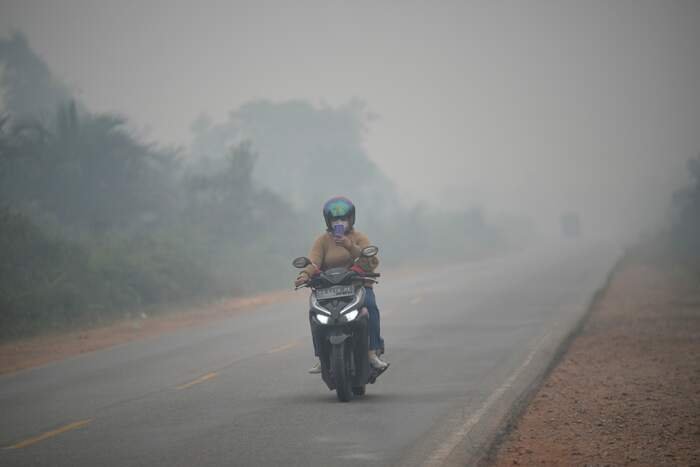
JAKARTA – A fierce environmental catastrophe is unfolding across Indonesia as out-of-control wildfires ravage the peatlands and forests of Borneo and Sumatra. The infernos, exacerbated by an intense El Niño-driven dry season, have created a desperate survival crisis for the region’s endangered orangutan population, forcing rescuers into a race against time to save the primates from a landscape turned to ash.
Among the victims is a young female Bornean orangutan named Novita. Rescuers from the Borneo Orangutan Survival Foundation discovered the 3-to-4-year-old ape clinging to a near-leafless tree in the scorched Katune forest. Surrounded by thick, blinding haze, she was found suffering from severe burns on her palms and feet—injuries likely sustained as she attempted to navigate the flaming forest floor to find refuge.
“She was in a dire state,” said Jamartin Sihite, chairman of the foundation. After being tranquilized and treated with oxygen and intravenous fluids, Novita was moved to a rehabilitation center in Nyaru Menteng. While her recovery will be long, conservationists remain cautiously optimistic that she can be rehabilitated and eventually released back into the wild.
The tragedy is far from isolated. Earlier this month, a 20-year-old male orangutan named Sampurna was discovered by residents near a palm oil plantation in West Kalimantan. He was found gasping for air, suffering from severe smoke inhalation, and died shortly after his rescue. Official data indicates that more than 270 wild animals have been rescued or relocated to safer habitats as of Saturday, but for many, help arrived too late.
The scale of the destruction is staggering. While government figures report over 202,000 hectares burned between January and July, independent satellite monitoring by the Nusantara Atlas project suggests the reality is much bleaker, estimating nearly 896,000 hectares—roughly 2.2 million acres—have been incinerated by the end of August. Water shortages in the affected areas have severely hampered firefighting efforts, prompting international intervention, including support from Japan.
The environmental impact has spiraled into a regional health crisis. Toxic haze from the fires has drifted hundreds of miles, crossing international borders and reaching as far as the Philippines. The situation in Malaysia became so dire last week that authorities in the Sarawak region declared an official emergency due to the hazardous air quality.
Andi Muhammad Kadhafi, head of Central Kalimantan’s Natural Resources Conservation Agency, warned that the crisis serves as a sobering reminder of the interconnectedness of human and animal welfare. “Wildfires do not only affect humans but can also threaten wildlife and their habitats,” Kadhafi said. “Fire prevention, habitat protection, monitoring and rapid response need to go hand in hand.”
As the dry season continues, conservation groups are doubling down on patrols, hoping to prevent further losses in a forest ecosystem already pushed to the brink.
Disclaimer: This content is auto-generated for informational purposes only.
Source: Read Original News