








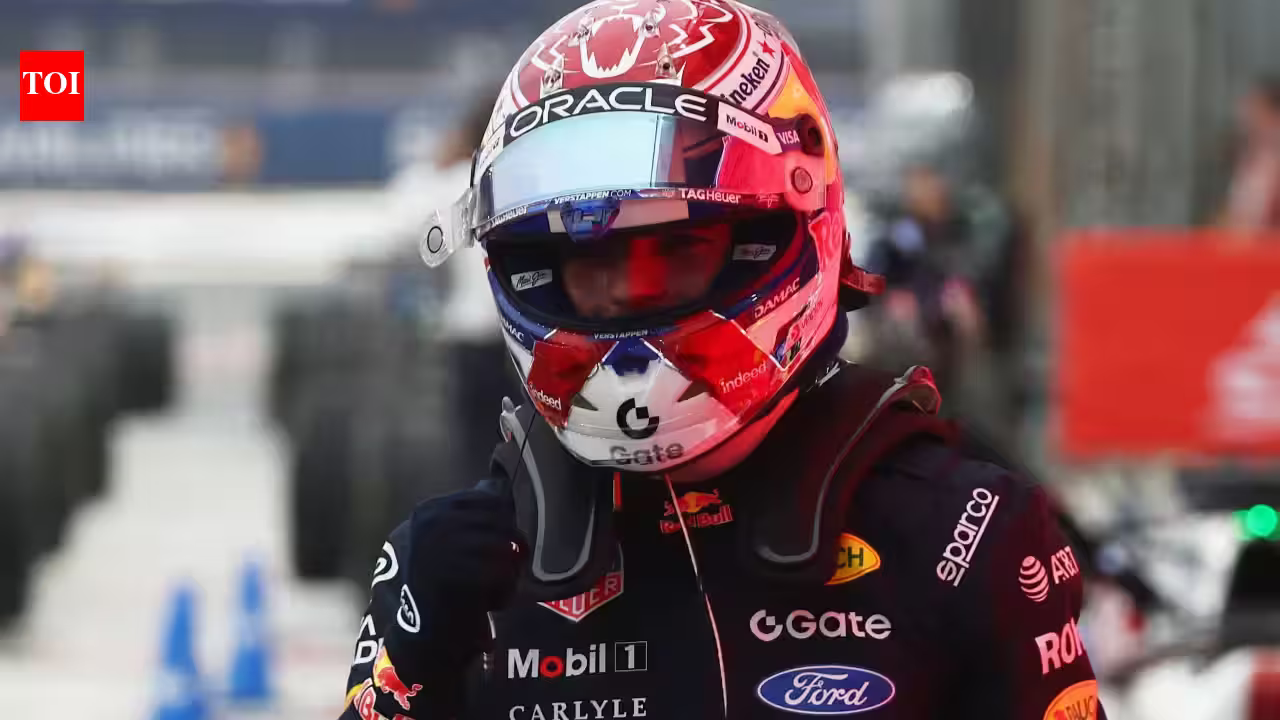
Marina Bay Circuit, Singapore — The lights went out on the inaugural Singapore Grand Prix sprint race, and while the spectacle delivered the high-octane drama synonymous with Formula 1, the aftermath has ignited a fierce debate regarding the future of the sport’s most iconic street circuits. Max Verstappen may have claimed the top step of the podium, but his post-race assessment was far from celebratory. The championship leader fired a warning shot at race organizers, suggesting that the current track layout is fundamentally incompatible with the sprint format.
“I think we shouldn’t host a sprint where you can’t pass,” Verstappen stated candidly to the press. For a driver who thrives on wheel-to-wheel combat, the 20-lap affair was an exercise in frustration. The Dutchman highlighted the mechanical limitations imposed by the circuit’s design, noting that the ‘overtake mode’—the primary tool for strategic maneuvering—offered negligible advantages on the short, twisting straights of Marina Bay. “You don’t really gain a lot on the straights,” he added. “We need to have a longer straight or a proper hairpin if we want to see genuine racing here.”
Verstappen and Hamilton Call for Track Evolution
Verstappen’s sentiments were echoed by seven-time world champion Lewis Hamilton, who acknowledged the unique allure of the Singapore venue while admitting its flaws. As one of the most technical and demanding tracks on the calendar, Marina Bay is often lauded for its aesthetic and the immense challenge it poses during a single qualifying lap. However, when it comes to race day, Hamilton believes the track’s inherent design makes overtakes a near-impossibility.
“It’s a great track to drive over a single lap and for qualifying,” Hamilton observed. “But there is essentially only one place where you could potentially get close to making a move. When you have a narrow street circuit that restricts flow, the entertainment value drops significantly.” The consensus among the veteran drivers is clear: unless the circuit architecture is modified to accommodate modern aerodynamic requirements for following and passing, the sprint format—which relies on rapid-fire action—will continue to feel stifled in the humidity of Singapore.
A Chaotic Canvas: Rain and Mechanical Mayhem
While the strategic racing left much to be desired, the weather gods provided a chaotic intervention. A sudden downpour turned the 20-lap sprint into a survival test, with the opening six laps neutralized behind the safety car. The damp asphalt acted as an equalizer, forcing drivers into errors that likely wouldn’t have occurred under dry conditions.
The carnage was immediate. George Russell, who had been charging toward the front, suffered a heart-stopping exit, slamming into the wall on the final corner of the opening lap. The retirement tally climbed steadily as the race progressed, culminating in a dramatic final-lap collision between the two McLaren drivers as they scrapped for the final spot on the podium. By the time the checkered flag fell, a staggering nine cars had been forced into early retirement.
Hamilton was quick to point out the irony of the spectacle. “I thought it was fun, but let’s be honest,” he admitted. “If it had been dry, that would have been probably the most boring race you’ve ever watched. It was the rain that made it exciting.” This admission highlights a growing concern for F1’s hierarchy: is the sport relying too heavily on external factors—like weather—to compensate for track layouts that fail to facilitate organic overtakes?
The Street Circuit Debate
The controversy has expanded beyond the specific configuration of Singapore, with Ferrari’s Charles Leclerc raising a broader philosophical question about the future of the sprint calendar. Leclerc, who secured a third-place finish, was vocal in his opposition to hosting sprints on city tracks altogether.
“I don’t think it makes sense to have any sprint races on city tracks in general,” Leclerc argued, pointing to the inherent risks and the lack of space for aggressive maneuvers. He noted that neither Singapore nor iconic venues like Monaco are optimized for the high-intensity, short-distance format.
The sport finds itself at a crossroads. While Formula 1 is actively pursuing wider global exposure, the balance between spectacle and sport remains a delicate one. Singapore is currently omitted from the 10-event sprint calendar for next season, offering a temporary reprieve from the debate. However, with other street circuits—most notably Monaco—slated to host future sprints, the calls for change from the paddock’s biggest stars are unlikely to go unheard.
For now, the paddock leaves Singapore with a trophy in the cabinet for Red Bull, but the real takeaway is a mandate for change. As Formula 1 continues to evolve, the challenge for architects and race directors will be to ensure that the pursuit of entertainment does not come at the cost of the very thing that drives the sport: the ability for the world’s best drivers to race each other, wheel-to-wheel, at every corner.
Disclaimer: This content is auto-generated for informational purposes only.
Source: Read Original News