








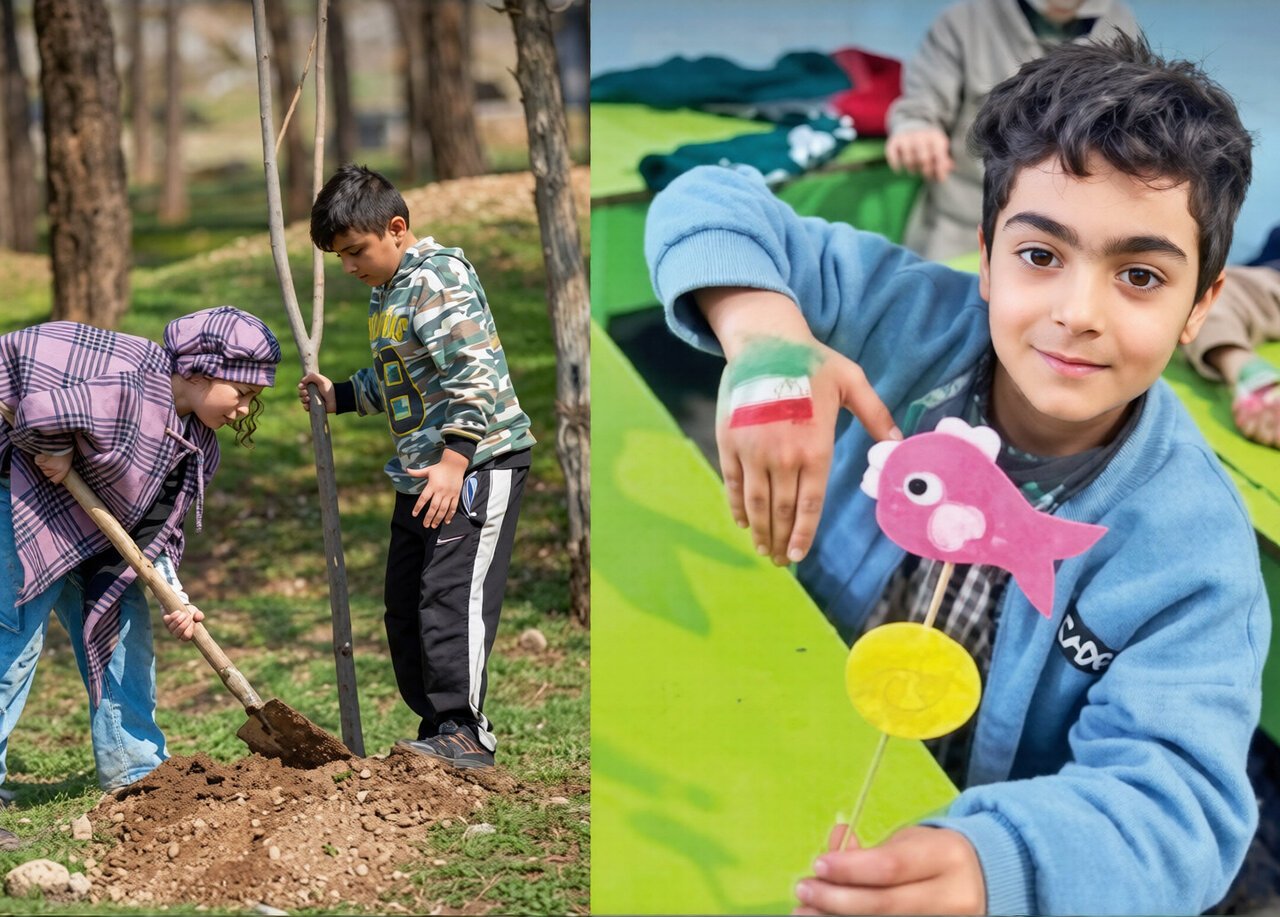
TEHRAN – The Department of Environment (DOE) has officially concluded its environmental storytelling project, “Makan’s Mission,” a national initiative dedicated to honoring the memory of students lost in the country’s conflicts while fostering a new generation of environmental stewards.
Launched in May in partnership with the Ministry of Education, the project commemorates Makan Nasiri, one of the 168 schoolchildren killed in a strike on Shajareh Tayyebeh Elementary School during the opening days of the imposed war. By framing Makan as a dedicated young environmentalist whose work remained unfinished, the project seeks to inspire current students to carry forward his legacy through active participation in nature conservation.
The initiative serves as a core component of a broader, long-standing effort to train “environmental helpers” across the nation. During the closing ceremony, Hadi Kiadaliri, the DOE’s deputy head for education and public participation, emphasized that the project is not merely an educational exercise, but a long-term investment in the nation’s future.
“The cultivation of good environmental habits must commence at a very young age,” Kiadaliri stated. “It is essential to strengthen children’s emotional affinity with nature, rather than simply providing them with raw data. True environmental literacy involves recognizing one’s personal role in tackling ecological issues.”
Kiadaliri noted that Iran faces significant environmental challenges, particularly as much of its territory is situated within arid and semi-arid climates. Despite these natural constraints, the country possesses vast biodiversity and ancient ecosystems that require robust protection. He argued that shifting societal behavior requires moving beyond mere advice; instead, children must be placed in environments where sustainable practices lead to positive outcomes, allowing them to take ownership of their choices.
“Investing in the younger generation is not an expenditure,” he added. “The more we invest in environmental education today, the less we will have to spend on mitigating environmental damage in the future.”
The Ministry of Education is currently working to align these goals with the national curriculum. Education Minister Alireza Kazemi stated that the ministry is prioritizing the integration of environmental teachings into textbooks from preschool through high school. Beyond formal academic instruction, the ministry plans to develop informal learning opportunities that encourage hands-on social participation.
“Education is the key to bringing about change in our culture and social life,” Kazemi noted. He expressed the ministry’s readiness to establish a vocational training center dedicated to environmental skills, noting that these programs are designed to reach not only students but also teachers and parents, creating a holistic ecosystem of environmental stewardship.
The initiative reflects a strategic pivot in Iran’s approach to ecological conservation. Mohammad Medadi, a senior DOE official, highlighted the historical inefficiency of short-term, incoherent teaching models. He argued that achieving sustainable development and national resilience requires the systematic institutionalization of eco-friendly lifestyles. According to Medadi, the goal is to shift from purely scientific training to a framework that incorporates ethical, cultural, and social dimensions of environmental responsibility.
As the “Makan’s Mission” project concludes, the DOE and the Ministry of Education have signaled their intent to continue this momentum. By institutionalizing environmental awareness, Iranian authorities hope to transform student “helpers” into lifelong advocates for the country’s unique natural heritage. With the integration of consistent, accessible training, the government aims to ensure that the next generation is prepared to navigate the environmental realities of a changing world with both knowledge and responsibility.
Disclaimer: This content is auto-generated for informational purposes only.
Source: Read Original News