







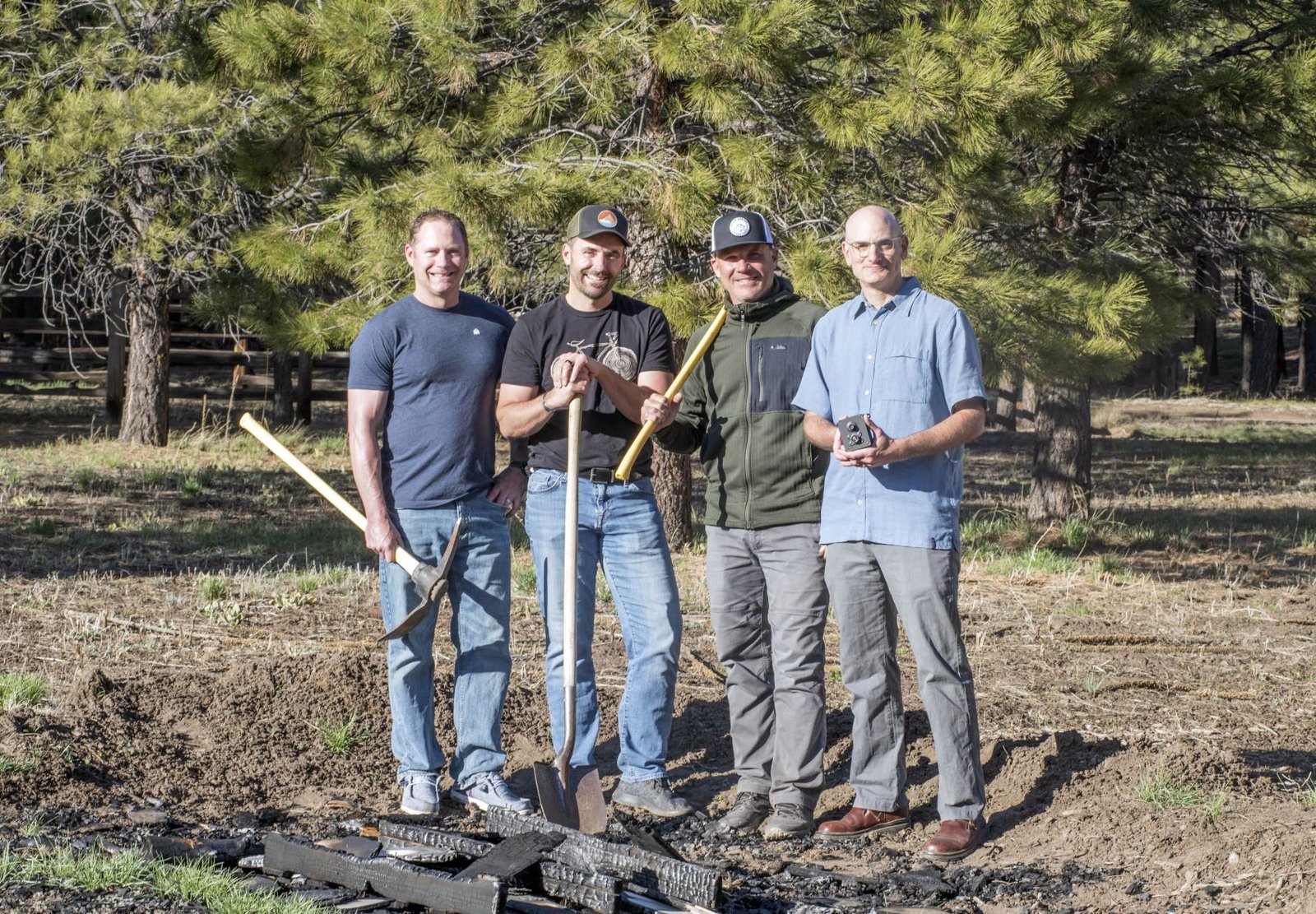
Flagstaff-based “Team Snuffed” has secured a major international victory, taking second place in the prestigious XPRIZE Wildfire Space-Based Wildfire Detection & Intelligence Competition. Out of an initial pool of 300 global competitors, the 20-member team emerged as the only U.S.-based group among the final eight, earning a $250,000 prize for their innovative, AI-driven approach to wildfire mitigation.
The project, which leverages advanced machine learning to provide early detection of wildfires, was spearheaded by aerospace engineer Cody Hartman and Northern Arizona University (NAU) professor David Trilling. By combining satellite imagery with sophisticated software algorithms, the team has developed a blueprint for a global detection system that could fundamentally change how fire agencies respond to climate-driven catastrophes.
## Leveraging Satellite Data and AI for Early Warning
The core of Team Snuffed’s solution is a platform called EmberSat, which utilizes artificial intelligence to process massive volumes of orbital satellite data in real time. Rather than relying on human observation, which is often delayed by smoke or remote terrain, EmberSat scans for environmental shifts that indicate a budding blaze.
During the competition’s rigorous testing phase, the team monitored over 300,000 square miles of territory in New South Wales, Australia. The software successfully processed satellite observations to flag potential ignition points, providing fire managers with actionable, contextual intelligence. By synthesizing data into a single, intuitive interface, the team aims to reduce the “cognitive load” on first responders, allowing them to prioritize resources and suppress fires before they scale into uncontrollable disasters.
## Bridging the Gap Between Tech and Field Operations
What sets Team Snuffed apart from other entries is its collaborative foundation. The group integrated the technical expertise of astronomers—who are already skilled at filtering vast datasets to track near-Earth asteroids—with the practical experience of local firefighters.
This interdisciplinary approach ensures that the technology does not just generate data, but provides solutions that fit into the high-pressure environment of wildfire management. Flagstaff Fire Battalion Chief Mike Felts, a key member of the team, noted that the wildfire sector has historically been slow to adopt modern tech. By working alongside fire scientists and engineers, the team ensured that EmberSat’s output is directly applicable to the daily, life-saving decisions made by fire crews on the ground.
## The Future of Climate-Resilient Infrastructure
While the $100 million estimated cost of full implementation is significant, the team highlights that it is a fraction of the economic burden caused by wildfires, which the U.S. Congress has estimated costs the domestic economy hundreds of billions of dollars annually.
For the team, the XPRIZE recognition serves as more than just a trophy; it is a catalyst for future investment and deployment. Although the specific competition has concluded, the members are actively seeking opportunities to scale their software. They believe that their success is a testament to the talent within the Flagstaff STEM community and a model for how public-private partnerships can leverage emerging tech to address systemic environmental threats.
“This milestone just increases the possibility that we might be able to do something out there,” said David Trilling, the team’s project lead. As wildfires continue to increase in frequency and intensity globally, Team Snuffed hopes to transition their research-grade system into an operational standard that protects forests and communities worldwide.
Disclaimer: This content is auto-generated for informational purposes only.
Source: Read Original News