








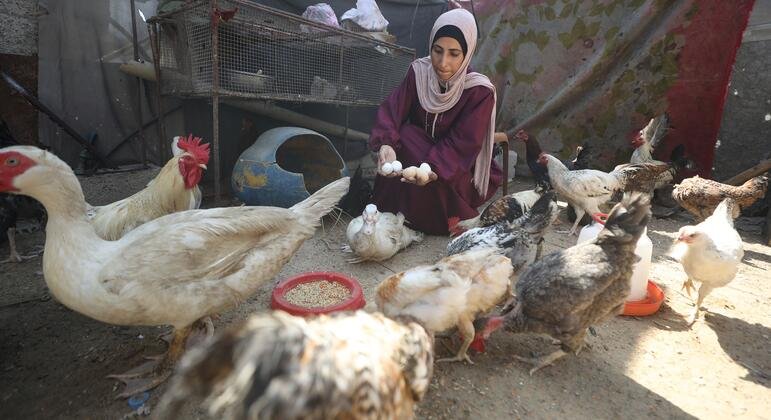
The ongoing conflict in Gaza has shattered the region’s economic foundation, leaving local markets in tatters and the cost of essential goods skyrocketing. Yet, amidst this profound instability, a quiet revolution is taking place. Women across Gaza are leveraging grit, community support, and international partnerships to rebuild their livelihoods, transforming from survivors into entrepreneurs.
Navigating Chaos with Innovation
Running a business in a war zone requires more than just capital; it demands an ability to pivot under extreme pressure. For 35-year-old Nidaa in Khan Younis, her passion for animal husbandry has become a lifeline for her family, including two brothers with disabilities. Despite the trauma of displacement and the loss of livestock during periods of famine, Nidaa has persisted.
Her story is mirrored by Hanaa, a 49-year-old in Gaza City who lost her husband and son during the war. After the destruction of her family’s dairy business, she chose to restart from scratch. Today, she navigates the constant threat of power outages—which can spoil inventory—by relying on sheer determination and strategic grants from the UN Development Programme (UNDP). These women are not merely making ends meet; they are utilizing training and equipment to professionalize their work, proving that economic activity can persist even in the most volatile conditions.
Scaling Up Through Skills and Technology
For many Gazan women, the path forward involves mastering trades that were previously inaccessible or overlooked. Hanin, a 36-year-old participant in a UNDP vocational program, is currently training in carpentry. She recognizes that in a post-conflict environment, the demand for furniture and repair skills is surging, creating a unique gap in the market.
This educational initiative is part of a broader effort to provide over 200 trainees with skills in sectors ranging from recycling and compost production to digital-age competencies like data science and graphic design. This focus on digital literacy and modern vocational training is crucial. As the world moves toward an increasingly digitized economy, integrating these skills allows women to look beyond local physical markets and envision a future where their services can scale. Whether through managing inventory with better data or utilizing design software to grow a small brand, these women are adopting the tools necessary for modern entrepreneurship.
The Role of Global Support and Infrastructure
The success of these micro-enterprises hinges on systemic support. The UNDP’s Gaza Neighbourhood Approach highlights that individual business success cannot exist in a vacuum; it requires stable energy, access to clean water, and functioning supply chains.
While these women are building the foundations of a locally driven recovery, their efforts are currently bolstered by international interventions. Since late 2023, the UNDP has facilitated over 6,000 emergency employment opportunities and provided critical grants to small and medium enterprises. This multi-layered support—combining financial aid with vocational training—acts as a catalyst. By focusing on women-led businesses, these programs are doing more than providing immediate relief; they are preserving the region’s productive capacity.
As Gaza looks toward a future of reconstruction, these women are proving that resilience is not just about endurance—it is about adaptation. By learning new trades, embracing new technologies, and leaning on community-led networks, they are building a bridge to economic stability, ensuring that when the conflict finally ends, the machinery of local commerce will be ready to roar back to life. Their work serves as a testament to the idea that even in the face of total systemic collapse, the human capacity for innovation and economic restoration remains unbroken.
Disclaimer: This content is auto-generated for informational purposes only.
Source: Read Original News