








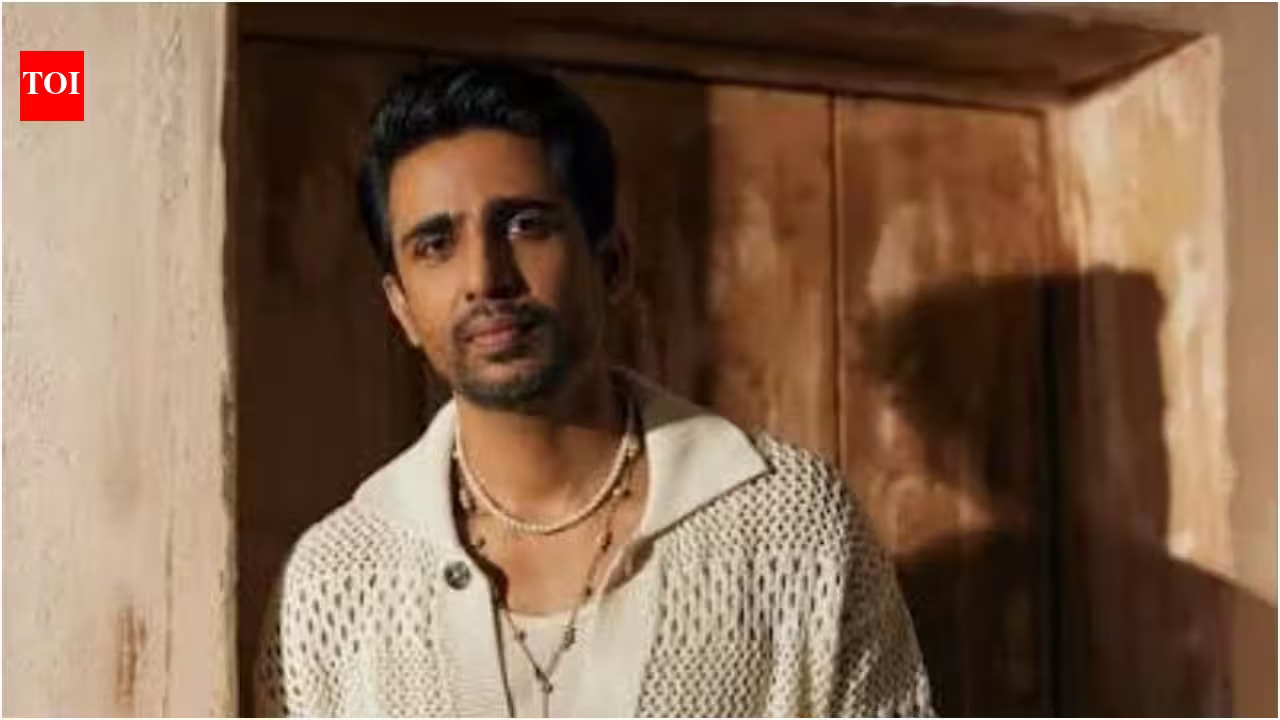
In the high-stakes arena of Indian cinema, where mythology often serves as the bedrock of cultural identity, the mere mention of a big-budget Ramayana adaptation is enough to spark a national debate. As Nitesh Tiwari’s gargantuan project—starring Ranbir Kapoor as Lord Ram—continues to dominate industry chatter, it isn’t just fans weighing in. The fraternity itself is taking stock, and among them is Gulshan Devaiah, a performer known for his nuanced, often jagged-edged portrayals, most recently seen as the antagonist in the visceral Kantara Chapter 1.
Devaiah, who has built a career on defying tropes, recently sat down to dissect the intricacies of bringing divine figures from the pages of ancient scripture to the stark reality of the silver screen. His take? It’s not the difficulty of the performance that matters; it’s the shadow of the past that actors must learn to navigate.
The Mirage of Mythology: Beyond the “Difficult” Label
When asked if the act of portraying mythological icons presents a unique hurdle compared to standard fiction, Devaiah is refreshingly pragmatic. To him, the audience is far more sophisticated than we give them credit for. “People come to theatres with the mindset that it’s make-believe,” he notes. The challenge isn’t convincing the audience of the character’s literal existence, but rather grounding the emotional resonance of the narrative.
For Devaiah, the art lies in the technical execution—the cinematography, the staging, and the performance—that maintains the “illusion.” However, he concedes that there is a tipping point. When a character is perceived not just as a historical figure but as a vessel of divinity, the scrutiny intensifies. “Certain characters are very revered and divine, like Shivaji Maharaj,” he explains. “To interpret him becomes tricky.” It is this specific vulnerability that sits at the center of every casting decision for a project as monumental as the Ramayana.
The Ghost of Nostalgia: Living Under the Shadow of the Past
If there is one hurdle that Ranbir Kapoor and his team must clear, it is the formidable shadow of Ramanand Sagar’s iconic 1980s television series. For an entire generation, Arun Govil’s portrayal of Lord Ram is not merely a performance; it is a fixed point in their cultural memory.
Devaiah acknowledges this “baggage of expectation” with a veteran’s perspective. He understands that every modern iteration will inevitably be measured against the benchmarks of nostalgia. When you tackle a figure like Maryada Purushottam, you aren’t just acting against a script; you are acting against the collective childhood memory of a nation. This is the “tricky” aspect he refers to—balancing a contemporary cinematic vision with a deep-seated, often rigid, emotional attachment from the audience.
Dreaming Big: The Global Ambition of Indian Epics
Beyond the casting choices and the costume designs, there is the larger, more ambitious goal of the film: to translate the Ramayana into a truly global cultural product. Devaiah is an ardent supporter of this expansionist mindset. He argues that Indian cinema should no longer be content with playing exclusively in its own backyard.
“I think this film caters to a much larger audience, to the Indian diaspora and to the non-Indian diaspora audience as well,” Devaiah asserts. He pushes back against the cynicism that often greets big-budget attempts to reach international markets, suggesting that the drive for a global footprint is, by itself, a virtue. In his view, comparing Indian industry standards to the reach of Hollywood isn’t just appropriate—it’s the logical next step for a robust, evolving film industry.
The ‘RRR’ Effect: Rallying Behind the Vision
Perhaps the most telling part of Devaiah’s commentary is his nod to S.S. Rajamouli’s RRR. Even though the actor admits, with characteristic candor, that the film didn’t personally “vibe” with him, he recognizes its importance as a structural milestone for Indian cinema.
“One should rally behind it,” he insists. “It is good for Indian films that at least Rajamouli has his foot in the door, and more will follow.” For Devaiah, supporting a project like Ramayana—even if you have reservations—is about supporting the infrastructure of ambition. If a film is rooted in Indian culture but packaged with a global sheen, it serves as a bridge, making it easier for subsequent filmmakers to walk through the door that the pioneers have kicked open. It is a pragmatic, big-picture approach: success for one major project often clears the path for ten smaller, more unconventional films to find their audience abroad.
The Road Ahead: From Myth to Modernity
As the industry waits for the two-part Ramayana project to unfold—beginning with its targeted Diwali 2026 release—the anticipation remains a volatile mix of curiosity and protective fervor. With Ranbir Kapoor in the lead, Sai Pallavi as Sita, and Yash stepping into the formidable boots of Ravana, the film is poised to be an unprecedented event in Indian pop culture.
For Gulshan Devaiah, the focus remains firmly on his own craft, even as he lends his voice to the conversation surrounding his peers. With his upcoming release Little Thomas, helmed by Kaushal Oza and co-starring the formidable Rasika Dugal, Devaiah is moving from the high-octane, mythical terrain of Kantara back to the intimate, character-driven storytelling he favors.
As the industry gears up for the eventual arrival of Ramayana, Devaiah’s message remains clear: support the ambition, engage with the craft, and acknowledge that the challenge of portraying the divine is perhaps the ultimate test of an actor’s grace. Whether the audience will grant that “benefit of the doubt” he speaks of remains to be seen, but the drive to elevate Indian storytelling to the global stage is a mission he clearly believes is worth fighting for.
Disclaimer: This content is auto-generated for informational purposes only.
Source: Read Original News