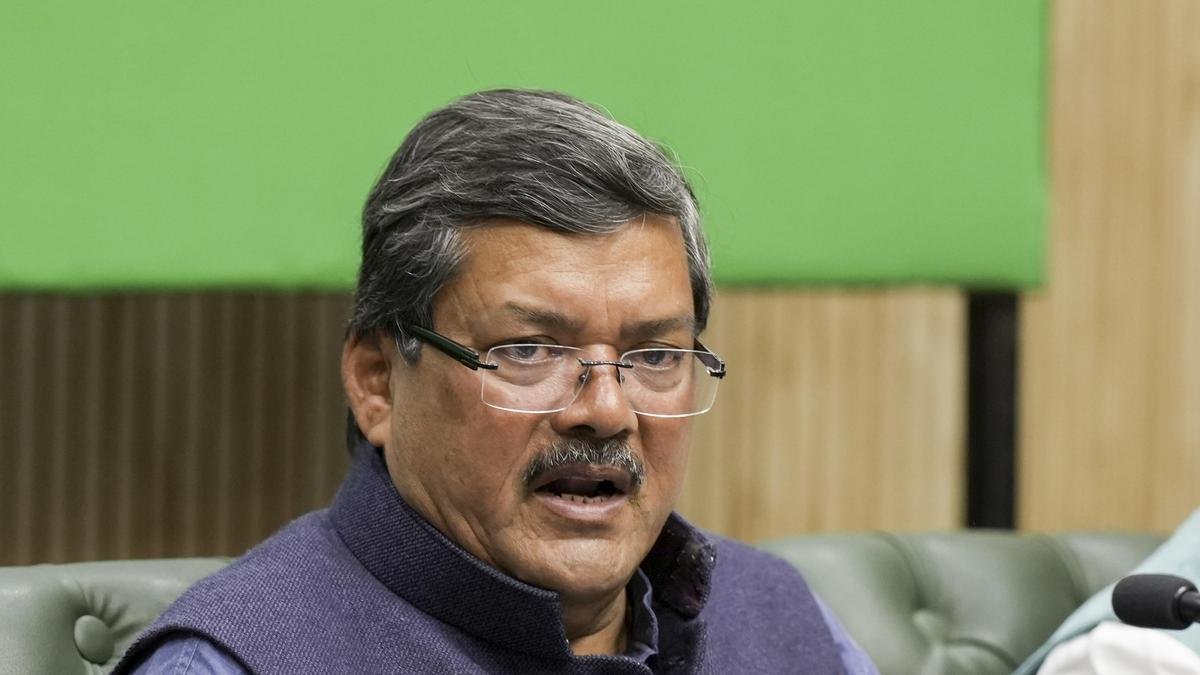





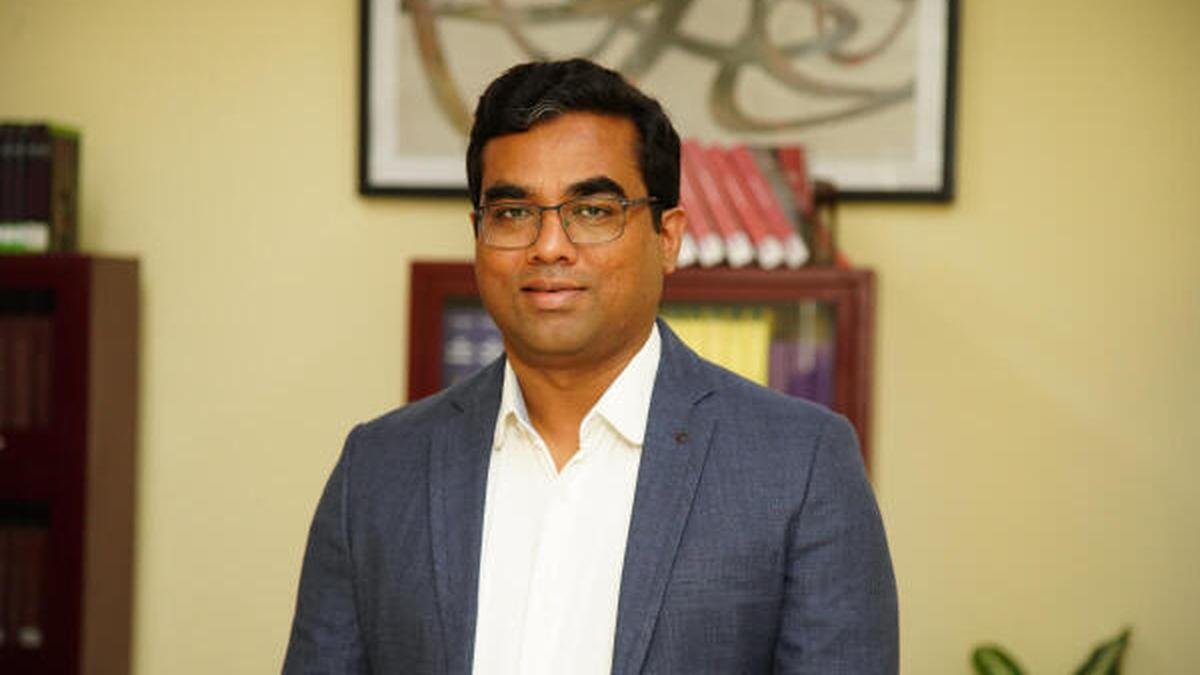
The 2026 Ramanujan Prize has been awarded to Mahesh Kakde, a Professor in the Department of Mathematics at the Indian Institute of Science (IISc), Bengaluru. A distinguished researcher in algebraic number theory, Professor Kakde is the fifth Indian to receive this prestigious international honor, which is awarded annually by the International Centre for Theoretical Physics (ICTP) and the International Mathematical Union (IMU) to recognize exceptional young mathematicians from developing nations.
His recognition stems from his fundamental contributions to non-commutative Iwasawa theory and his groundbreaking work on the Gross-Stark and Brumer-Stark conjectures—research that holds significant implications for Hilbert’s 12th problem, one of the most famous unsolved challenges in mathematics posed in 1900.
From Curiosity to Academic Excellence
Born in 1983 in Akola, Maharashtra, Prof. Kakde’s journey was defined by a natural inquisitiveness that transcended standard classroom boundaries. He recalls solving textbook problems well in advance of his school curriculum, driven by the realization that mathematics requires only a solid grasp of definitions to begin exploration. His early academic trajectory was shaped by mentors who encouraged him to look beyond his high school syllabus and pursue competitive platforms like the Math Olympiads. His path eventually led him to the Indian Statistical Institute (ISI), Bengaluru, and later to the University of Cambridge, where he earned his Ph.D. under the mentorship of Professor John Coates.
The “Chicken-and-Egg” Challenge of Mathematical Education
Reflecting on India’s academic landscape, Prof. Kakde observes that while the last quarter-century has seen a healthy expansion of institutions like the IITs and IISERs, the infrastructure remains modest relative to the country’s population. He identifies a “chicken-and-egg” dilemma: the need to train a large, highly skilled workforce to staff new institutions, while simultaneously building those institutions to facilitate that very training.
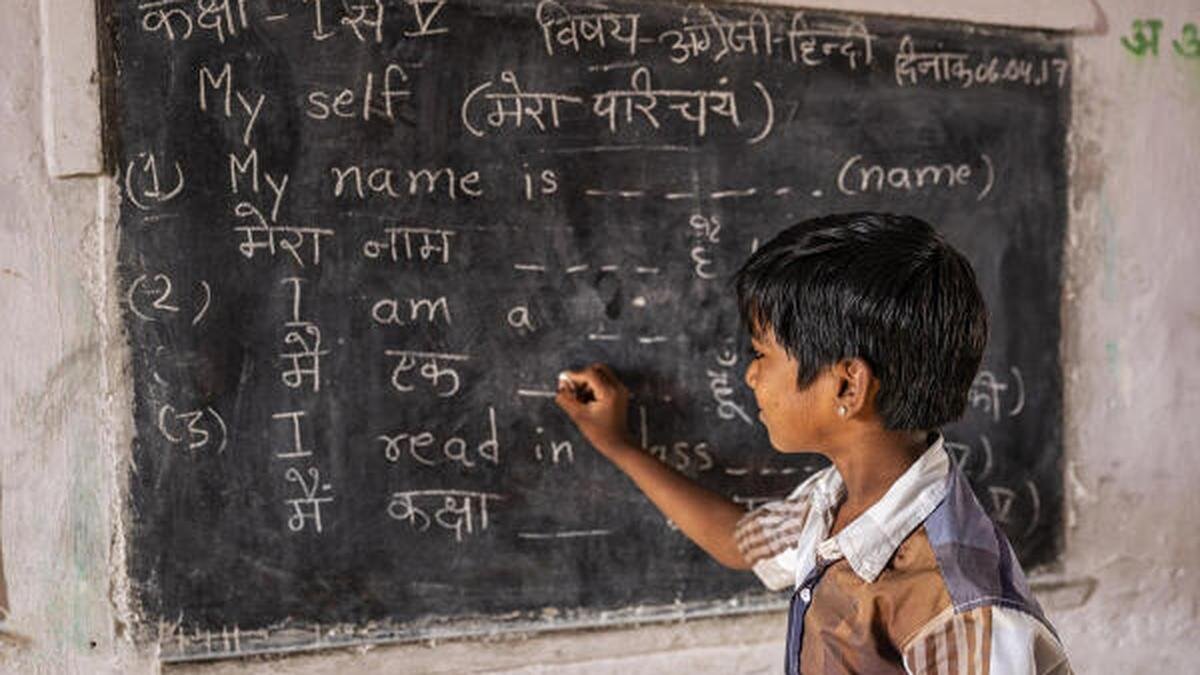
He emphasizes that a robust mathematical ecosystem is built on student enthusiasm and an atmosphere that rewards deep, conceptual engagement. However, he voices significant concern regarding the current assessment culture in India, particularly the heavy reliance on multiple-choice questions (MCQs) in university entrance examinations.
Reforming Assessment for Deeper Understanding
Prof. Kakde argues that the systemic obsession with MCQs acts as a deterrent to the open-ended exploration essential for higher-level mathematics. While he commends the NCERT textbooks for including thought-provoking, open-ended exercises, he notes that these are often ignored by both teachers and students because they do not align with the formats of high-stakes entrance tests. According to him, this prioritization of speed and standard answers over creative problem-solving stifles the development of mathematical maturity early in a student’s career.
He advocates for a shift toward assessment models that incentivize critical thinking and long-form logical deduction, which he believes are the bedrock of true scientific research.
Addressing Systemic Inequalities
Beyond curriculum reform, Prof. Kakde has turned his attention to the gender imbalance in the mathematical sciences—a “universal problem” that he insists requires structural intervention. He suggests that India can learn from European models of institutional support, such as normalizing career breaks for childcare and providing robust maternity leave policies.
By removing the stigma associated with these breaks, institutions can create a more equitable environment for women researchers. While he acknowledges that these policies are not a complete panacea, he views them as critical, non-negotiable steps toward fostering a more inclusive and diverse scientific community.
For Prof. Kakde, the path forward is clear: success in mathematics requires a balance of curiosity-driven research at institutions like the IISc and a national commitment to fostering a culture of exploration that values the process of inquiry as much as the final result.
Disclaimer: This content is auto-generated for informational purposes only.
Source: Read Original News