








A Century of the UPSC: Time for a Pedagogical and Structural Overhaul
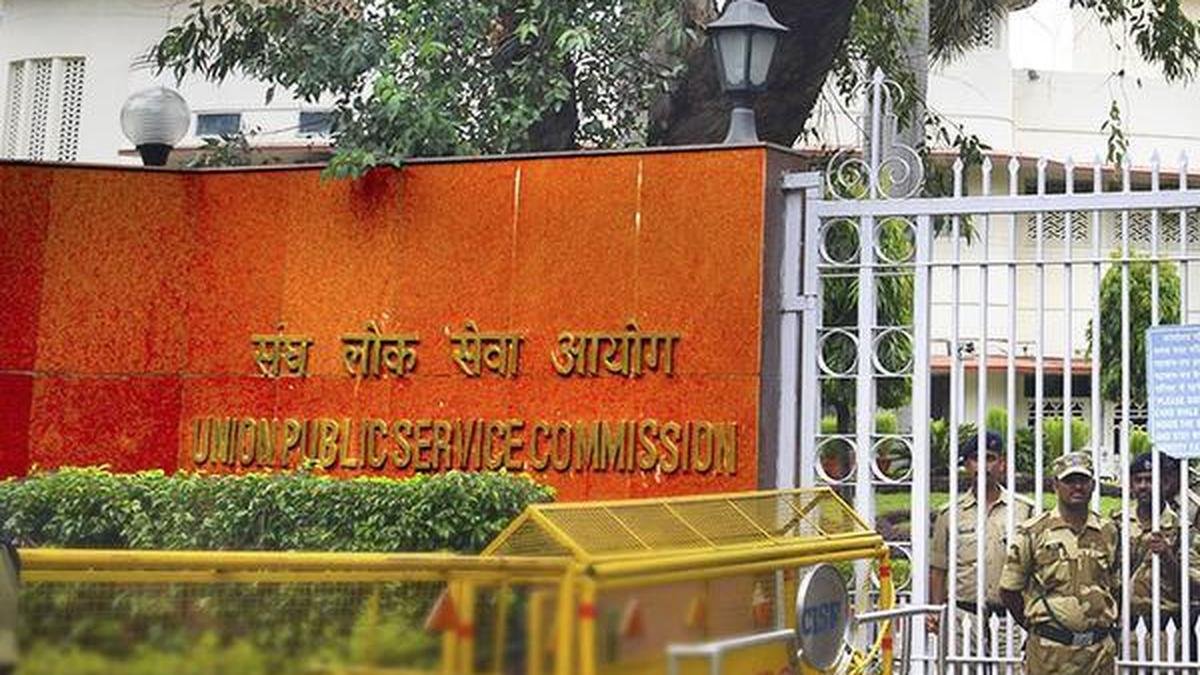
The Union Public Service Commission (UPSC) marked its centenary on October 1, 2026. For a hundred years, this institution has functioned as the primary gateway to India’s bureaucratic machinery. However, as it enters its second century, the UPSC finds itself at a critical crossroads. While it continues to attract nearly a million applicants annually for roughly 1,000 positions, the fundamental design of its examination system remains anchored in an era that predates the digital revolution and the complexities of modern governance.
The Resilience of an Outdated Ethos
Despite undergoing scrutiny by over nine expert committees, the UPSC’s assessment model has shown remarkable resistance to change. The current Civil Services Examination (CSE) prioritizes rote memory, vast data accumulation, and the ability to endure extreme psychological stress. With a success rate of approximately 0.2%, the exam functions less as a meritocratic assessment of contemporary administrative aptitude and more as a test of attrition.
In the age of Artificial Intelligence, where computational power handles data processing, the human value of an administrator lies in adaptability, specialized domain knowledge, and the capacity for continuous learning. Currently, the UPSC’s pedagogical approach fails to test these essential 21st-century competencies, continuing to reward the “all-rounder” who can memorize static information rather than the specialist who can navigate dynamic, data-driven challenges.
Reimagining the Examination Framework
To remain relevant, the Commission must address the “three pillars” of reform: age, competency, and well-being. The current system encourages a cycle of repeated attempts, often consuming a decade of a candidate’s most productive years. This “lost decade” represents a significant opportunity cost for both the individual and the nation.
Experts propose shifting away from the age-based eligibility cap—which often triggers political debates—toward a more surgical approach. By making the Preliminary examination a “qualifying” round valid for two years and capping the number of attempts over a fixed timeframe (such as two years, whichever is later), the Commission could reduce the “chimera-chasing” culture currently prevalent among youth.
Competency-Based Recruitment
A radical restructuring of the Mains examination is equally vital. The current generalized format should be replaced by a tiered system that evaluates role-specific domain knowledge. Whether for civil, technical, or social welfare departments, recruitment should reflect the unique competencies required for the post. By splitting the Mains into service-specific tiers, the UPSC could not only ensure better talent-job alignment but also compress the unwieldy, year-long examination cycle into a focused four-month period.
Transparency and the “Jury” System
The well-being and psychological health of aspirants depend heavily on the perceived fairness of the selection process. The current interview stage, often criticized for its opaqueness, remains a point of contention. To restore public trust, the Commission could adopt a jury system for interviews, utilizing randomly generated panels drawn from a diverse pool of qualified professionals. Leveraging AI to audit and identify systemic disparities in marking across these boards would ensure that the final assessment is not just seen as fair, but is mathematically verified as such.
Looking Toward the Future
As India’s median age evolves and the demand for a more agile public service grows, the UPSC must look beyond the traditional “generalist” model. Transitioning toward a system that allows for lateral, mid-career entry from the private sector would infuse the bureaucracy with fresh perspectives and contemporary technical expertise.
The UPSC’s first 100 years were defined by stability and the maintenance of a colonial administrative legacy. Its next 100 years must be defined by flexibility, equity, and a profound commitment to preparing a public service that is capable of governing in an era defined by climate instability, rapid technological change, and the needs of a young, aspiring nation. The mandate is clear: the institution that guards the gateway to the state must itself be the first to undergo modern evolution.
Disclaimer: This content is auto-generated for informational purposes only.
Source: Read Original News