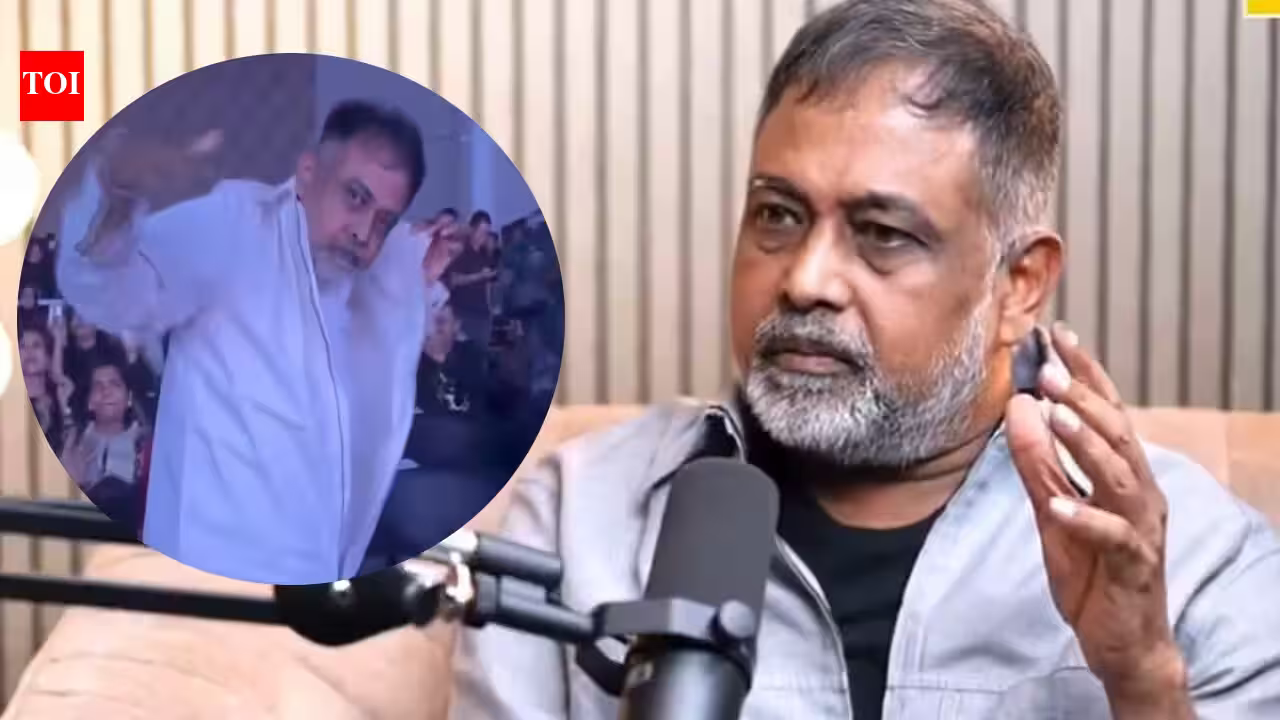










The dust has finally begun to settle on the Onam theatrical releases, but for director Vysakh, the conversation surrounding his latest outing, Khalifa, is far from over. In a move that has sparked renewed discourse across Malayalam cinema circles, the filmmaker recently took to social media to amplify a fan’s candid assessment of the film’s lackluster box-office performance, reigniting the contentious debate over “review bombing” and the increasingly polarized reception of star-driven vehicles.
While Khalifa, starring the formidable Prithviraj Sukumaran, arrived with a gargantuan level of pre-release hype, its reality at the box office told a different, more somber story. Now, with the film having migrated to OTT platforms, the post-mortem has moved from the trade analysts’ spreadsheets to the more visceral arena of audience sentiment.
When Silence Isn’t Enough: The Director’s Digital Stance
In an industry where silence is often the preferred strategy for handling an underperforming film, Vysakh’s decision to share a fan’s Instagram Story is a rare, bold intervention. The post in question offers a diagnostic view of Khalifa’s struggles, explicitly citing a concerted campaign of negativity and a persistent, underlying hostility directed toward Prithviraj Sukumaran as the primary culprits.
By sharing this perspective, Vysakh hasn’t necessarily issued a formal statement, but he has signaled his endorsement of the sentiment. It’s a classic move in the modern creator’s playbook: using the audience to voice what the director perhaps cannot—that the film wasn’t judged on its own merits, but was instead caught in the crossfire of online factionalism. Whether one agrees with the fan’s assessment or sees it as an attempt to deflect from structural flaws, the director has successfully forced a conversation about the external pressures that modern stars now face before a single ticket is even sold.
The ‘Prithviraj Factor’ and the Toxicity of Online Fandom
The fan’s review, now amplified by the director, touches upon a nerve that has been throbbing in the Malayalam film industry for some time: the targeting of specific A-listers. Prithviraj Sukumaran, known for his cerebral approach to cinema and his outspoken nature, has often been a lightning rod for such friction.
The argument presented is that the “review bombing” phenomenon is no longer just about critiquing a movie; it has morphed into a coordinated effort to undermine the commercial viability of stars who occupy a certain stature. The fan went as far as to posit that if Khalifa had been anchored by a different lead actor, the reception—and by extension, the theatrical outcome—might have looked vastly different. It’s a provocative claim, one that challenges the audience to look beyond the “hit or flop” binary and consider the cultural ecosystem in which these films exist. Is there a genuine systemic bias against Prithviraj? Or is this merely a convenient narrative to explain away the fatigue that even the most “mass” of entertainers can suffer?
The Defense of the ‘Mass’ Entertainer
Setting aside the toxicity of social media discourse, the fan’s review also serves as a spirited defense of the craft behind Khalifa. In an era where “realistic,” “grounded,” and “minimalist” are the labels favored by critics and film festival circles, the fan argued for the continued relevance of the larger-than-life, high-octane entertainer.
The review lauded the film’s technical prowess—specifically highlighting the music, editing, and the signature directorial flair that Vysakh is known for. The central thesis here is that Khalifa belongs to a specific breed of cinema that values plot twists, stylized sequences, and a certain “old-school” grandiosity. The fan expressed a palpable dissatisfaction that such an earnest attempt at a mainstream crowd-pleaser was dismissed so readily. It brings to light a fundamental tension in today’s movie market: are audiences becoming too cynical to enjoy a traditional mass film, or have the filmmakers behind such projects failed to evolve their language for a more discerning, internet-savvy generation?
The Shift to OTT: A Second Life for the Underdog
As Khalifa makes its transition to OTT platforms, the stakes change. Without the pressure of the Friday box-office opening, the film is finally finding its intended audience in a more relaxed viewing environment. Available across multiple Indian languages, the film is now being evaluated outside the heated, immediate context of its theatrical release.
For Jinu Abraham, who both wrote and produced the film alongside his collaboration with Vysakh, the OTT debut represents a vital second wind. It allows the film to be judged in isolation, away from the noise of competing releases—like the Bethlehem Kudumba Unit release, which the fan noted as a factor in the original theatrical crowding. History has shown us that films dismissed by critics and audiences during their theatrical run often find a “cult” status or a fairer reappraisal once they hit streaming services. Whether Khalifa achieves this long-term redemption remains to be seen, but the current online discourse has certainly piqued interest.
A Mirror to the Industry
At the end of the day, the debate ignited by Vysakh’s social media post is not just about Khalifa. It is a mirror held up to the industry at large. We are in a transitional phase where the relationship between the star, the filmmaker, the critic, and the fan has become increasingly blurred and, at times, volatile.
Vysakh’s choice to champion this specific review—a review that blames external factors for internal struggles—is a testament to his belief that his work deserved a cleaner playing field. Whether or not one agrees with the fan’s assessment, it is undeniable that the conversation around Khalifa has shifted from “was the movie good?” to “was the movie treated fairly?” In the digital age, that distinction has become just as significant to a film’s legacy as the box office figures themselves. As we watch this debate unfold, one thing is clear: the theater is no longer the final curtain. The real story of a film now begins when the audience hits ‘play’ on their devices, and in this new era, the directors are just as vocal as the critics.
Disclaimer: This content is auto-generated for informational purposes only.
Source: Read Original News