







Delhi Under Siege: State Clamps Down as Protests Against Electoral Rolls Escalate
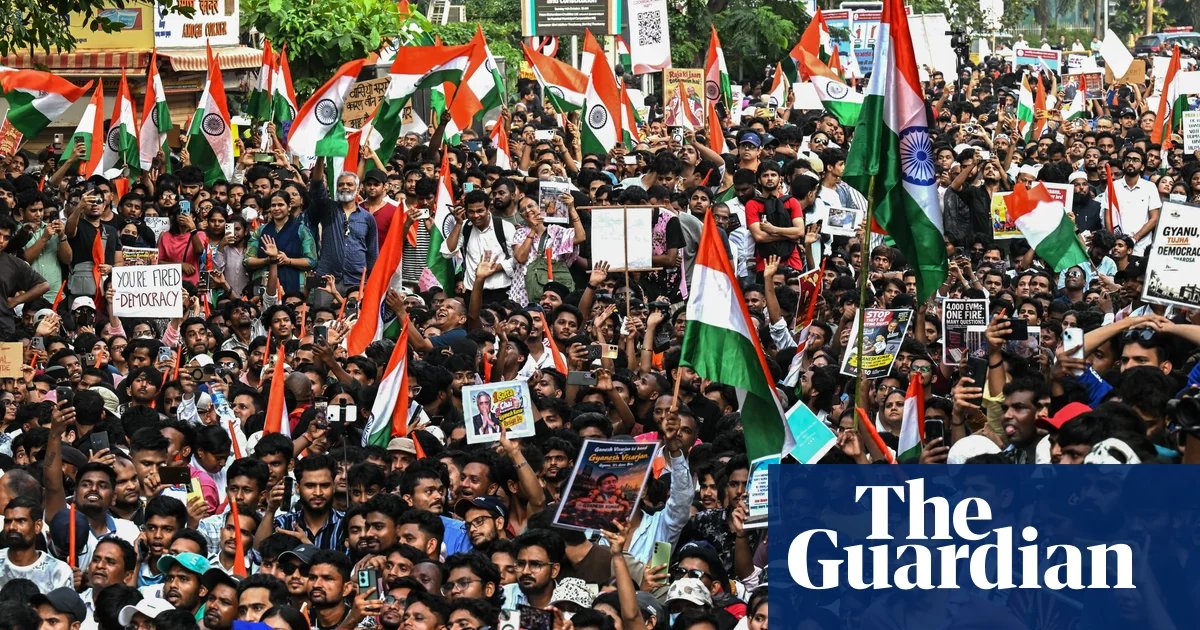
New Delhi has been transformed into a fortress as the central government intensifies its crackdown on widespread public unrest. Over the past week, the capital has faced a severe security lockdown, with authorities deploying paramilitary forces, shuttering dozens of metro stations, and cancelling hundreds of train services to prevent demonstrators from reaching the city center.
The current wave of indignation stems from a controversial Special Intensive Revision (SIR) of electoral rolls, which has resulted in the names of approximately 130 million citizens being removed from the voter register. Protesters, spearheaded by the Cockroach Janta party, are demanding the immediate resignation of Chief Election Commissioner (CEC) Gyanesh Kumar.
A Militarised Capital
The scale of the government’s response has drawn sharp condemnation from rights activists and opposition leaders. During the weekend, the city witnessed widespread detentions. Founders of the Cockroach Janta party were apprehended after deboarding an Air India flight, while scores of students, activists, and even journalists were swept up in police dragnets. In one incident, a Supreme Court lawyer was forcibly removed by officers, his clothing torn in the struggle.
The security dragnet extended beyond the capital, reaching Mumbai, where Tushar Gandhi, the great-grandson of Mahatma Gandhi, was taken into custody to prevent his participation in solidarity demonstrations. Meanwhile, Delhi police have de-notified Jantar Mantar—a historic site for public dissent—as an authorized protest zone.
Political commentator Yogendra Yadav, who was among those detained, described the atmosphere as a display of state-sponsored terror. “I have witnessed four decades of Indian politics, yet I have never seen such extreme preparations to suppress a demonstration,” he noted.
Crisis at the Election Commission
The controversy surrounding the SIR process has been amplified by internal reports suggesting that the Election Commission of India (ECI) is deeply divided. An investigation revealed that two fellow commissioners, Sukhbir Singh Sandhu and Vivek Joshi, had voiced significant objections regarding the methods used in the electoral revision. While the ECI has publicly stated that differing views are merely part of their decision-making process, critics argue the system is being weaponized to disenfranchise marginalized groups.
Former Election Commissioner Ashok Lavasa characterized the current SIR procedures as unprecedented and damaging to the fabric of Indian democracy. He argued that the ECI has historically operated as an inclusive body, but has now shifted to a “hostile” administrative stance that complicates the basic rights of voters.
The Government’s Defense
The Bharatiya Janata Party (BJP) has remained defiant, dismissing the protests as an attempt by the opposition to incite anarchy following electoral losses. Spokesperson Ravi Shankar Prasad asserted that the country is governed by parliamentary processes rather than street agitation.
However, the political stakes continue to rise. Several state assemblies, including Kerelam, have passed formal resolutions calling for the CEC’s removal, while opposition figures—most notably Rahul and Priyanka Gandhi—have become the faces of a nationwide movement against what they label as “democratic capture.” As the government refuses to pivot, the resolve of the demonstrators seems to be hardening. With activists vowing to continue their flash protests, the standoff between the state and those demanding a transparent electoral process shows no signs of resolution, signaling a volatile period ahead for Indian democracy.
Disclaimer: This content is auto-generated for informational purposes only.
Source: Read Original News