









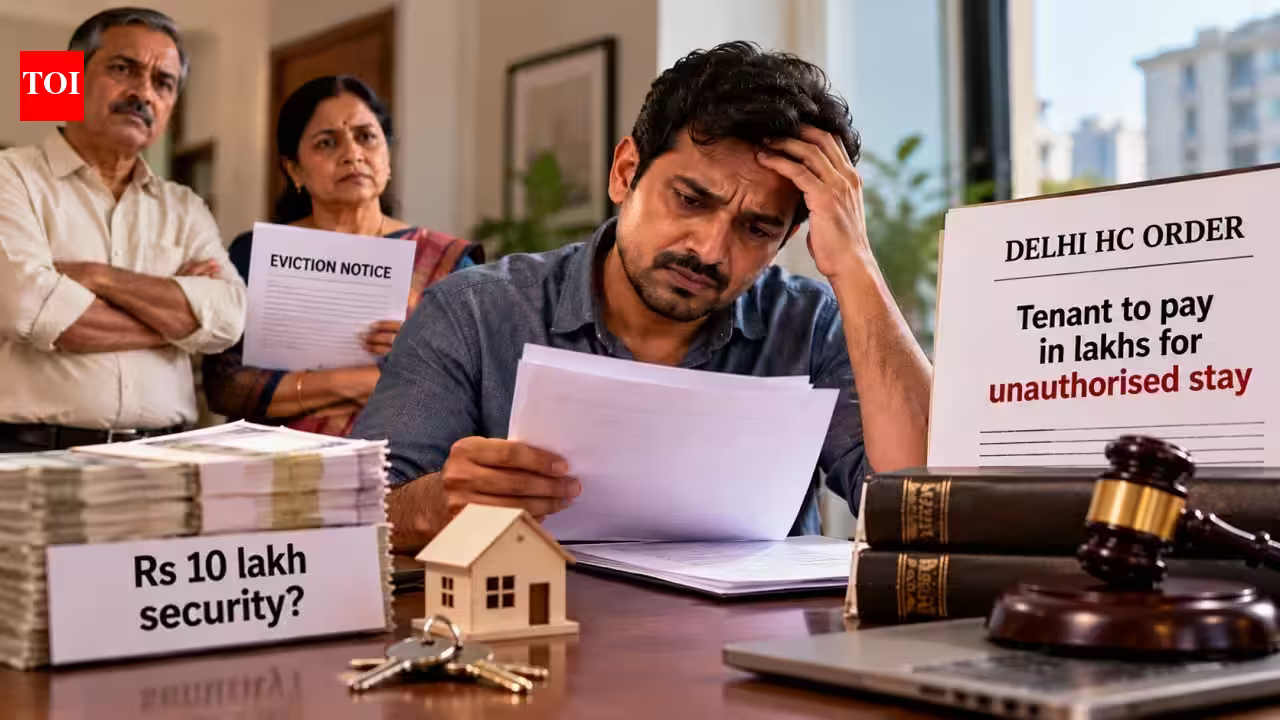
The recent ruling by the Delhi High Court regarding a commercial lease dispute serves as a stern reminder of the dangers associated with undocumented financial transactions and informal rental arrangements in the Indian real estate sector. The case, which centered on a tenant’s claim of a substantial security deposit versus a landlord’s demand for eviction, underscores the legal vulnerability of both parties when they prioritize convenience over contractual rigor.
The Perils of Informal Lease Arrangements
In India, the commercial real estate market is heavily influenced by the practice of oral agreements and unregistered rent contracts. While parties often seek to avoid the costs associated with stamp duty and registration, these short-term savings can transform into long-term liabilities. The case under review involved a series of 11-month rent agreements, a duration frequently chosen to bypass the mandatory registration requirements under the Registration Act, 1908.
By opting for unregistered agreements, both the landlord and the tenant relinquished the primary legal protection afforded by a formal, public record. The tenant’s defense relied entirely on his assertion that he had paid a Rs 10 lakh security deposit to reduce his monthly rent from a market-standard rate to a negligible amount. Without a formal, registered document capturing this specific financial arrangement, the court was left to rely on contradictory testimonies and shaky circumstantial evidence, ultimately leading to the tenant’s defeat.
The Burden of Proof in Civil Litigation
One of the most critical aspects of this legal battle was the tenant’s failure to substantiate his financial claims. In Indian civil law, the burden of proof rests heavily on the party making an extraordinary claim. When the tenant alleged he had provided a lump sum of Rs 10 lakh to the landlords, he was unable to provide a single receipt, bank statement, or written acknowledgement to support this.
The court’s observation was stark: the absence of evidence is tantamount to the absence of the event itself. Furthermore, the tenant’s credibility was irreparably damaged by the testimony of his own witness—his mother—who contradicted his version of events regarding the supposed security deposit. This highlights a recurring issue in Indian litigation where parties often attempt to construct a narrative of payment without the necessary paper trail, only to have their case collapse under judicial scrutiny. When entering into commercial contracts, businesses must ensure that every significant payment is documented through formal banking channels. Relying on cash payments to avoid tax documentation—a practice often cited in such disputes—not only invites scrutiny from tax authorities but leaves the payer with no legal recourse should the other party renege on their obligations.
Professional Management and Tax Compliance
The dispute also shed light on the complications arising from tax evasion, as admitted by the landlord regarding the collection of rent in cash to bypass GST and income tax reporting. While this admission created significant regulatory risk for the landlord, it did not absolve the tenant of the consequences of his own lack of documentation.
For property owners and business tenants, this case illustrates that the “savings” achieved through tax avoidance are often illusory. By failing to declare rental income or issue valid receipts, landlords leave their property vulnerable to squatting and unauthorized occupation. Conversely, tenants who pay in cash without receipts forfeit their ability to claim business expenses or prove that they have fulfilled their contractual obligations. In the current Indian business environment, where the implementation of the Goods and Services Tax (GST) and the digitization of financial records have increased transparency, maintaining professional, compliant, and transparent documentation is no longer just a legal recommendation—it is a vital business strategy.
The Legal Concept of Mesne Profits
A significant takeaway from this judgment is the court’s order for the tenant to pay “mesne profits.” In Indian legal terminology, mesne profits represent the damages recoverable by a person who has been wrongfully dispossessed of their property, calculated based on the profits the owner could have derived from the property had they enjoyed possession.
Because the tenant refused to vacate the premises after the expiration of the 2018 agreement, his continued stay was deemed unauthorized. The court, therefore, imposed a financial penalty that essentially serves as a market-rate rent for the duration of the illegal occupation. This serves as a cautionary tale for tenants who believe that holding a property “hostage” against a disputed security deposit is an effective negotiation tactic. The judicial system, particularly in high-demand real estate markets like Delhi, typically views such actions as a breach of contract that warrants both immediate eviction and the payment of significant financial penalties.
Best Practices for Future Lease Contracts
To mitigate the risks evidenced in this case, businesses must prioritize institutional-grade leasing practices. First, all lease agreements—regardless of duration—should be drafted by legal professionals and ideally registered with the relevant sub-registrar office. Registration provides the lease with legal validity that is difficult to challenge in court.
Second, all financial transactions should be executed via banking instruments, such as NEFT, IMPS, or bank drafts. Cash transactions, particularly those involving large sums like security deposits, are notoriously difficult to prove in a court of law. A clear paper trail comprising stamped receipts and bank records acts as a definitive record of the intent and performance of the contract.
Third, tenants and landlords alike should maintain a comprehensive file containing all communications, signed agreements, and proof of payments. In this instance, the tenant’s shifting stance—initially denying his signature on the 2018 agreement and later acknowledging it—demonstrated a lack of integrity that severely prejudiced his case. Consistency in documentation and pleading is essential for any successful legal defense.
In conclusion, this case is a microcosm of the risks inherent in India’s informal rental sector. It demonstrates that when individuals circumvent formal systems to save on tax or administrative costs, they invite a level of complexity and risk that far outweighs the initial savings. The Delhi High Court’s ruling reinforces the principle that courts will prioritize the existence of clear, written, and verified evidence over verbal arguments and unverified claims, ultimately favoring those who maintain their business affairs with transparency and professional diligence.
Disclaimer: This content is auto-generated for informational purposes only.
Source: Read Original News