









The Mechanics of RBI’s Currency Intervention
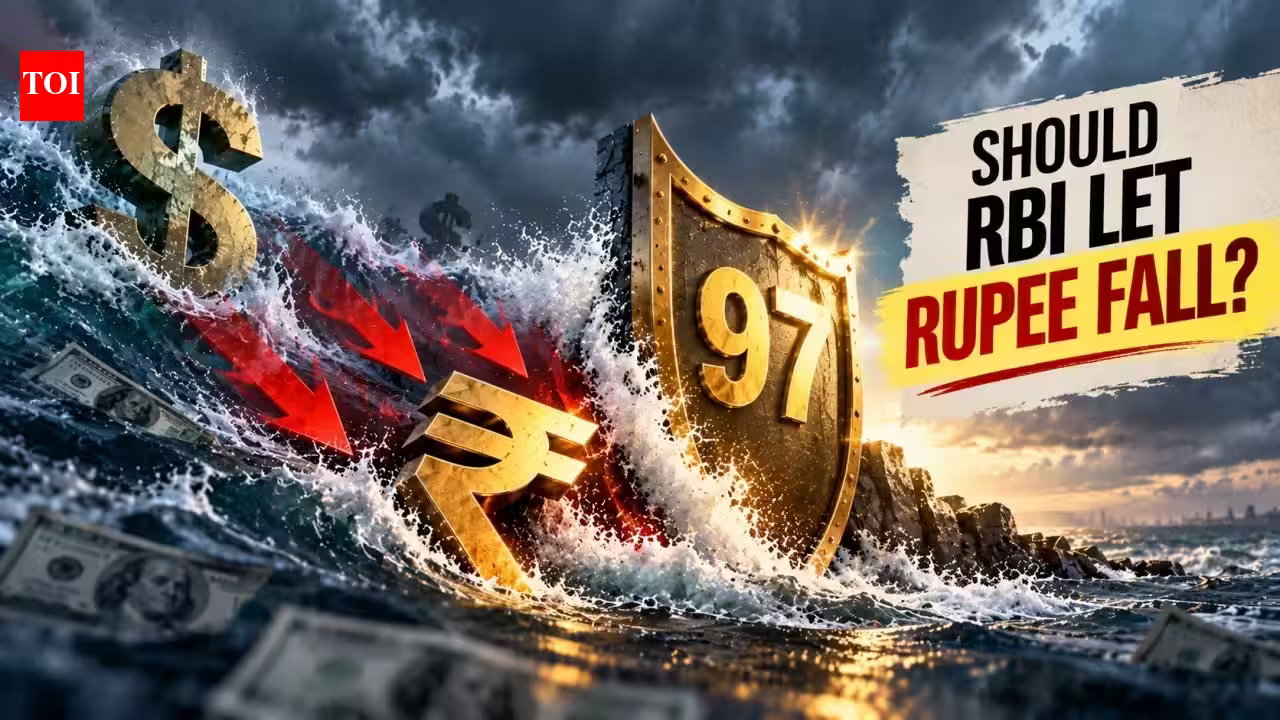
The Reserve Bank of India (RBI) recently deployed a significant policy package aimed at curbing the depreciation of the rupee. As the domestic currency faced intense downward pressure—approaching the 97-per-dollar mark—the central bank transitioned from passive monitoring to active intervention. This strategic shift, described by observers as a “bazooka” approach, addresses both the technical liquidity in the market and the speculative behavior fueling volatility.
Central to this intervention is a direct dollar-supply window for state-run Oil Marketing Companies (OMCs). By diverting approximately $10-12 billion in monthly demand away from the open spot market, the RBI has effectively reduced the immediate pressure on the rupee. Simultaneously, the bank moved to tighten liquidity by increasing the daily Cash Reserve Ratio (CRR) maintenance to 99% and announcing Open Market Operation (OMO) sales worth Rs 25,000 crore. These steps are designed to increase the cost of holding liquidity, thereby discouraging speculative positions against the currency.
Furthermore, the RBI has overhauled foreign exchange derivative regulations. By prohibiting the rebooking of cancelled contracts and lowering the threshold for taking positions without underlying exposure to $5 million, the regulator has significantly constrained the space for speculative trading. These administrative hurdles are intended to ensure that forex market activity remains tethered to real economic requirements rather than sentiment-driven hedging.
Assessing the Longevity of Currency Stability
While the RBI’s recent measures have provided an immediate “relief rally,” analysts remain cautious about the long-term trajectory of the rupee. The fundamental pressures—primarily a strong US dollar, elevated energy prices, and consistent portfolio outflows—remain largely unchanged. Historically, interest rate hikes by the US Federal Reserve create a challenging environment for emerging markets, as higher yields in the US divert capital away from markets like India.
The durability of the current stability depends heavily on the evolution of global geopolitical tensions and the narrowing of interest rate differentials. Economists argue that while the RBI can manage volatility, it cannot entirely insulate the rupee from external macro trends. For a more sustainable balance, the focus must shift beyond tactical interventions. Maintaining an appropriate real policy rate and implementing structural reforms to attract long-term foreign investment are essential. Without these, any currency appreciation driven by current measures may prove to be a short-term correction rather than a shift in trend.
The Debate on Currency Depreciation
The question of whether the RBI should allow the market to dictate the rupee’s value remains a subject of intense professional debate. Proponents of market-driven exchange rates, including perspectives often echoed by the IMF, suggest that the currency should act as a shock absorber for the economy. However, for a net importer like India, depreciation carries distinct hazards.
With crude oil import dependence hovering near 89%, a weaker rupee functions as a multiplier for domestic inflation. It increases the cost of energy and fertilizers, feeding directly into the production costs of goods and services. Furthermore, depreciation exacerbates the burden of unhedged foreign-currency debt held by Indian corporates. Given these risks, the central bank’s preference for “orderly adjustment” over pure market floating is a calculated trade-off. The goal is to prevent “disorderly” movements—a scenario where depreciation becomes self-reinforcing and triggers capital flight. By anchoring expectations, the RBI seeks to protect price stability while accepting that some degree of movement is inevitable in a globalized trade environment.
Structural Factors and Fundamental Value
The RBI governor’s recent assertion that the rupee is “undervalued” highlights a disconnect between market price and economic reality. A currency is generally considered undervalued when its market rate is weaker than what its underlying fundamentals—such as productivity, trade balance, and inflation differentials—would suggest. However, in the current landscape, the strength of the US dollar—often considered overvalued by international standards—masks the potential of the Indian economy.
The Indian growth narrative remains robust, with most agencies upgrading growth forecasts. Yet, these signals are currently overshadowed by high-yield opportunities in developed markets and the global rush toward AI-centered investments. As observed by experts, the outflow of capital is a cyclical phenomenon. While the immediate focus is on managing the exchange rate, the structural solution lies in enhancing the attractiveness of the Indian market. Recommendations such as revisiting long-term capital gains taxes on equities are surfacing as potential catalysts to stem capital outflows. If the government addresses these long-standing structural impediments, it would reduce the burden on the RBI to manage the currency through monetary intervention alone.
Policy Outlook and Economic Resilience
Moving forward, the RBI’s strategy will likely remain a mix of calibrated intervention and policy signaling. The central bank is not targeting a specific exchange rate; instead, it is managing the “disorder” that often accompanies rapid, sentiment-driven fluctuations. This is a pragmatic approach: the RBI has limited firepower, and attempting to fight deep-seated global trends solely through reserve utilization is unsustainable in the long run.
Ultimately, the goal is to align the rupee with a trend consistent with inflation differentials between India and the US. If India maintains a higher structural inflation rate, a gradual, moderate depreciation is not only expected but necessary for trade competitiveness. The challenge lies in ensuring this process remains controlled. By focusing on liquidity management and restricting speculative excess, the RBI is creating a buffer that allows the Indian economy to navigate the current cycle of global uncertainty without enduring a systemic shock. As global sentiment shifts and the US monetary cycle potentially turns, the foundational strength of the Indian economy is expected to reassert itself, providing a natural floor for the currency. In this period of transition, the focus on orderly, rather than restricted, market conditions remains the most viable policy path.
Disclaimer: This content is auto-generated for informational purposes only.
Source: Read Original News