








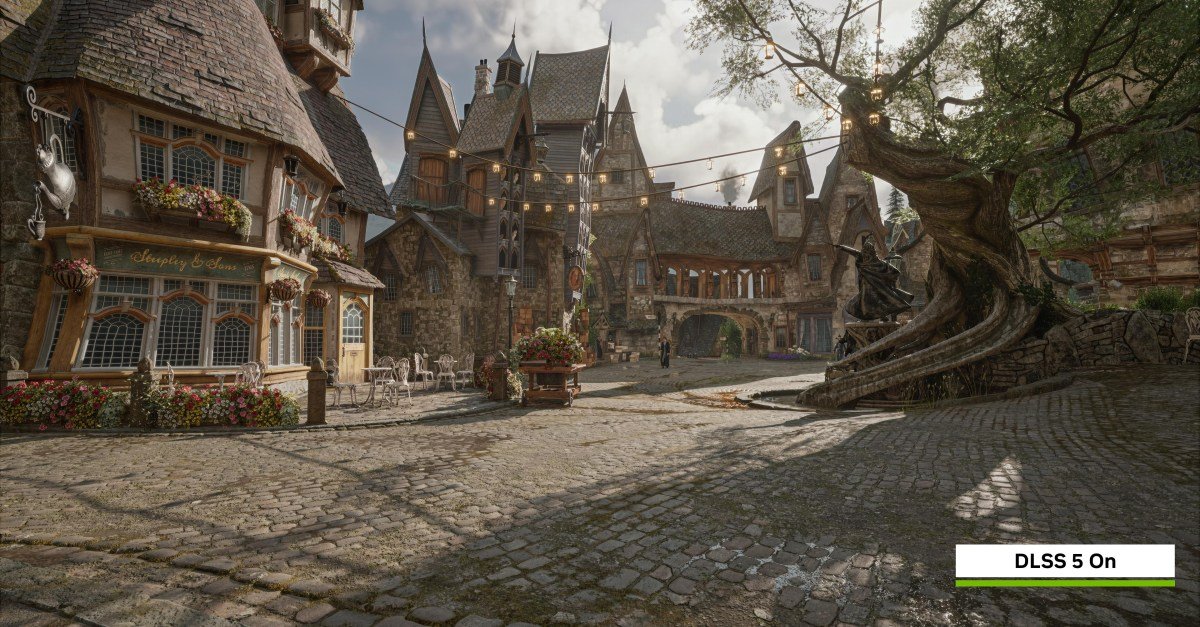
Refining Neural Rendering: The Evolution of DLSS 5
Nvidia’s Deep Learning Super Sampling (DLSS) technology has long been a cornerstone of modern PC gaming, acting as a bridge between high-fidelity visuals and playable frame rates. However, the announcement of DLSS 5 earlier this year marked a significant shift in the company’s strategy. By moving toward a more generative approach to image reconstruction, Nvidia introduced a system that sparked considerable debate regarding the boundaries of “gaming fidelity” versus “AI-assisted alteration.” Early demonstrations of the technology suggested that it was capable of rewriting character features in real-time, occasionally resulting in uncanny or unintended visual transformations.
After a six-month refinement period, the technology is moving from experimental demonstrations to a controlled deployment in major titles. The primary goal of this iteration is to balance the predictive power of generative AI with the aesthetic integrity intended by game developers. Recent comparison data from upcoming implementations indicates that Nvidia has successfully reined in the aggressive nature of these neural processes, shifting the focus back to frame rate stability and high-resolution scaling rather than radical character remodeling.
Artistic Control and Implementation Constraints
One of the most significant concerns regarding generative AI in gaming is the loss of artistic intent. If an AI model decides to reinterpret a character’s face during a frame-generation cycle, the result can diverge from the developer’s original design. Nvidia has explicitly addressed this by emphasizing that developers retain detailed artistic control over how DLSS 5 operates within their software. This configuration allows studios to define the boundaries of the neural rendering system, ensuring that assets—such as character models or environmental textures—remain consistent with the desired visual style of the game.
The upcoming launch of DLSS 5 in Hogwarts Legacy, scheduled for November 5th, serves as a litmus test for this refined implementation. Early evidence suggests that the dramatic, unintended aging effects previously seen in technical demonstrations have been neutralized. This subtle application is also reflected in titles like NBA 2K27, where the technology prioritizes the preservation of texture fidelity and character silhouettes. By empowering developers to fine-tune the AI’s intervention levels, Nvidia is attempting to position DLSS 5 as an essential performance tool rather than a source of visual inconsistency.
Optimizing the Neural Footprint
Performance optimization is the critical metric for any upscaling technology, and Nvidia’s October update to the DLSS 5 neural rendering system brings substantial efficiency gains. The company has successfully reduced the complexity of the underlying model, shrinking the footprint by 24 percent to approximately 118 million parameters. This reduction is not merely academic; it translates directly into hardware-level benefits, most notably a 20 percent decrease in 4K VRAM usage.
These optimizations are particularly vital for the upcoming generation of hardware. Users with RTX 50-series GPUs and the new RTX Spark laptops can expect the neural rendering process to run twice as fast compared to previous testing phases. By reducing the computational overhead required to execute these complex AI models, Nvidia is ensuring that the performance tax of enabling DLSS is offset by the speed of the hardware execution. This streamlined model is set to become the standard for all future DLSS 5-enabled games, with an initial rollout arriving in NBA 2K27 on October 16th.
Performance Modes and the Future of Frame Generation
Beyond the improvements to upscaling, Nvidia has also overhauled its approach to Frame Generation. The latest Nvidia app beta update introduces a performance mode specifically designed for users operating on RTX 40- and 50-series hardware. This update employs a faster, lighter algorithm tasked with increasing frame rates for various generation modes, including standard Frame Gen, Multi Frame Gen, and Dynamic Multi Frame Gen.
According to technical specifications released by the company, this performance-focused update can yield a 35 percent increase in throughput. While Nvidia acknowledges that there are minor trade-offs in image quality compared to the standard high-fidelity mode, the performance gains offer a compelling trade-off for users aiming to maximize refresh rates in fast-paced scenarios. This move highlights the company’s dual-track strategy: maintaining a high-precision mode for visual purists while offering a high-velocity mode for those prioritize frame rate fluidity above all else.
The Impact on Future Gaming Ecosystems
The shift toward a more conservative and optimized DLSS 5 ecosystem signals a maturing of AI-assisted gaming. By addressing concerns over visual stability and computational resource usage, Nvidia is positioning its generative technology as a long-term standard. As titles like Where Winds Meet adopt these features later this year, the industry will likely see a wider acceptance of neural rendering as an essential layer of the modern rendering pipeline.
The success of these updates hinges on the synergy between hardware capabilities and developer implementation. By providing the necessary tools for studios to restrain or expand the AI’s influence, Nvidia is moving toward a future where performance boosts are not achieved at the expense of visual coherence. As the underlying models continue to shrink in size while increasing in speed, the barriers between native resolution rendering and AI-upscaled gaming will continue to blur, potentially establishing a new baseline for what players expect from high-end PC performance.
Disclaimer: This content is auto-generated for informational purposes only.
Source: Read Original News