







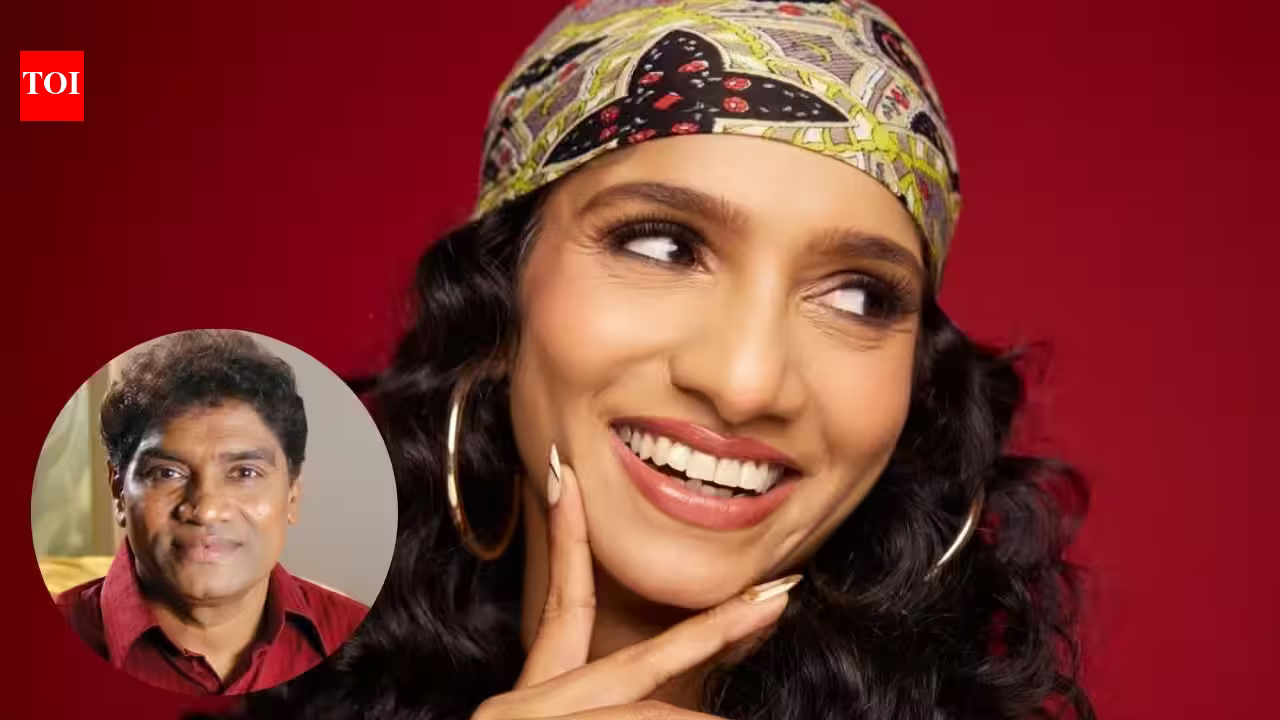
The Heavy Burden of Legacy: Jamie Lever on Escaping the Shadow of a Comedy Icon
In the glittering, often unforgiving world of Indian entertainment, few things are as double-edged as a famous surname. For most, it is a golden ticket—an immediate introduction to doors that would otherwise remain bolted. For Jamie Lever, daughter of the legendary king of comedy Johnny Lever, that same surname felt less like a key and more like an anchor.
Recently, while reflecting on her journey—from the early days of struggling to find her footing to sharing the stage with her father in Kolkata—Jamie opened up with refreshing vulnerability about the psychological toll of walking in the footsteps of a giant. It is a rare glimpse into the internal tug-of-war faced by the children of icons: the desire to honor a legacy without being swallowed whole by it.
The Weight of a Legendary Name
When you are the child of a performer as universally beloved and technically proficient as Johnny Lever, the bar isn’t just raised; it is moved to a different stratosphere. Jamie admits that even today, the name “Lever” carries a gravity that few in the industry can truly comprehend. It isn’t just about talent; it is about the crushing weight of expectation from an audience that has spent decades laughing at her father’s signature style.
“Even to this date, I think that the surname Lever is so heavy on me,” she shared in a recent interview. For years, this weight wasn’t just a professional hurdle—it was a personal identity crisis. She spent much of her formative career trying to decouple her professional identity from her familial one, fearing that any success she achieved would be dismissed as a byproduct of her lineage rather than her own comedic instincts.
Why the Initial Hesitation to Use ‘Lever’?
In the beginning, Jamie didn’t just want to forge her own path; she wanted a blank slate. She famously resisted using her father’s surname professionally, a decision that often baffled producers and industry insiders. To them, the name was a marketing asset—the “Lever” brand was synonymous with laughs. To Jamie, it was an unwanted label that invited immediate, often unfair comparisons.
She recalls how the industry constantly tried to fold her into the Johnny Lever narrative. Every conversation, every stage appearance, and every pitch was interrupted by the looming shadow of her father. “It was given to me or imposed on me very early on,” she reflected. “I need to find my voice now. I need to really figure out what I’m good at or what I can offer.” By choosing to step away from the name, she wasn’t rejecting her father; she was demanding the space to be seen as an individual—a comedian with her own cadence, timing, and observational style.
A Decade of Defining Her Own Voice
The journey to autonomy is rarely a sprint; for Jamie, it took a grueling 10 to 12 years. This period was not just about accumulating credits; it was about the slow, painstaking process of earning the audience’s respect on her own terms. It is the kind of persistence that only those who truly love the craft can endure.
“Today, when people see me, they know me for what I do. They don’t have to really put my name alongside my father’s name,” she says, describing a shift that feels less like a milestone and more like a hard-won victory. It’s a transition from being “Johnny Lever’s daughter” to simply “Jamie Lever,” a performer who can hold her own. However, she remains humble about this evolution. She knows that in comedy, you are only as good as your last set, and resting on one’s laurels is a luxury she refuses to entertain.
The ‘Student’ Dynamic on Stage
Despite the desire for independence, there is a profound, respectful synergy when she performs alongside her father. Rather than approaching these collaborations as a peer-to-peer event, Jamie adopts the mindset of a student watching a master. It’s a humble acknowledgment of her father’s craft, where she treats the stage as a classroom.
“I’m just observing a master at his craft, you know, perform and just create magic on stage,” she notes. This dynamic allows her to bridge the gap between legacy and individuality. By framing herself as a student, she bypasses the “competition” narrative, focusing instead on the technical brilliance that her father brings to the table, while simultaneously layering in her own modern sensibility.
Johnny Lever’s Hard Truths
When Jamie decided to enter the world of comedy, she didn’t receive a free pass. She received a warning. Johnny Lever, a man who survived the brutal landscape of early Bollywood stand-up with nothing but raw talent, was clear: comedy is not a hobby.
“This is not easy,” he warned her. “If you want to do this, you better go 100%. Don’t be half-hearted about it.” It was this tough-love advice that helped shape Jamie’s work ethic. She realized early on that if she was going to use the name, she had to earn the right to carry it by outworking everyone else. It is that “100%” mindset that has kept her in the room, from the comedy circuit to projects like the series Matka King, where she is proving her mettle as a versatile actor beyond the comedic stage.
Building a Future Beyond the Shadow
Today, Jamie Lever stands at an interesting crossroads. She has moved beyond the need to hide her surname, and she has survived the period of being judged solely by it. With roles in films like Kis Kisko Pyaar Karoon 2 and Matka King, she is actively diversifying her portfolio.
The pressure hasn’t vanished—she admits she still prays for increased creativity and works tirelessly on her craft—but it has changed. It is no longer the pressure of hiding her identity, but the pressure of living up to her own potential. Jamie Lever is no longer just continuing a legacy; she is in the process of building one that is entirely her own. And in a country that loves its comedy legends, that is perhaps the most impressive punchline of all.
Disclaimer: This content is auto-generated for informational purposes only.
Source: Read Original News