








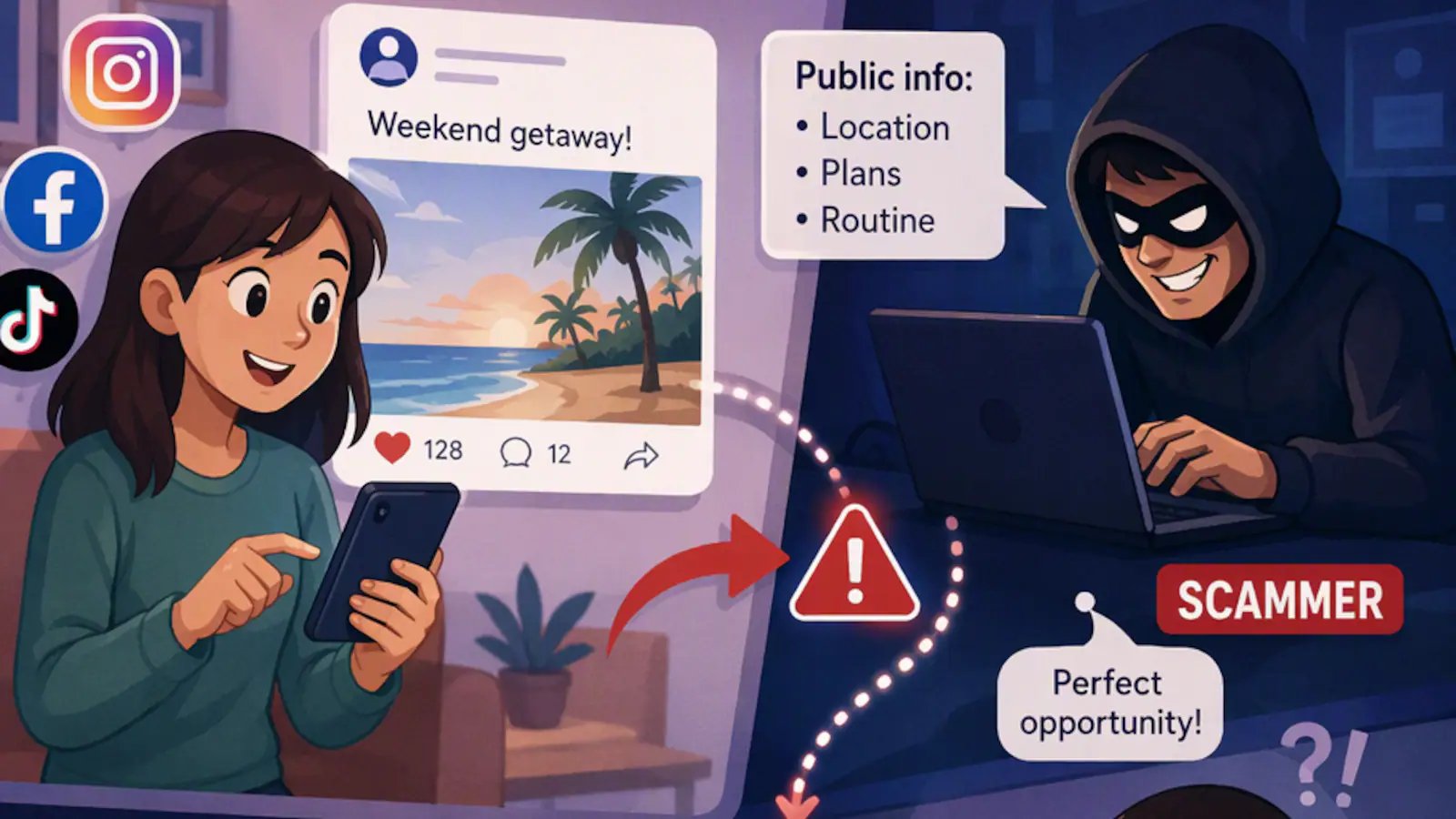
In the modern digital era, the most dangerous scams rarely begin with a cold call or a suspicious phishing email. Instead, they start weeks or even months in advance, cultivated through the seemingly innocuous details users share on social media. A simple birthday post, a photo of a child’s first day of school, or a professional update on LinkedIn provides a roadmap for cybercriminals to build highly personalized, deceptive narratives.
As artificial intelligence (AI) evolves, these risks have surged. Tools that can synthesize human voices and replicate individual writing styles are no longer the stuff of science fiction; they are accessible, affordable, and increasingly accurate. Experts are now warning that the line between a genuine message from a friend and a sophisticated AI-driven impersonation is blurring rapidly.
The Anatomy of a Targeted Attack
For scammers, your social media presence is a goldmine of context. When a criminal knows the name of your pet, your high school, and your family members, they can easily bypass standard security questions or craft messages that sound intimately familiar.
This is particularly dangerous when combined with the capabilities of generative AI. By scraping public videos or audio clips from your accounts, scammers can use voice-cloning technology to call a relative, mimicking your tone and cadence to request an “emergency” financial transfer. Because the caller sounds exactly like you, the victim is far more likely to bypass their own skepticism, assuming the request is legitimate.
Professional Platforms as Corporate Vectors
The threat is not confined to personal interactions. Platforms like LinkedIn are increasingly being used for “business email compromise” (BEC) schemes. By mapping out a company’s hierarchy—noting who handles accounts, who has recently been hired, and who reports to whom—fraudsters can execute surgically precise attacks.
A new employee, eager to impress and still learning internal procedures, might be the perfect target. A scammer impersonating a senior executive can send an urgent, spoofed email demanding an immediate payment to a “new vendor.” Because the email contains accurate internal details culled from public professional profiles, the victim perceives the request as standard operating procedure rather than a red flag.
Defensive Strategies in an AI-Driven World
While deleting every social media account is an impractical solution, users must adopt a more cautious approach to their “digital footprint.” Protecting your identity requires moving away from the assumption that the person on the other end of a digital interaction is who they claim to be.
To bolster your security, consider the following technical and procedural adjustments:
- Tighten Digital Visibility: Regularly audit your privacy settings across all platforms. Limit the audience for family photos, work milestones, and personal identifying information to verified connections only.
- Implement Multi-Factor Authentication (MFA): Relying on passwords alone is no longer sufficient. Utilize authenticator apps or physical security keys to ensure that even if your credentials are leaked, your accounts remain inaccessible to unauthorized parties.
- Establish Verification Protocols: If a family member reaches out via text or social media demanding money, implement a “code word” system or call them directly on a known number before taking action. At the corporate level, never process a payment based on an email alone; always verify requests through a secondary channel, such as an internal messaging app or a phone call to a known colleague.
- Beware of Manufactured Urgency: High-pressure tactics are the hallmark of a scam. Whether it is a boss demanding a transfer or a “relative” claiming to be in trouble, scammers use time pressure to force you into making a mistake. Taking thirty seconds to verify the request through an independent source can be the difference between a secure account and a significant financial loss.
Ultimately, the most effective defense is a shift in mindset. As AI continues to refine the art of deception, skepticism is not a character flaw—it is a necessary security measure for the digital age.
Disclaimer: This content is auto-generated for informational purposes only.
Source: Read Original News