








The Boy Who Said “Tussi Na Jao”: Where Is Parzaan Dastur Now?
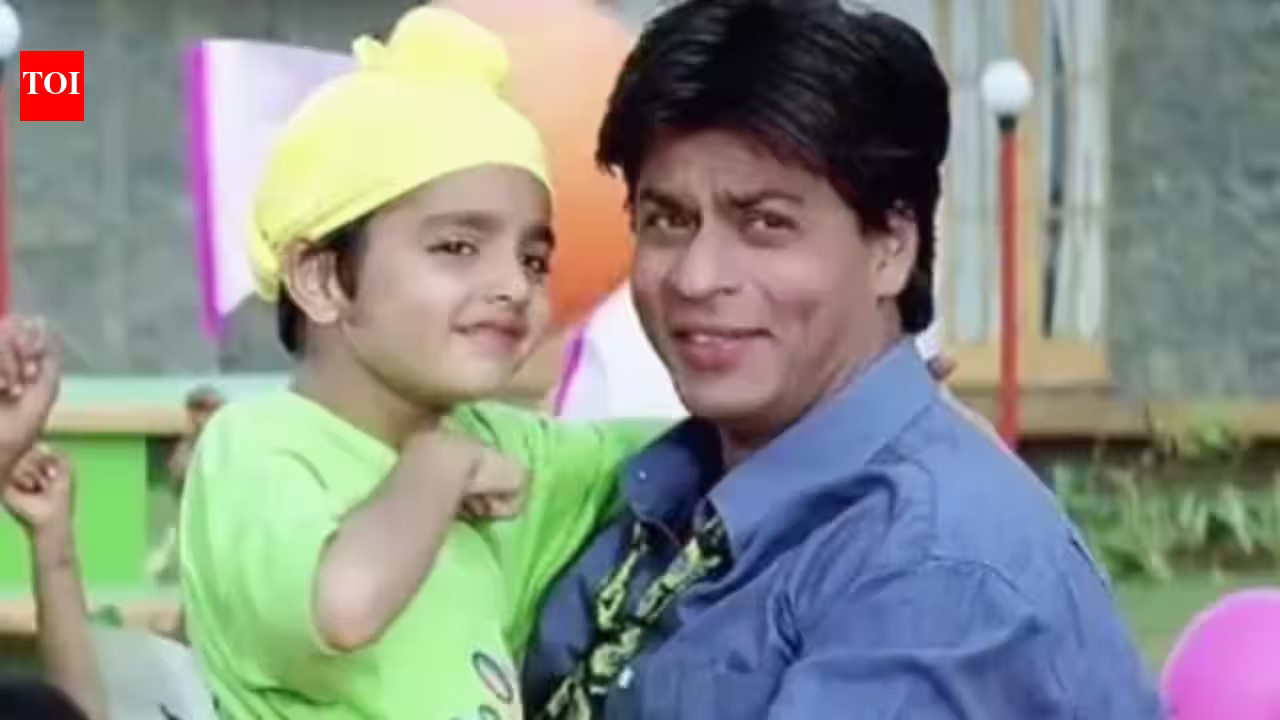
There is a singular, crystalline moment in Indian cinema that transcends time, geography, and age. It is a rainy afternoon in a summer camp, a young boy with a bowl cut stands clutching a basketball, and he delivers a line that would become the anthem of childhood heartbreak for a generation: “Tussi jaa rahe ho? Tussi na jao.”
For the audience, that moment was the soul of Karan Johar’s 1998 blockbuster Kuch Kuch Hota Hai. For Parzaan Dastur, the child actor behind the iconic Sikh boy, it was simply the beginning of a life-long love affair with the magic of moving pictures. While he remains etched in the collective memory as the silent, expressive face of that film, the reality of Dastur’s career is far more complex and multifaceted than a single soundbite. Today, as he navigates the high-stakes world of production and directing, Dastur stands as a testament to the idea that sometimes, the most interesting parts of a story happen once the camera stops rolling.
Childhood Stardom: Memories of Shah Rukh and Kajol
Looking back at his early years, Dastur views his entry into the industry not as a rigid career move, but as a stroke of pure, unadulterated luck. In recent reflections on those golden days, he characterizes the Kuch Kuch Hota Hai set as “party time.” To a six-year-old, the high-octane environment of a Karan Johar set wasn’t a pressure cooker; it was a playground.
The legacy of that film follows him like a shadow, and he is well aware of it. He often finds himself in conversations where fans recount the sheer thrill of seeing him held by Shah Rukh Khan, or the emotional gravitas he brought to his scenes with Kajol. His recollections of those days are surprisingly personal—he speaks fondly of quiet walks with Kajol away from the prying eyes of the crew. These aren’t the stories of a polished child star, but the genuine reminiscences of a kid who happened to find himself at the epicenter of a cultural phenomenon.
A Transition from Child Star to Serious Performer
While many child actors fade into obscurity once they hit their teenage years, Dastur’s transition was both deliberate and surprisingly gritty. He didn’t just stick to the glossy, candy-colored romances of the late 90s. As he grew, he sought out narratives that demanded more from him as a performer.
His filmography expanded in fascinating directions. He appeared in the ensemble hits of the era, such as Mohabbatein, Kabhi Khushi Kabhie Gham, and Hum Tum, but he also leaned into the provocative. His role in Rahul Dholakia’s Parzania—a harrowing, gut-wrenching look at the 2002 Gujarat riots—showcased a startling evolution. It was a role that required him to shed the “cute child actor” skin and grapple with the weight of tragedy. Similarly, in Piyush Jha’s Sikandar, he played a boy whose innocence is shattered by violence, proving he had the range to tackle cinema that mattered. By the time he was lending his voice to animation and appearing in diverse roles, it was clear that Dastur was an actor of substance, not just a nostalgic placeholder.
Stepping Behind the Lens: The Assistant Director’s Grind
The industry often forgets that some of its best filmmakers were once its most promising actors. After completing his business management studies, Dastur made the pivot that would redefine his adult life. He traded the spotlight for the clipboard, entering the grueling world of assistant direction.
If his childhood was about the joy of performing, his early adulthood was about the mechanics of storytelling. He became a staple on sets, contributing to big-ticket projects like Karan Johar’s Student of the Year, the quirky Gori Tere Pyaar Mein, and the ambitious Fitoor. It was a humbling transition. On set, he wasn’t the “boy from Kuch Kuch Hota Hai“; he was the person ensuring the chaos of production ran smoothly. This phase stripped away the artifice of fame and replaced it with a grounded understanding of the industry’s backbone.
Entrepreneurship and the Creative Voice
Today, Dastur isn’t just an industry veteran; he is an entrepreneur. After years of honing his craft behind the camera and spending time in the world of digital marketing, he established his own production house. This move was the culmination of his journey—a way to exert creative control over the content he believes in.
His portfolio has become incredibly diverse, spanning from sleek advertising and branded content to music videos and fiction projects. He has also taken his passion for the craft into the audio space with TCP Originals, a filmmaking podcast where he deconstructs the art of screenwriting with fellow professionals. It’s an intellectual endeavor that marks his full evolution from a silent screen presence to a vocal, active architect of stories.
The Honest Question: Why Not Mainstream Acting Success?
Perhaps the most compelling aspect of Dastur’s narrative is his brutal honesty. In an industry that thrives on curated, perfect images, Dastur has been refreshingly transparent about his internal monologue regarding his acting career. He openly wonders why, despite his early start and steady work, he didn’t reach the dizzying heights of the leading men he once shared the screen with.
He asks the questions many actors fear: Was it my height? My voice? Or simply a lack of the specific “X-factor” the mainstream requires? He doesn’t pose these questions with bitterness, but with the pragmatic curiosity of a man who prefers truth over ego. It is a vulnerability that makes him more relatable than most stars. By questioning his path, he has effectively freed himself from the need to satisfy the audience’s nostalgia.
Parzaan Dastur may have once been the boy who asked, “Tussi na jao,” but he has grown into a man who knows exactly when to move on. He didn’t just survive the transition from child star to adult filmmaker; he embraced it, building a career that is entirely his own. And in an industry obsessed with the next big thing, that is a success story worth celebrating.
Disclaimer: This content is auto-generated for informational purposes only.
Source: Read Original News