









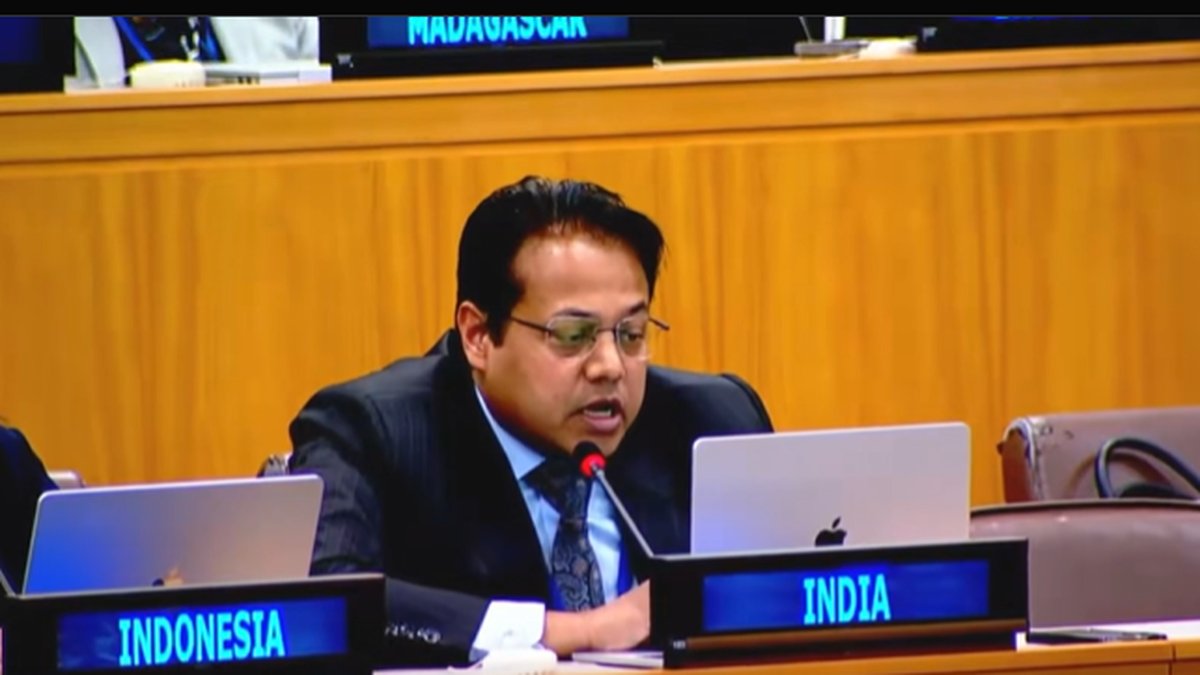
India Demands UN Accountability on Human Rights Violations in PoK
UNITED NATIONS: India has issued a sharp challenge to the United Nations’ human rights monitoring body, demanding transparency regarding the deteriorating situation in Pakistan-occupied Kashmir (PoK). During the 81st session of the UN General Assembly’s Third Committee held on October 14, 2026, New Delhi questioned the Office of the High Commissioner for Human Rights (OHCHR) on its progress in securing answers from Islamabad concerning ongoing suppression and violence in the region.
Anuj Swarup, First Secretary at the Permanent Mission of India to the UN, pointedly asked the High Commissioner when a report would be released detailing the actions, if any, taken by the Pakistani government to address critical concerns. These concerns include state-sanctioned violence, the mysterious killings of civilians by armed forces, and the systematic suppression of communication through widespread internet shutdowns.
Focus on Systematic Suppression
The Indian delegation highlighted that the OHCHR has previously documented disturbing trends in PoK, including the unlawful detention of leaders from the Joint Awami Action Committee. India emphasized that these individuals have been denied basic due process, legal representation, and contact with their families—violations that demand a “prompt, thorough, and impartial” investigation, as previously urged by UN officials.
Swarup did not mince words, noting that the human rights crisis extends beyond PoK into other territories under Pakistan’s control, such as Khyber Pakhtunkhwa and Rawalakot. He urged the international body to look inward at the systematic denial of rights in these areas, rather than maintaining a superficial focus on external matters.
Challenging ‘Double Standards’
A significant portion of India’s statement addressed what New Delhi perceives as a persistent bias within the UN’s human rights framework. Swarup accused the OHCHR of adopting an approach of “extreme selectivity,” arguing that the agency frequently ignores violent state responses to protests in Western nations and neighboring regions while focusing disproportionate attention on India.
“Needless to say, such double standards contribute to loss of trust in multilateralism and the work of OHCHR,” Swarup remarked.
India’s critique of the UN body comes on the heels of a diplomatic spat last week, where New Delhi rejected as “unwarranted interference” the OHCHR’s commentary on domestic protests occurring in the Indian capital. India maintained that its own law enforcement operates strictly under the rule of law and that its judicial system remains fully equipped to handle and redress any public grievances.
Reaffirming Sovereignty
The Indian representative used the forum to reiterate the country’s firm stance on its territorial integrity. He underscored that the Indian Constitution guarantees the same fundamental rights to the people of Jammu and Kashmir and Ladakh as it does to all other Indian citizens.
Reaffirming that these regions are “integral and inalienable parts of India,” Swarup stated that New Delhi would continue to engage with the UN in a spirit of partnership, provided that the engagement remains free from the “selectivity and double standards” that have hampered the credibility of international human rights interventions in the past.
As of the conclusion of the session, the UN has yet to provide a timeline for a formal report on the state of human rights in Pakistan-occupied Kashmir.
Disclaimer: This content is auto-generated for informational purposes only.
Source: Read Original News