









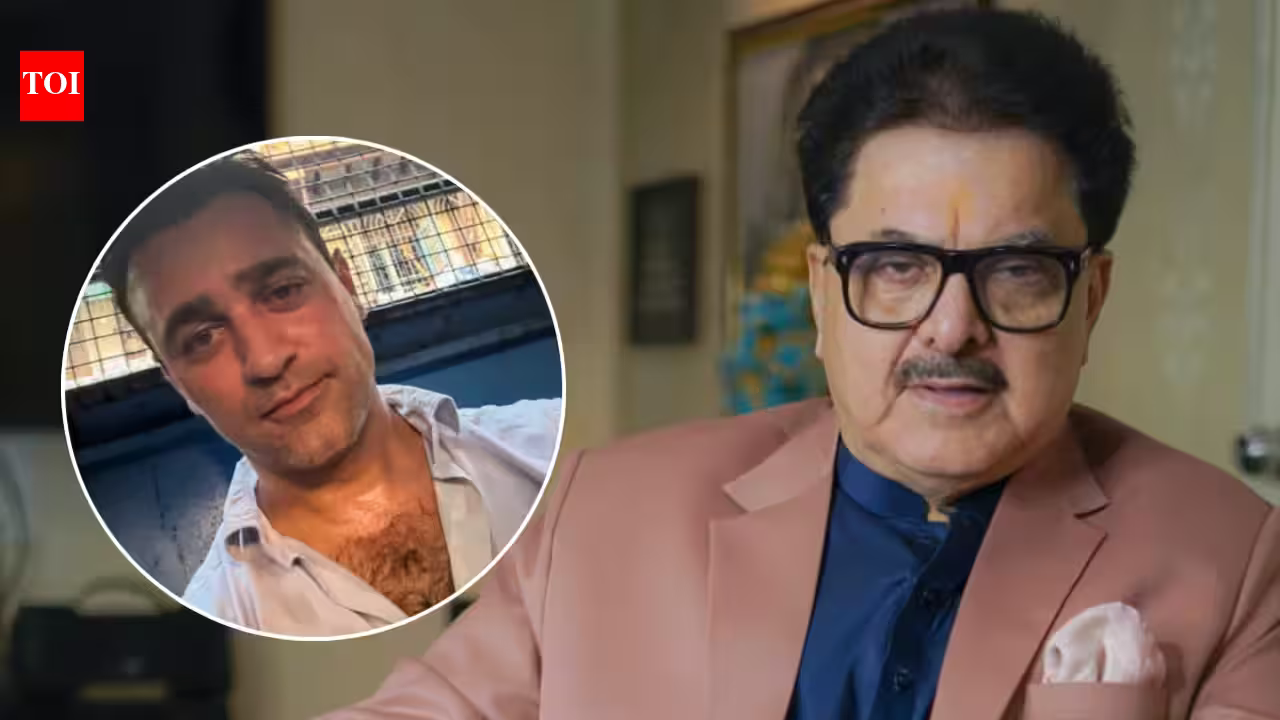
The intersection of celebrity, politics, and immigration status is rarely a quiet space, but the recent firestorm surrounding actor Imran Khan has pushed this delicate boundary into the national spotlight. As the industry grapples with the fallout of a government notice demanding that the American-born actor leave India, filmmaker Ashoke Pandit has emerged as one of the most vocal proponents of the state’s stance, setting the stage for a high-stakes legal battle that could redefine the rights of Overseas Citizen of India (OCI) cardholders.
## A Provocative Presence at August Kranti Maidan
The controversy stems from a chilly October morning when Imran Khan, the nephew of Bollywood superstar Aamir Khan, joined a protest at Mumbai’s historic August Kranti Maidan. The demonstration, organized by the Cockroach Janta Party (CJP), was intended to be a show of civil solidarity. However, for law enforcement and government regulators, the actor’s presence was anything but routine.
Imran, who carries a US passport and travels on an OCI card, was among those detained by the Mumbai Police. Rather than retreating into the shadows post-detention, the actor opted for a touch of social media defiance, posting a snapshot from inside a police van with the nonchalant caption, “Apparently I’m going for a drive.”
During the event, Imran addressed the media with a clear objective: to voice his concerns as a long-term resident of Mumbai. “I don’t have demands,” he stated at the time. “I’m here as a citizen, as a person who lives in this city. I’m here to see why freedom of movement is being restricted, why people’s voices are being suppressed.” His framing of the situation as a basic civic inquiry was, however, starkly at odds with the legal interpretation of his status as a foreign national.
## Ashoke Pandit’s Sharp Critique
Enter Ashoke Pandit, a producer and filmmaker known for his unapologetic stance on nationalist issues. In an interview with ANI, Pandit did not mince words regarding the actor’s participation in the protest. For Pandit, the issue transcends individual dissent; it is a matter of sovereignty and the responsibilities inherent in foreign citizenship.
“I am really very happy… because when you don’t have a right to protest, and you are not a citizen of this country, you go all out to see to it that our country is defamed,” Pandit remarked. His rhetoric signals a broader sentiment within segments of the industry and the public: that foreign nationals, regardless of their professional or personal ties to India, should be mindful of their guest status.
Pandit didn’t stop at calling out the act of protesting; he took a paternalistic tone, urging Khan to brush up on the legalities of his presence. “First educate yourself, study, and ask your family members and elders to explain whether you are allowed to take to the streets and wage a war against this country,” Pandit added, suggesting that Khan’s actions were perceived as an attempt to stir up unnecessary civil unrest.
## The FRRO Notice and the Immigration Act
On October 15, the drama shifted from the streets to the administrative offices when the Foreigners Regional Registration Office (FRRO) issued a formal notice. The directive was unequivocal: Imran Khan was to vacate India by October 28. The government’s move cited alleged violations of the Immigration and Foreigners Act, 2025, effectively suggesting that Khan’s political activity breached the terms under which he was permitted to reside in the country.
For the actor’s legal team, the notice came as a bolt from the blue. While immigration laws in India are notoriously stringent, the specific application of these laws to peaceful protests remains a gray area that legal experts have long debated. The government’s action is seen by many as a warning shot—a signal that the state intends to enforce a strict interpretation of “guest” behavior for those holding OCI status.
## Challenging the Order in High Court
The standoff is now headed for the Bombay High Court. Imran’s legal representative, Zulfikar Memon, has confirmed that they are preparing to challenge the FRRO notice. The petition is expected to be filed imminently, and the courtroom will likely become the site of a fundamental debate on civil rights.
Memon’s camp has described the government’s order as “drastic.” Their central argument is rooted in the absence of explicit legislation that bars OCI cardholders from participating in democratic demonstrations. “Where is the law that says an OCI holder cannot stand in a park and speak his mind?” a source close to the legal team hinted. By taking the fight to the High Court, Khan is not just seeking to stay in India; he is hoping to secure a judicial precedent that clarifies the scope of expression for those who, like him, live in India but hold passports from elsewhere.
## The Wider Implications for the Industry
This case is far more than a personal ordeal for Imran Khan. It serves as a litmus test for the growing number of non-resident Indians and foreign-born individuals who work and live within the Bollywood ecosystem. As the industry becomes more globalized, with actors, directors, and technical staff moving between international jurisdictions, the “Imran Khan precedent” could have lasting effects.
If the Bombay High Court upholds the FRRO notice, it may force a sea change in how foreign nationals participate in local social causes, effectively creating a “silence by default” policy for the expat community in the arts. Conversely, if the court finds in Khan’s favor, it would be a massive victory for the right to free speech, regardless of one’s passport.
As the October 28 deadline looms, the eyes of the legal and film worlds are fixed on the Bombay High Court. Whatever the verdict, one thing is clear: the days of casual, consequence-free political engagement for international citizens in India have come to an abrupt and jarring end. The “drive” in the police van has turned into a slow, difficult, and defining journey for the actor—and for the country’s approach to dissent.
Disclaimer: This content is auto-generated for informational purposes only.
Source: Read Original News