






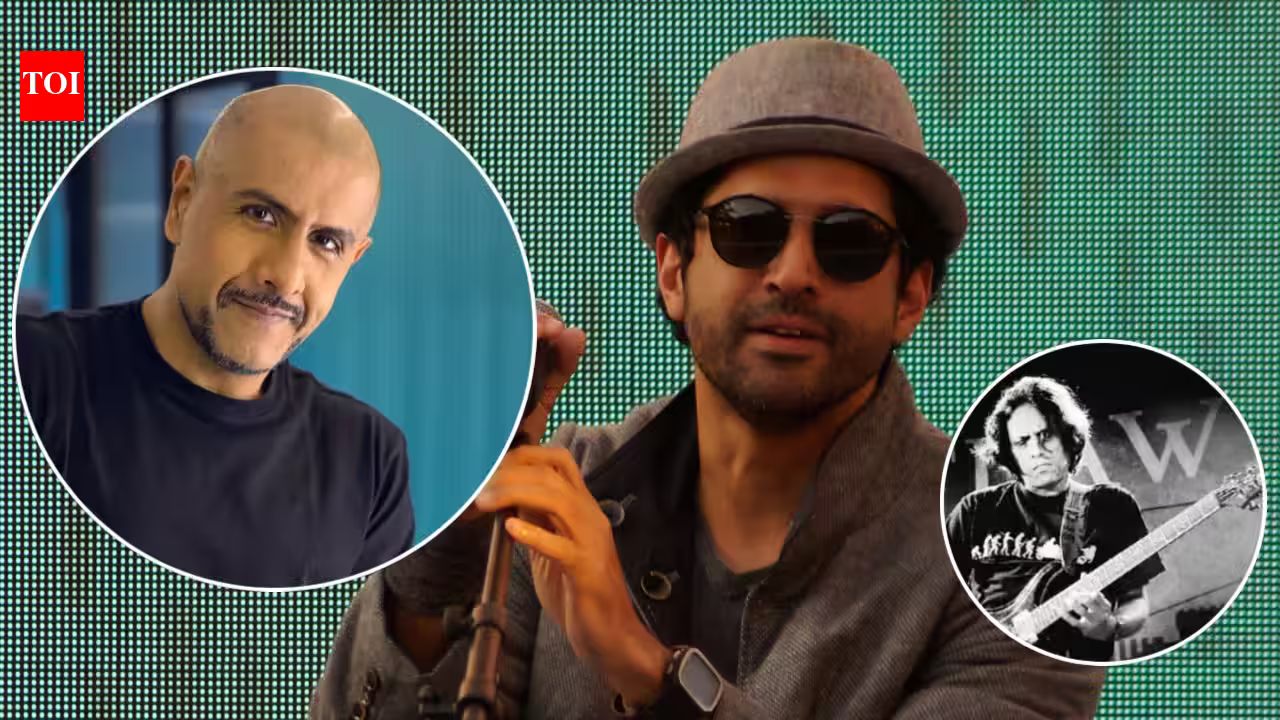
The Indian music fraternity is mourning a profound loss this week as news broke of the passing of Mahesh Tinaikar, one of the primary architects of the country’s independent rock revolution. The 63-year-old guitarist, whose fingers once danced across fretboards to define the sound of a generation, reportedly suffered a fatal heart attack, leaving behind a legacy that transformed the cultural landscape of Indian music.
As the news of his passing rippled through social media, the outpouring of grief from industry stalwarts serves as a powerful reminder of Tinaikar’s significance. He wasn’t just a musician; he was a pioneer who helped build the very infrastructure of Indian rock at a time when the genre was little more than a whisper in the country’s mainstream consciousness.
## Farhan Akhtar’s Solemn Farewell
Among the first to acknowledge the gravity of the loss was actor, director, and musician Farhan Akhtar. Known for his deep appreciation for the craft of songwriting and live performance, Akhtar took to his Instagram stories to share a hauntingly beautiful black-and-white photograph of Tinaikar mid-performance. The image, capturing the guitarist in his element—lost in the vibrations of his instrument—was accompanied by a brief, poignant message: “RIP brother #maheshtinaikar.”
For Akhtar, who has often navigated the space between mainstream Bollywood success and his own independent musical pursuits, Tinaikar represented the “real deal”—the grit and authenticity of the gigging musician who did it for the love of the sound. The simplicity of his tribute reflected the quiet respect held by those who knew that without the groundwork laid by men like Tinaikar, the modern Indian independent scene would be a significantly emptier space.
## A Gut-Wrenching Tribute from Vishal Dadlani
If Farhan Akhtar’s tribute was one of somber reflection, Vishal Dadlani’s reaction was one of visceral, unfiltered pain. The composer and singer, known for his own outspoken passion for music, didn’t hold back on the impact of this loss. “I feel like I’ve been kicked hard in the chest,” Dadlani wrote, capturing the collective feeling of a community that has lost one of its pillars.
Dadlani’s words resonated deeply with the history of the Indian music industry. He pointed out that every single rock-and-roller in India today—anyone who has picked up an electric guitar and dared to dream of a stage—owes a debt of gratitude to Mahesh Tinaikar. According to Dadlani, Tinaikar didn’t just play music; he lit a path. He showed generations of young artists that it was possible to create an original, rock-driven identity within India, an idea that seemed almost impossible to pull off in the early 1980s. Dadlani’s note of solidarity reached out to Tinaikar’s extended family, including his legendary bandmates from Indus Creed, acknowledging the tight-knit bond that defined their era.
## The Legacy of Rock Machine and Indus Creed
To understand the magnitude of Tinaikar’s contribution, one must look back to 1984. At that time, Western-style rock music in India was largely relegated to cover bands playing in hotels and clubs. Then came Rock Machine. Alongside Uday Benegal, Zubin Balaporia, Mark Selwyn, and others, Tinaikar helped forge a band that refused to settle for being a tribute act. They pushed for original compositions, aggressive marketing, and a professional touring ethic that was unheard of for an indie band in India at the time.
As the band eventually transitioned into Indus Creed, they didn’t just grow in popularity; they became an institution. Their success with tracks like “Rock and Roll Renegade” and “Pretty Child” proved that Indian bands could command the same stage presence as their global counterparts. Tinaikar’s guitar work was the engine of this transition. It was melodic, precise, and possessed a searing intensity that became the signature sound of the band. He didn’t just play the notes; he navigated the bridge between the technical demands of Western rock and the sensibilities of an Indian audience that was hungry for something original.
## Shaping the Future of Indian Independent Music
Tinaikar’s impact extends far beyond his own discography. He was part of an era that professionalized the Indian music scene. He and his bandmates taught the industry how to tour, how to engage with the media, and most importantly, how to remain steadfast in the face of a market that didn’t always understand the “rock” aesthetic.
By the time the nineties arrived, Indus Creed was effectively the benchmark for excellence. For younger musicians entering the fray in the late 90s and early 2000s, Mahesh Tinaikar was a mentor, even if from afar. He was the standard against which they measured their own skill. His influence permeates the DNA of countless Indian bands that followed in the wake of the Indus Creed explosion. Every heavy riff, every soul-searching guitar solo, and every band struggling to make their own voice heard in a Bollywood-centric market owes a silent nod to the work Tinaikar did in the mid-80s.
## Remembering the Man and the Musician
As tributes continue to pour in from fans and collaborators, the focus remains on the humanity of the man behind the guitar. While his contributions to the history of Indian rock are monumental, those who worked with him remember the camaraderie, the long road trips, the shared struggles, and the quiet dignity he maintained throughout his career.
Mahesh Tinaikar’s passing is more than just the end of a life; it is the closing of a foundational chapter in Indian music history. He leaves behind a landscape that he helped design—one where independence is celebrated, where rock music is taken seriously, and where the guitar remains a symbol of defiance and creativity. While the man may no longer be on stage, the echoes of his chords remain ingrained in the bedrock of Indian rock music. He was, and remains, the architect of a sound that refused to die.
Disclaimer: This content is auto-generated for informational purposes only.
Source: Read Original News