








The Arrival of Siege of Vegas and the Area 51 Map
The recent launch of Battlefield 6 Season 5, titled “Siege of Vegas,” has introduced a variety of content intended to revitalize the player experience. Central to this update is the addition of the Area 51 map, a location that has received significant acclaim from the community. Players have identified the map as a standout addition to the game, citing its complex layout and verticality as prime examples of effective level design. By integrating themes of covert military testing and subterranean research facilities, the map successfully captures the desired aesthetic of the Battlefield series while providing fresh tactical challenges.
However, the positive reception of the gameplay environment has been overshadowed by controversy regarding the accompanying cosmetic items. As part of the seasonal battle pass, BF Studios released a suite of character skins that have become the subject of intense scrutiny. Rather than fostering excitement, these assets have ignited a debate regarding the role of generative artificial intelligence in professional game development pipelines.
Identifying the Markers of Algorithmic Output
The suspicion that these assets were created using generative artificial intelligence stems from several incongruities found within the character designs. Observant players have highlighted instances of non-functional gear, such as a character model equipped with five identical pistols holstered simultaneously. This configuration lacks a foundation in tactical realism, which has traditionally been a core element of the franchise’s visual identity.
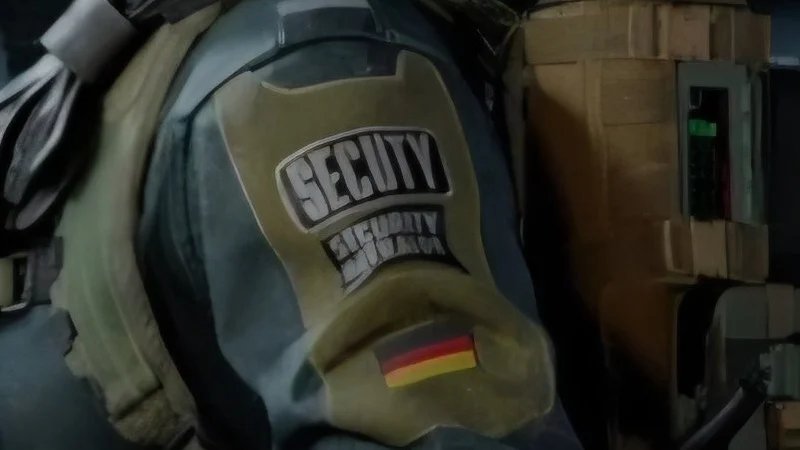
Further analysis by the community has pointed toward technical inconsistencies that are characteristic of current image generation models. For example, a vest design featuring a chaotic, non-functional array of magazines suggests a lack of understanding regarding how ammunition storage interfaces with military equipment. Most damning, however, is a security patch visible on one of the character models. The patch displays the misspelled text “Secuty” directly above the correctly spelled “Security Operator.” Such errors are frequent in generative tools, which struggle to replicate specific textual strings with consistent accuracy. These visual artifacts have led a substantial portion of the player base to conclude that the assets were generated without sufficient human review or manual cleanup.
The Impact of Monetization and Community Sentiment
The controversy is intensified by the fact that these items are locked behind a paid seasonal battle pass. For the player base, the perceived use of low-effort, automated content in a premium transaction represents a disconnect between the developer and the consumer. The discourse across social media platforms and gaming forums suggests that users feel disrespected when asked to pay for content that displays clear signs of technical negligence.
This situation reflects a broader tension in the gaming industry regarding the balance between rapid content deployment and quality control. When studios utilize automated tools to meet aggressive roadmap deadlines, the resulting output often requires human oversight to ensure that the content meets the intended design standards. In the case of Battlefield 6, the presence of obvious textual errors and functional nonsense suggests that this oversight phase was either skipped or inadequately staffed.
Organizational Challenges and Resource Allocation
The backlash against these cosmetics coincides with significant shifts within Electronic Arts and its subsidiary studios. Recent reports of workforce reductions and layoffs among development teams have created an environment where remaining personnel may be stretched thin. When internal teams face significant headcount reductions while simultaneously being tasked with maintaining high-frequency content releases, the pressure to adopt automated tools increases.
Industry observers suggest that the reliance on generative tools may be a symptom of these resource constraints rather than a deliberate creative choice. If the objective is to fulfill a content roadmap with limited human resources, automated generation becomes a tempting solution for asset creation. However, the resulting quality concerns demonstrate that the efficiency gains of these tools are often negated by the cost of damage to the brand’s reputation and player trust.
The Future of Asset Production in AAA Titles
The “Siege of Vegas” update serves as a case study for the risks associated with integrating unrefined generative technologies into high-profile software. While AI-assisted design has the potential to accelerate prototyping and environment creation, its application in character and asset design requires rigorous human-in-the-loop workflows. Without this, studios risk shipping content that fails to meet basic aesthetic and functional requirements.
Moving forward, the studio faces a difficult path to reconcile its current content strategies with community expectations. For players, the immediate resolution involves a demand for higher production standards and a pivot away from visibly flawed assets. For developers, the challenge lies in leveraging technology to support, rather than replace, the creative processes that define the aesthetic integrity of their projects. Whether these specific cosmetics will be patched or replaced remains to be seen, but the situation underscores a growing need for transparency in how automated tools are utilized within professional game development.
Disclaimer: This content is auto-generated for informational purposes only.
Source: Read Original News