








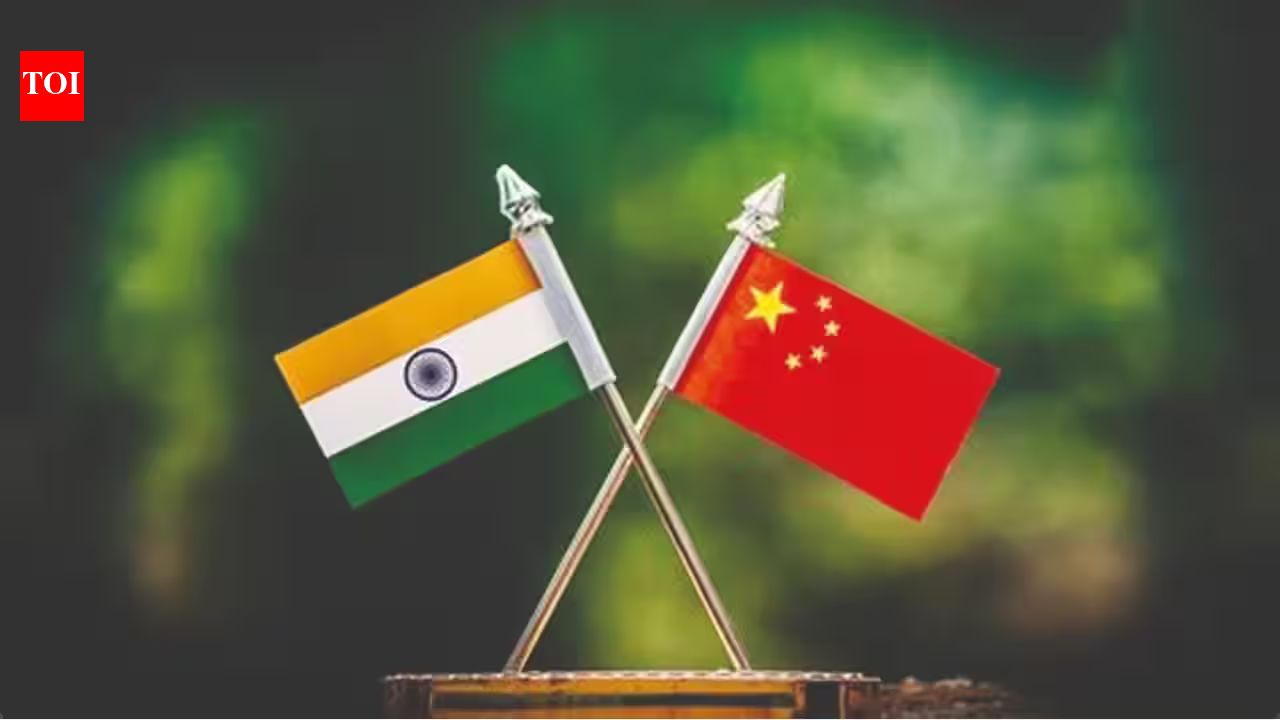
GEOPOLITICAL TENSIONS have once again spilled over onto the field of play, as rising Indian weightlifting prospect Charu Pesi has been forced to withdraw from the upcoming Senior World Weightlifting Championships in Ningbo, China. The decision, handed down by the Indian Weightlifting Federation (IWLF) following consultations with government authorities, underscores the persistent and highly sensitive diplomatic standoff regarding Beijing’s issuance of “stapled visas” to residents of Arunachal Pradesh.
Pesi, a promising competitor in the men’s 65kg category, was set to be a key part of the Indian contingent heading to Ningbo for the prestigious tournament beginning October 24. However, the path to the platform was blocked when the Chinese Visa Application Service Centre (CVASS) in New Delhi requested a formal undertaking from the IWLF, confirming that the federation and the athlete would accept a stapled visa—a document that remains a point of intense contention between New Delhi and Beijing.
The Diplomatic “Stapled” Standoff
At the heart of the crisis is the nature of the travel document itself. Unlike a standard visa, which is permanently stamped into a passport, a stapled visa is issued on a separate sheet of paper. For Beijing, this serves as a deliberate policy tool to signal its refusal to recognize India’s sovereignty over Arunachal Pradesh. For India, the practice is a direct challenge to its territorial integrity.
The Indian government’s position remains firm: it does not recognize stapled visas as valid entry documents. By demanding that the IWLF acknowledge the document, the Chinese authorities effectively pushed the federation into a corner. Following high-level consultations, it became clear that the federation could not accept such conditions without undermining the nation’s official diplomatic stance. Consequently, the IWLF had no choice but to withdraw Pesi from the competition, prioritizing national policy over the athlete’s immediate sporting opportunity.
A Pattern of Exclusion
This incident is not an outlier, but rather the latest in a recurring pattern of sporting disruptions that have plagued India-China athletic relations over the past several years. The sports community is becoming all too familiar with this particular geopolitical hurdle.
In July 2023, the issue hit the wushu world when three athletes—Nyeman Wangsu, Onilu Tega, and Mepung Lamgu—were met with the same requirement ahead of the Summer World University Games in Chengdu. In that instance, the Indian government’s protest was swift and unequivocal, leading to the withdrawal of the entire wushu contingent as a show of solidarity and defiance. The cycle continued shortly thereafter at the Hangzhou Asian Games, where the same athletes faced accreditation and entry barriers that effectively precluded their participation, denying them the chance to compete on a continental stage.
The Human Cost: Athlete Development Stalled
While the political discourse centers on sovereignty and international relations, the human cost is felt most acutely by athletes like Charu Pesi. For a weightlifter, the Senior World Weightlifting Championships are not merely ceremonial; they are the crucible in which international careers are forged.
Pesi’s exclusion is a significant blow to his development. The Ningbo championships carry immense weight, serving as a primary venue for earning crucial ranking points. These points are the currency of the Olympic movement, forming the backbone of the qualification race for the 2028 Los Angeles Games. By missing this opportunity, Pesi is left at a disadvantage compared to his international peers, missing out on the high-stakes environment necessary to refine his technique and build the resilience required for elite-level competition.
The Path Ahead
As the rest of the eight-member Indian squad, headlined by Olympic sensation Mirabai Chanu, prepares for their departure to Ningbo, the atmosphere surrounding the team is one of somber professionalism. The IWLF has confirmed that visa processing for the remaining members of the contingent is proceeding without intervention, suggesting that the issue is specifically tethered to the nationality status of athletes hailing from Arunachal Pradesh.
The incident serves as a stark reminder that in the modern era of high-stakes international sports, the field of play is rarely isolated from the shifting tectonic plates of global politics. For the Indian sporting fraternity, the challenge remains balancing the aspiration for global excellence with the unyielding commitment to national policy.
For now, the focus shifts back to the training halls and the upcoming tournament. However, until a lasting diplomatic solution can be negotiated between New Delhi and Beijing regarding the entry of athletes from all corners of India, sporting events in China will continue to carry an asterisk—a symbol of the difficult intersection where the pursuit of gold meets the complexities of sovereignty. As Pesi watches from the sidelines, the hope remains that one day, he and his fellow athletes will be judged solely by the weight they lift, rather than the documents they carry.
Disclaimer: This content is auto-generated for informational purposes only.
Source: Read Original News