








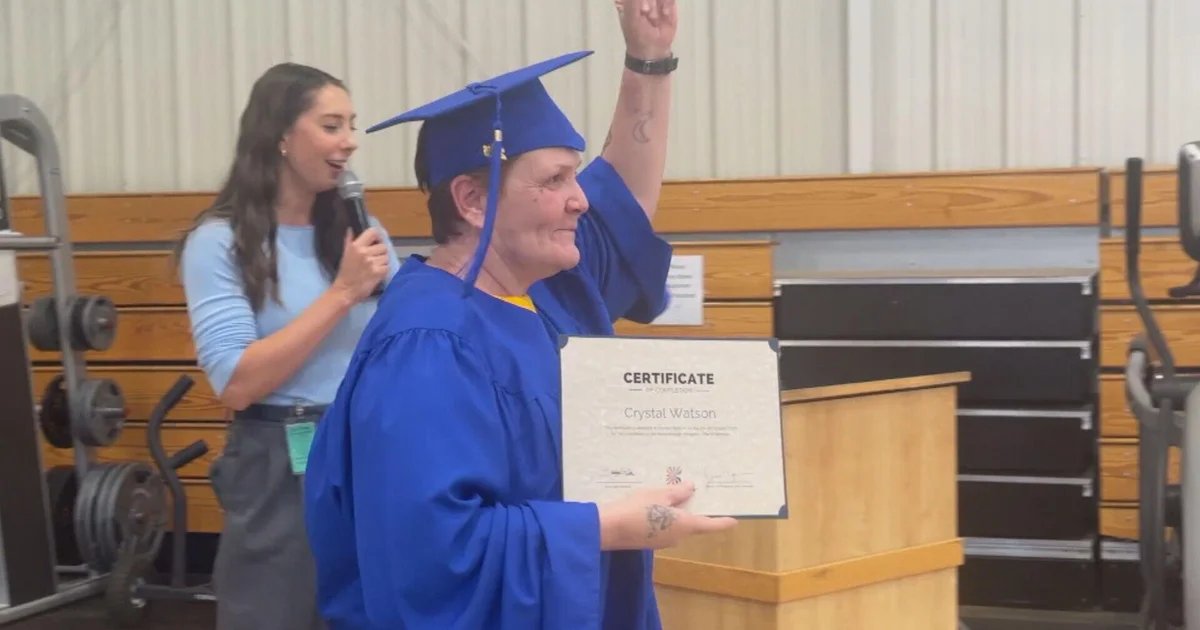
PUEBLO, Colo. — The atmosphere inside the La Vista Correctional Facility gymnasium last week felt like any other graduation: nervous smiles, tearful hugs, and boisterous cheers as names were called. Graduates walked across the stage in traditional caps and gowns, celebrating a milestone that, for many, serves as a bridge to a life they once thought was out of reach.
However, this was no ordinary ceremony. The 27 graduates were incarcerated women marking the completion of “The Challenge,” an intensive eight-month program designed to prepare them for a successful transition back into society. Operated by the Colorado nonprofit Breakthrough, the curriculum focuses on career readiness, personal development, entrepreneurship, and reentry planning.
For Melissa Anderson, who was incarcerated for theft, the program provided more than just classroom instruction; it offered a roadmap for a new life.
“This is not a place we want to end up again,” Anderson said. “A lot of things I’ve learned in here will be beneficial in the future.” She credited the program with teaching her the practical skills necessary to navigate the modern workforce, including professional presentation, job applications, and interview techniques. As she accepted her diploma, her daughters and grandson watched from the crowd, marking what she hopes is the beginning of a fresh chapter.
The premise of the Breakthrough program is simple but radical: successful reentry begins long before a prisoner is released. By fostering communication, long-term goal setting, and collaborative business planning, the organization aims to replace the hopelessness that often follows incarceration with a sense of agency.
Stacey Putka, co-founder of Breakthrough, believes that providing a safe environment to plan and practice for life outside the prison walls is the key to preventing recidivism.
“Our program gives them the opportunity to plan and then practice before they ever come home,” Putka said. The data suggests the approach is working. Breakthrough reports a recidivism rate of approximately 5% for its participants, a stark contrast to the 30% to 45% rates typically seen among the broader prison population. Beyond the personal impact, Putka estimates that the program’s success has saved Colorado taxpayers roughly $24 million.
For graduate Kaile Stevens, the impact is personal and profound. “We have the opportunity to be successful when we step out of here, but [also] to be impactful on the society we once harmed,” she noted.
As the ceremony concluded, the gym filled with the sounds of encouragement. “You are now a CEO, entrepreneur, whatever else you want to be,” one graduate told another. While the caps and gowns were packed away, the real work for these 27 women begins now. Their ultimate success will be measured by their ability to navigate the complexities of life outside, reunite with their families, and contribute to their communities.
Disclaimer: This content is auto-generated for informational purposes only.
Source: Read Original News