








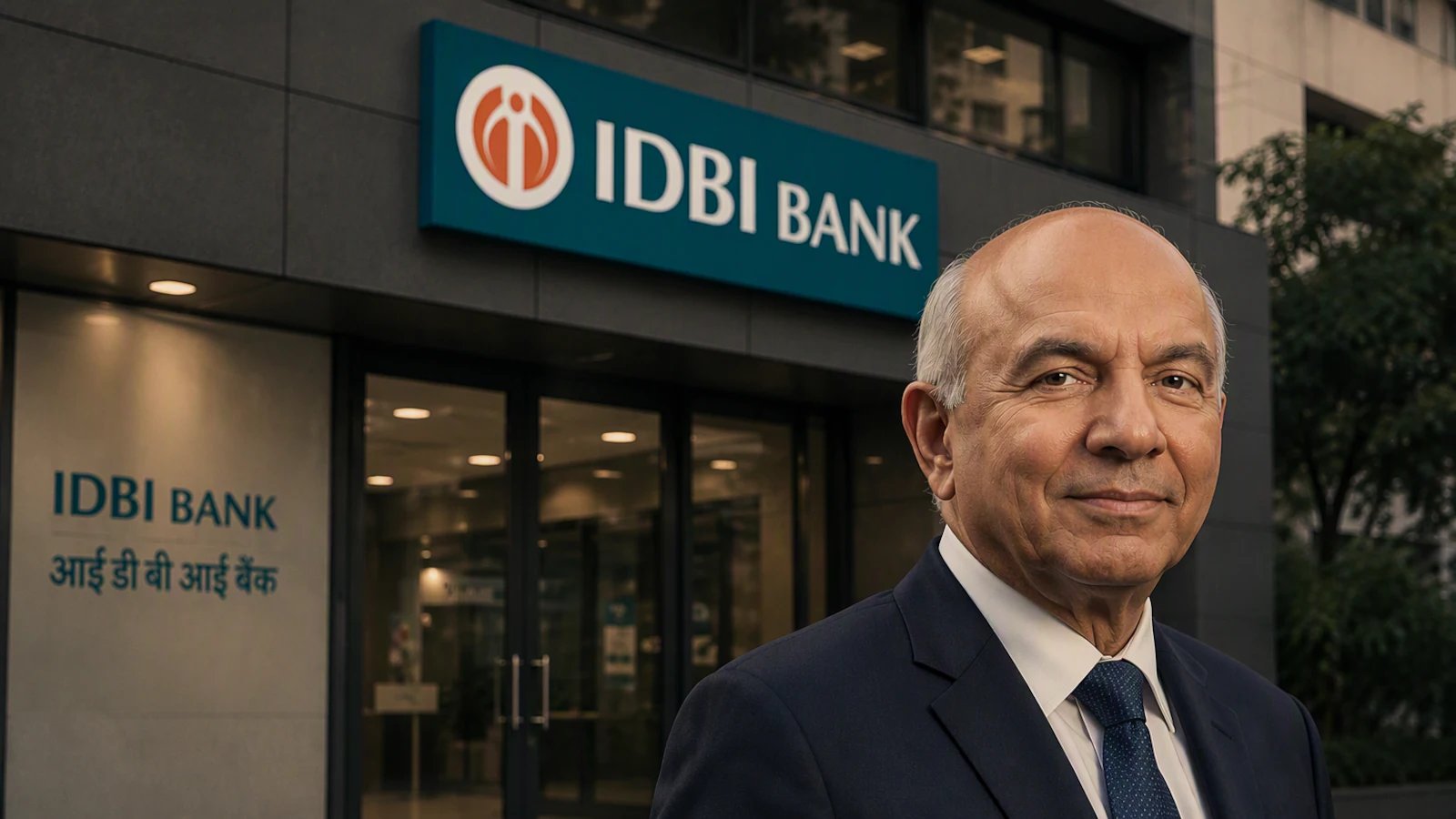
Prem Watsa, often dubbed “Canada’s Warren Buffett,” is poised to reshape India’s financial landscape with a massive Rs 52,878-crore investment in IDBI Bank. The Hyderabad-born billionaire, who migrated to Canada in 1972 with only $8 in his pocket, has secured Union Cabinet approval to acquire a 60.72% stake in the lender. This landmark deal marks a significant milestone in the Indian government’s ongoing strategy to offload controlling stakes in public sector entities, signaling a major shift toward private-sector banking management.
## From Humble Beginnings to Global Financial Empire
Watsa’s journey is a quintessential rags-to-riches story. After completing his degree at IIT Madras, he moved to Canada to pursue an MBA at the Ivey Business School. During his early years, he worked menial jobs, including door-to-door sales of furnaces and air conditioners, to survive. His career trajectory changed dramatically when he joined Confederation Life in 1974, where he embraced the “value investing” philosophy championed by Benjamin Graham—a methodology that focuses on acquiring businesses for less than their intrinsic worth.
This disciplined approach eventually led him to found Fairfax Financial Holdings in 1985. Much like Warren Buffett’s Berkshire Hathaway, Watsa leveraged the “insurance float”—the capital collected from premiums before claims are paid—to aggressively acquire and invest in diverse companies. Today, Fairfax stands as a global powerhouse, with Watsa’s influence extending across sectors ranging from infrastructure to financial services.
## The Strategic Bet on India’s Banking Sector
The IDBI Bank acquisition is the centerpiece of Watsa’s recent commitment to the Indian market. For years, Watsa has been pivoting his portfolio toward India, with platforms like Fairfax India Holdings specifically designed to tap into the nation’s economic expansion. The investment in IDBI is predicated on the belief that India’s burgeoning economy requires a robust, high-functioning banking system to facilitate credit for businesses and households.
For industry experts, such as Manish Aggarwal of Deloitte India, the deal is a masterclass in structural reform. By allowing an experienced foreign operator to take the reins while the government and Life Insurance Corporation (LIC) retain a residual interest, the state benefits from the bank’s future value appreciation without the burdens of active management. This model creates a template that may well attract further long-term, high-quality foreign capital into India’s financial sector.
## Technology and the Modern Financial Frontier
While Watsa’s core strategy remains deeply rooted in traditional value investing, the modern banking sector in India is increasingly intertwined with rapid technological advancements. As IDBI prepares for this new chapter under Fairfax, it faces the challenge of digital transformation. Throughout the global tech industry, institutions are shifting toward AI-driven risk assessment, cloud-based core banking, and sophisticated data analytics to maintain a competitive edge.
The current climate of tech sector volatility, characterized by fluctuating employment rates and the rising demand for specialized digital skills, suggests that any major acquisition in banking today must be backed by a strong technology roadmap. For Watsa, the goal is not merely to own the bank, but to instill a growth-oriented operational culture. Success in this venture will likely depend on whether his team can blend his proven investment discipline with the cutting-edge digital infrastructure required to navigate India’s increasingly fintech-forward banking environment. As the deal nears completion, it serves as a litmus test for whether legacy institutions, infused with fresh foreign capital and private management, can effectively digitize and scale to meet the demands of a 21st-century economy.
Disclaimer: This content is auto-generated for informational purposes only.
Source: Read Original News