








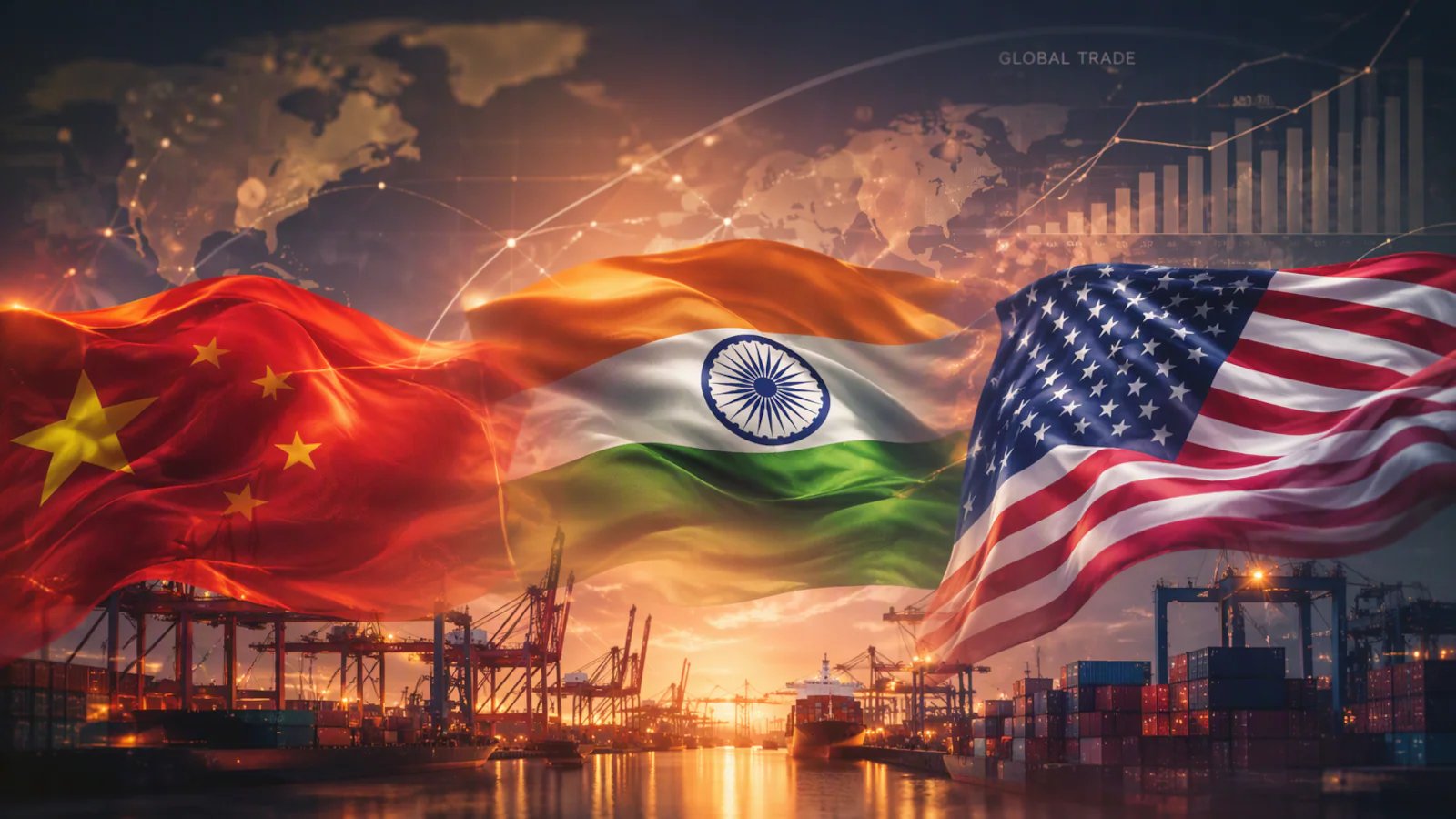
India’s trade landscape in 2026 presents a striking paradox: the nation is successfully expanding its export footprint in both the United States and China, yet the underlying economic health of these two relationships tells vastly different stories. While Indian shipments to the US remain resilient despite ongoing tariff uncertainty, the country faces a widening, structural trade imbalance with Beijing that continues to challenge domestic economic policymakers.
## Resilience Amidst Tariff Pressures
The trade corridor between New Delhi and Washington has remained surprisingly robust. During the first half of the 2026 financial year, India’s merchandise exports to the US climbed to $50.81 billion, marking a significant 11.1% increase compared to the previous year. This growth is particularly notable given the climate of anxiety surrounding trade policy and the ongoing negotiations for a multi-phase trade agreement.
While the proposed tariff reductions—shifting from an initial 50% burden toward an 18% target—remain in flux, the data suggests that American demand for Indian products is largely inelastic. Sectors such as electronics and high-end engineering have seen a surge in productivity. This trend aligns with a broader shift in the global tech supply chain, where Indian manufacturing is increasingly positioning itself as a strategic alternative for global enterprises looking to diversify away from traditional hubs.
## The China Trade Gap: A Structural Dilemma
In contrast, India’s trade with China is defined by a massive, lopsided deficit. While India’s exports to its neighbor saw an impressive 40.7% growth to reach $19.26 billion during the first nine months of the year, this figure is dwarfed by the $125.19 billion in imports flowing into India. The result is a $105.93 billion trade deficit—a figure that continues to climb regardless of the percentage-based growth in exports.
The discrepancy lies in the composition of trade. India primarily exports raw materials like ores, fuel, and agricultural products to China, while it imports high-value finished goods, industrial machinery, and sophisticated electronic components. This reliance on Chinese inputs for Indian manufacturing creates a cycle where domestic growth inadvertently fuels the import bill, making the deficit difficult to narrow without a significant leap in indigenous production capabilities.
## Leveraging Technology and Strategic Policy
Economic analysts emphasize that the raw value of exports tells only half the story. Experts like Sohom Banerjee point out that the real measure of success is domestic value-added—the portion of the manufacturing process that happens within Indian borders rather than simple assembly of foreign parts. As tech industries integrate AI-driven logistics and advanced analytics to optimize production, the goal is to shift from being an export hub for components to a powerhouse of high-margin finished products.
To address the deficit, India is looking toward the “Make in India” initiative and Production Linked Incentive (PLI) schemes to enhance the competitiveness of local manufacturers. The current strategy involves using the resilience shown in the US market as a blueprint for long-term growth. By focusing on international quality standards, reliable export credit, and tech-backed logistics, India aims to reduce its dependency on foreign imports for critical industrial materials.
Ultimately, the goal is not to decouple from global markets, but to achieve a more sustainable trade balance. By fostering stronger domestic suppliers, India hopes to reach a point where its manufacturing sector can supply the very machinery and electronics it currently imports, effectively turning the tide on a decade-long structural challenge. As the economy pivots toward 2027, the focus remains on transforming headline growth figures into sustainable, profit-driven industrial strength.
Disclaimer: This content is auto-generated for informational purposes only.
Source: Read Original News