








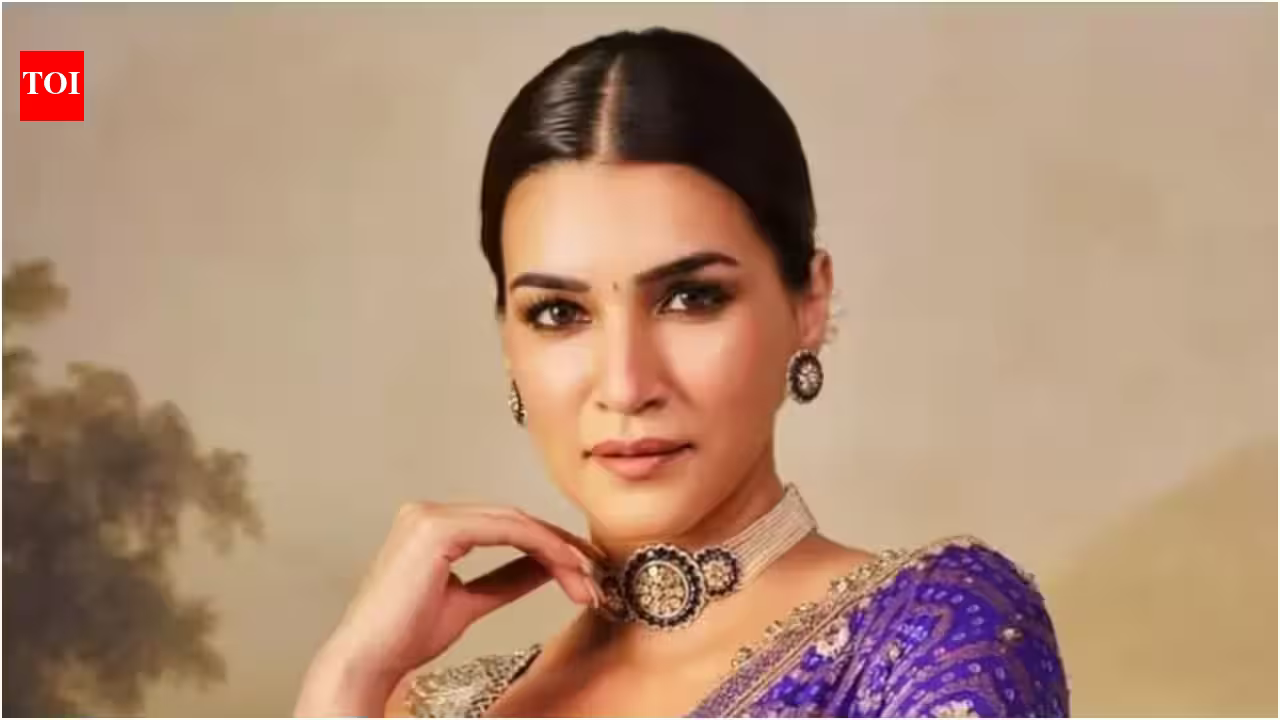
The sanctity of an image is becoming the new frontier of legal warfare in Bollywood. As the lines between personal identity and commercial commodity blur, actor Kriti Sanon has become the latest star to knock on the doors of the Delhi High Court, seeking a legal shield to protect her “personality rights.” However, the judiciary is signaling that it is no longer content with treating these cases as routine filings. Instead, it is demanding a rigorous constitutional and structural audit of what exactly constitutes a celebrity’s right to their own face, voice, and likeness.
During a hearing this past Friday, Justice Purushaindra Kumar Kaurav hit the pause button on the standard flow of such litigation. Rather than immediately granting blanket injunctions, the court directed Sanon’s legal team—led by the seasoned advocate Pravin Anand—to furnish a comprehensive compilation of judicial precedents. The message from the bench was clear: the court is looking for more than just a grievance; it is looking for a roadmap to define the scope, boundaries, and jurisdictional validity of personality rights in the digital age.
The Court’s Call for Clarity
The Delhi High Court’s hesitation is rooted in a pragmatic concern: the sheer frequency of these petitions is turning the court into a clearinghouse for celebrity brand management. Justice Kaurav’s request for a detailed research paper and a compilation of judgments isn’t merely procedural—it’s an attempt to establish a definitive framework.
The court is specifically grappling with the question of whether the Intellectual Property Division (IPD) is the correct forum for these disputes. While intellectual property law governs the ownership of tangible and intangible assets, the law surrounding a person’s inherent identity—their voice, their mannerisms, their very image—falls into a murky, gray area of common law. By asking for research, the court is essentially tasking the petitioners with bridging the gap between existing IP law and the evolving concept of the “right to publicity.”
Defining the Scope: Where Does the Persona End?
The crux of the argument presented by Sanon’s counsel revolves around the sanctity of an individual’s identity. Anand argued that personality rights are not merely about “fame”; they encompass a wide array of identifiers: names, voices, facial recognition, photographs, and video footage. In an era where deepfake technology and AI-generated content can clone a person’s likeness in seconds, the commercial exploitation of a star’s identity without consent is no longer just a privacy concern—it is a major financial risk.
However, the legal challenge lies in drawing the line. Where does public interest end and personal proprietary right begin? Can an actor stake a claim on a caricature? Does the use of their likeness in a satirical context or a fan-made tribute count as an infringement? These are the questions the court is now inviting counsel to help answer. The upcoming hearing on October 29 will likely prove to be a watershed moment in how these rights are interpreted under Indian law.
The Growing Trend of Celebrity Litigation
Sanon is certainly not alone in this endeavor. The Delhi High Court has, in recent years, become a battleground for A-listers looking to reclaim control over their digital shadows. From the veteran grace of Tabu to the bold, uncompromising stance of Kangana Ranaut, and even figures from the realms of politics and sports like Shashi Tharoor and Yuvraj Singh, the list of public figures seeking “personality rights” is swelling.
These petitions often emerge when brands, AI startups, or rogue digital entities use a celebrity’s likeness to peddle products or gain traction without a contract. While many celebrities view these lawsuits as a necessary defense against “parasitic” commercial use, critics often point to the risk of “SLAPP” suits (Strategic Lawsuits Against Public Participation) that could stifle free speech or parody. The court’s cautious approach suggests it is well aware of the fine line between protecting an individual’s livelihood and ensuring the judiciary doesn’t inadvertently censor public discourse.
Jurisdictional Uncertainty in the IP Division
Perhaps the most intriguing part of the court’s observation is the focus on the Intellectual Property Division’s jurisdiction. Historically, courts have handled personality rights as torts—a matter of privacy and defamation. By routing these cases through the IPD, celebrities have found a faster, more effective way to secure injunctions.
Yet, the court is now questioning if this is a square peg in a round hole. If personality rights are essentially about the right to be left alone or the right to control one’s image, does it truly belong alongside trademark and patent litigation? If the court determines that the IPD is not the appropriate forum, it could force a sea change in how celebrities approach these cases in the future. The October 29 hearing will not only be about Kriti Sanon; it will be a foundational inquiry into whether the law can evolve as quickly as the technology that threatens to exploit it.
Beyond the Courtroom: A Star’s Balancing Act
While the legal heavy lifting continues, life behind the scenes for Sanon remains as busy as ever. Fresh off her appearance in ‘Cocktail 2’ alongside Rashmika Mandanna and Shahid Kapoor, she continues to solidify her position as one of the industry’s most bankable stars. Her legal move is a reflection of the reality of modern stardom: today, an actor’s brand is their biggest asset, and protecting that brand is just as important as the roles they choose.
For now, the industry watches with bated breath. The outcome of this case will set a precedent for every major face on the silver screen. As the digital ecosystem becomes increasingly hostile toward unauthorized identity usage, the Delhi High Court’s demand for intellectual rigor will likely ensure that when the dust settles, there is a much clearer, more robust set of rules for everyone involved. Whether this leads to a new “personality rights” act or simply a tighter interpretation of existing laws remains to be seen. But one thing is certain: the era of the wild-west exploitation of celebrity identity in India is rapidly drawing to a close.
Disclaimer: This content is auto-generated for informational purposes only.
Source: Read Original News