





Strategic Shift in Apple Silicon Development
Apple’s roadmap for its proprietary silicon has undergone a significant recalibration. Recent reports indicate that the company is effectively bypassing the development of Pro, Max, and Ultra variants within the M6 chip generation. While the base M6 processor has already made its debut in the latest Mac mini, and will soon power the updated iMac and the entry-level 14-inch MacBook Pro, the architecture will not be extended into the high-performance tiers typically associated with the professional Mac lineup.
This decision marks a departure from the iterative cycle established with the M1 through M5 series. By concluding the M6 rollout prematurely, Apple is consolidating its engineering resources to accelerate the deployment of the M7 generation. This strategic pivot appears designed to concentrate R&D efforts on advanced computational requirements, specifically those related to next-generation artificial intelligence workloads and architectural refinements that require a clean break from current constraints.
Maintaining Performance Equilibrium with M5 Hardware
The decision to skip the M6 Pro and M6 Max iterations creates a unique product cycle for users who require high-performance hardware. Current flagship devices, specifically the professional MacBook Pro models, will continue to rely on the M5 Pro and M5 Max chipsets throughout the remainder of 2026 and into much of 2027. Since these chips were introduced in March of this year, they remain highly competitive in terms of power efficiency and multi-core processing capabilities.
Users seeking high-end power will not see a hardware refresh for the Pro and Max categories until late 2027, when the M7 series is scheduled to launch. This approach allows Apple to maximize the lifecycle of the M5 silicon, ensuring that its professional hardware remains stable for a longer period before the next major architectural leap. For corporate environments and content creators, this provides a predictable hardware trajectory, effectively extending the relevance of existing M5-based workstations until the anticipated M7 transition.
The Rise of M7 and AI Integration
The industry expectation is that the M7 generation will introduce hardware-level enhancements specifically tailored to sustain demanding machine learning and artificial intelligence tasks. As generative AI models become more complex, the hardware requirements for local processing—rather than relying solely on cloud-based computation—are increasing. The M7 chips are rumored to incorporate a more robust Neural Engine and optimized cache hierarchies designed to manage large parameter models locally on the device.
By skipping the high-end M6 variants, Apple is positioning the M7 series as the primary vehicle for its long-term AI strategy. The integration of these new chips into the MacBook Pro lineup at the end of 2027 will likely coincide with broader software updates that leverage this increased on-device processing power. This transition is not merely about increasing core counts; it is about architectural optimization for the specific data throughput necessary for high-frequency AI inference.
Timeline for Hardware Releases
The roadmap for the next two years reveals a clear distinction between consumer and professional hardware cycles. In the near term, the focus remains on the M6 entry-level machines, which cater to general-purpose computing. Following the launch of the M6-equipped 14-inch MacBook Pro, the development focus shifts entirely toward the M7 series.
The release of M7 Pro and M7 Max chips is currently targeted for the final quarter of 2027. These chips are expected to appear in refreshed MacBook Pro designs, which reports suggest will feature touch-sensitive OLED displays. Furthermore, the M7 Ultra—the pinnacle of the stack—is slated for the first half of 2028. This schedule effectively delays the next significant update for the Mac Studio, which is unlikely to see a refresh until the M7 Ultra is ready for mass production. This staggered release suggests that Apple is prioritizing the mobile professional segment for its initial M7 rollout.
Impact on Professional Workflows
The shift away from a “yearly cycle” for every tier of silicon offers both challenges and benefits for professional users. The primary benefit is stability; by skipping the M6 Pro/Max iterations, Apple minimizes the frequency of platform transitions, which can be disruptive for software developers and creative professionals who rely on specific binary compatibility and stable hardware environments.
Conversely, professionals who require cutting-edge performance will experience a longer wait between significant performance jumps. However, the anticipated jump to the M7 architecture is expected to provide greater efficiency gains than a marginal iteration of the existing M6 design would have provided. For developers, the extended use of M5 Pro and Max chips ensures that software optimization efforts remain relevant for a longer duration, reducing the need for constant re-optimization.
The OLED and Touchscreen Transition
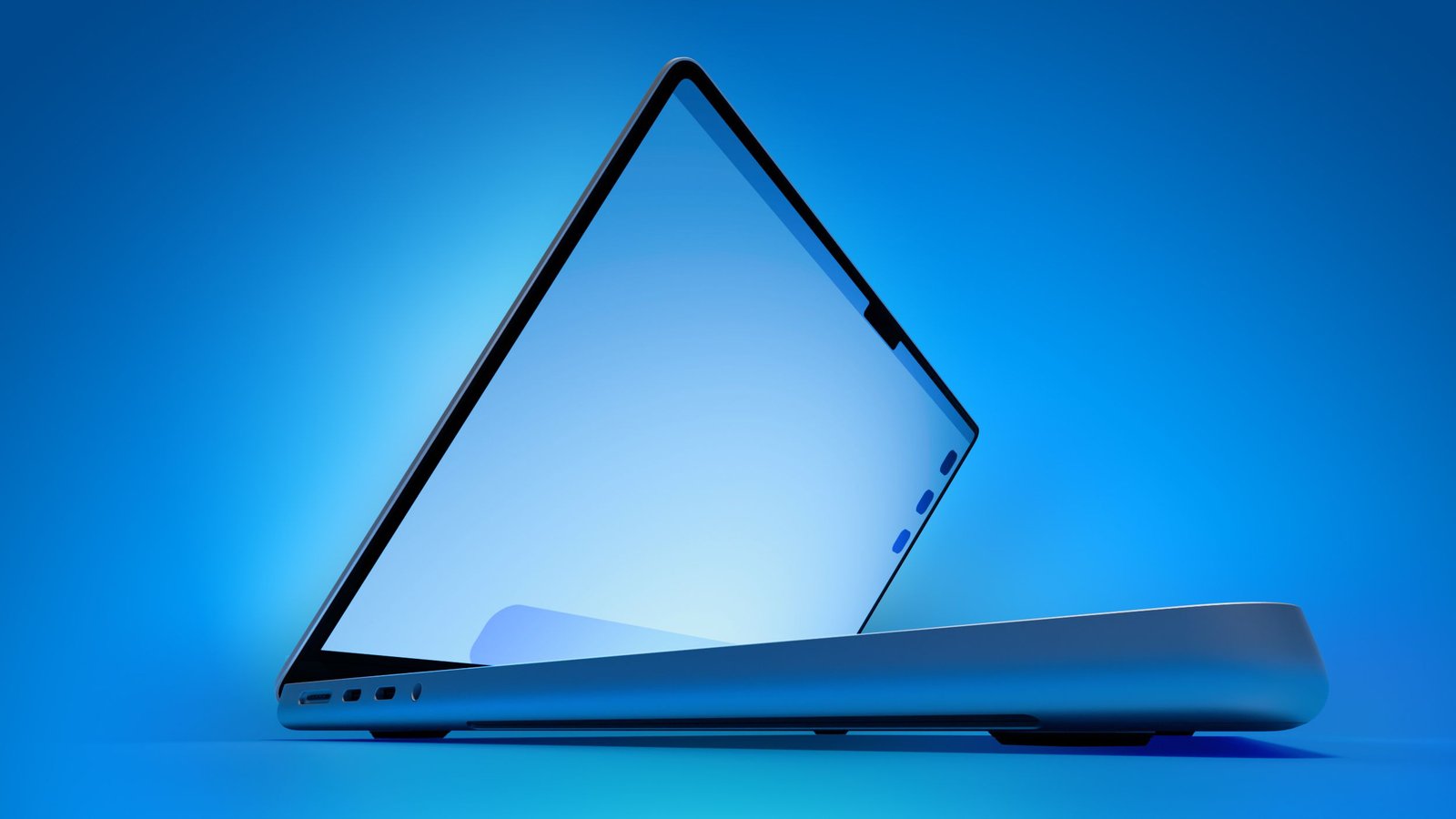
Integral to the transition into the M7 era is the move toward OLED display technology in the high-end MacBook Pro lineup. While the base M6 models currently address the lower-cost segment, the forthcoming touchscreen MacBook Pros scheduled for late 2027 will serve as the premier showcase for the M7 series.
By pairing the M7 chip with OLED panels, Apple is aiming to redefine the high-end mobile computing experience. OLED offers distinct advantages in color accuracy, contrast, and power efficiency compared to traditional LED backlighting. The combination of more powerful silicon—capable of handling both professional-grade creative tools and advanced AI-assisted workflows—and superior display technology marks a significant departure from previous laptop designs. This represents a long-term investment in hardware that is intended to bridge the gap between traditional workstations and the next generation of interactive, AI-driven professional devices.
Disclaimer: This content is auto-generated for informational purposes only.
Source: Read Original News