





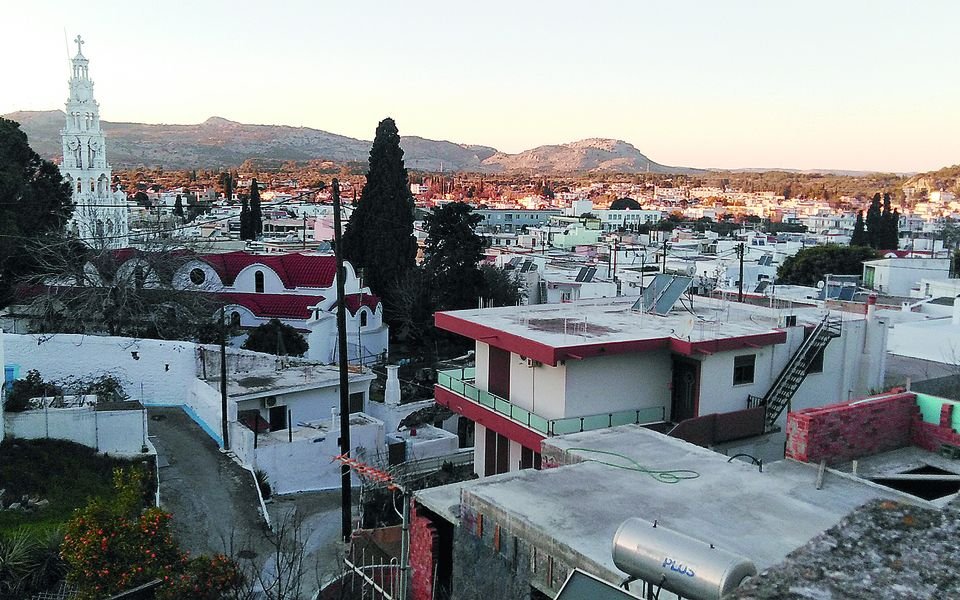
The recent, devastating floods in the Archangelos region of Rhodes, which tragically claimed one life, have brought a harsh spotlight to the bureaucratic gridlock currently paralyzing Greece’s environmental infrastructure projects. While the extreme weather event was undeniably intense—with the National Observatory of Athens recording nearly six times the average rainfall for October in just 48 hours—experts and local officials argue that the scale of the disaster was exacerbated by years of stalled flood-prevention initiatives.
Flood-prevention designs tailored specifically for the Archangelos area were initially drafted in 2021. Yet, nearly four years later, these plans remain confined to paper. South Aegean Regional Governor Giorgios Hatzimarkos expressed deep frustration regarding the delays, noting that the project has been effectively trapped in a cycle of administrative inertia. “For three years we have been trying to license the project, but we stumble over bodies and agencies,” Hatzimarkos told Kathimerini, highlighting a systemic failure in the permitting process that pits vital public safety measures against complex, slow-moving regulatory frameworks.
The timeline of the project’s stagnation underscores the gravity of the oversight. Although a technical study for the intervention was completed by 2023, and the €5.1 million project was officially integrated into the regional program in January 2025, construction has yet to commence. While an environmental approval was eventually granted after three years of processing, it has since emerged that further adjustments are required before the project can proceed to a public tender. Even under a best-case scenario, where the remaining bureaucratic hurdles are cleared within the next six months, the actual construction phase is expected to take at least a year to complete.
The vulnerability of Archangelos is not merely a product of climate-induced rainfall extremes, but also of urban planning decisions that have failed to account for natural hydrology. Professor Niki Evelpidou of the University of Athens points to a critical structural issue: the village was constructed in a way that ignores the natural flow of water, with two separate streams converging directly within the built-up area. This design flaw significantly amplifies the destructive potential of flash floods, as the dense, concrete-heavy environment provides little opportunity for the ground to absorb the deluge. When rainfall of such magnitude hits these impermeable surfaces, the water gains speed and volume, turning urban streets into destructive channels.
The tragedy in Rhodes serves as a stark reminder of the widening gap between climate reality and administrative capacity. As Mediterranean weather patterns become increasingly unpredictable and severe, the time required for standard environmental impact assessments and project licensing—often stretching into years—is increasingly at odds with the urgent need for climate adaptation.
The incident has reignited the debate over whether the current national framework for environmental protection effectively prioritizes the completion of essential infrastructure. With the local community mourning a lost life and grappling with extensive material damage, the focus has now shifted to whether the necessary adjustments to the flood-prevention project can be expedited. Until these critical works move from administrative files to the construction site, the island of Rhodes remains at high risk, left exposed to the next inevitable extreme weather event by a system that has, thus far, been unable to move at the speed of the crisis.
Disclaimer: This content is auto-generated for informational purposes only.
Source: Read Original News