








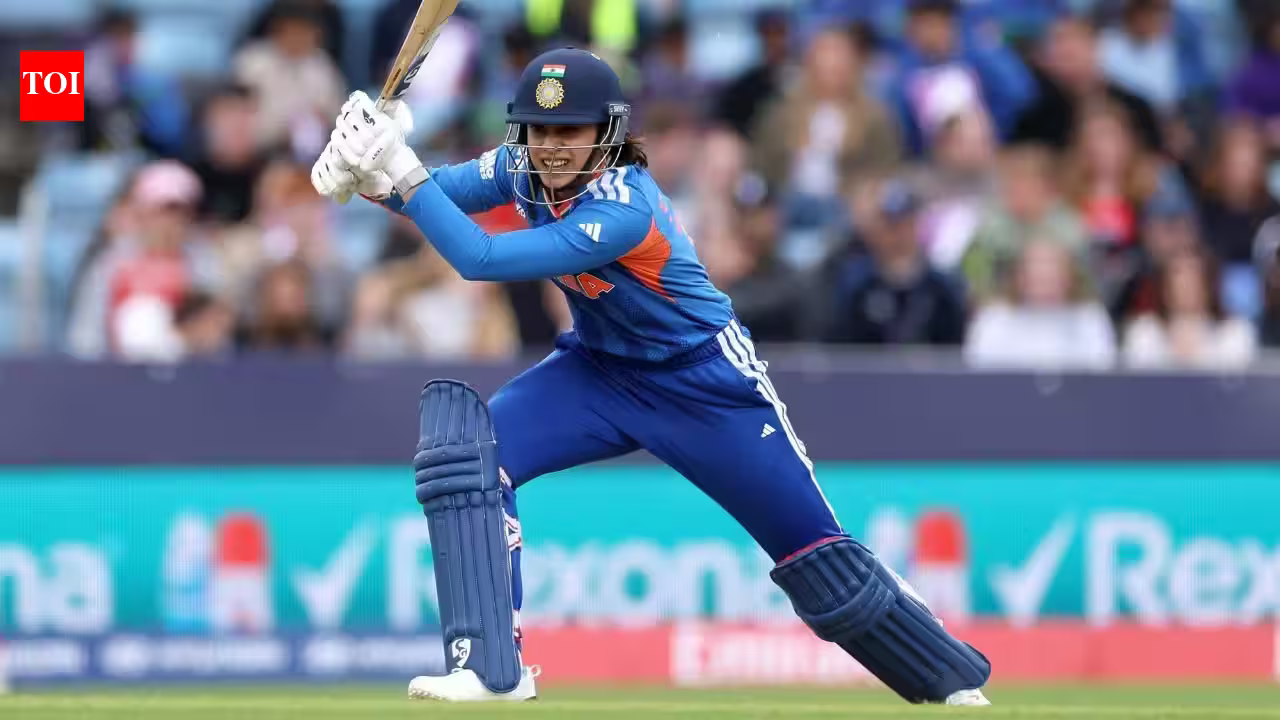
Raipur is set to become the epicenter of a new dawn for Indian women’s cricket this Friday, as Smriti Mandhana officially steps into her role as full-time captain. With the three-match T20I series against Zimbabwe marking the beginning of a fresh chapter, the atmosphere is electric. This series isn’t just about the immediate result; it is the opening movement of a long-term symphony designed to culminate in the ICC Women’s Champions Trophy 2027 on home soil.
Mandhana, one of the most prolific batters in the modern game, assumes the mantle with a clear vision. She is not merely looking to win matches; she is looking to fundamentally alter the architecture of the team’s approach to the sport. As India prepares to face Zimbabwe for the first time in international history, the mandate from the skipper is unambiguous: evolution through professionalism.
Building a “Well-Oiled Machine”
In an candid interview on JioStar’s Follow the Blues: The Dawn of Captain Smriti, Mandhana articulated the philosophy that will guide her tenure. She views the captaincy not as a position of personal glory, but as a service role—a duty to put the needs of the team and the collective standards of the squad above her own statistics.
“I have a job to do, I have to deliver,” Mandhana stated. “I always say this, that though the captain’s name is first on the list, you’re always the last on the list in terms of keeping everyone ahead.”
The roadmap she has laid out focuses on tangible improvements in areas where India has historically looked to bridge the gap with world leaders. Mandhana identifies “power-hitting,” “fielding intensity,” and “professionalism” as the cornerstones of her new regime. By emphasizing these pillars, she aims to transform the Indian setup into a “well-oiled machine” that operates with clinical efficiency regardless of the opponent.
The Legacy Factor
Beyond the boundary ropes, Mandhana is deeply conscious of the cultural imprint she leaves behind. Leadership, in her eyes, is about setting a blueprint for the next generation. She believes that the true measure of her success will not be found in trophy cabinets alone, but in the behaviors and standards adopted by the players who take the field long after her tenure concludes.
“You always take up this role to leave it in a way where you set a culture for the team, for the rest of the girls to follow,” Mandhana explained. “So, you don’t just do this for the sake of it.”
By institutionalizing a culture of rigorous preparation and high-performance accountability, she hopes to ensure that the transition for young players entering the dressing room is seamless and aspirational.
The Mentor in the Room
One of the most intriguing aspects of this transition is the presence of the woman Mandhana succeeds: the legendary Harmanpreet Kaur. Rather than viewing her former skipper’s presence as a shadow, Mandhana is leaning into it as a strategic advantage. She understands the immense value of having the longest-serving captain in the country’s history still contributing to the team’s ecosystem.
“She’s led India, she’s the longest-serving captain, and has been such a great leader,” Mandhana remarked. “So I’m sure that her experience, especially with a lot of youngsters coming into the team now, and the way she works towards the game, is going to be inspiring for a lot of people.”
Mandhana has explicitly encouraged the younger brigade to observe Kaur’s work ethic—the way she prepares, the way she manages pressure, and the way she approaches the craft of cricket. For a team in flux, this mentorship bridge between eras is vital.
A Roadmap to the 2027 Champions Trophy
The upcoming series against Zimbabwe, followed by three T20Is against South Africa, serves as the primary laboratory for Mandhana’s experiments. With the 2027 Champions Trophy looming on the horizon, the coaching staff and leadership group are under pressure to define a specific brand of cricket that suits India’s diverse talent pool.
“It’s going to be extremely important to see what style of cricket you want to play, what brand of cricket you want to play, and who’s fitting where,” Mandhana noted.
Between the upcoming international fixtures and the high-intensity exposure provided by the Women’s Premier League (WPL), the management has a unique opportunity to stress-test their squad. For Mandhana, every match from Friday onward is a building block. The results in Raipur will provide the first data points in a long-term quest to make India the undisputed powerhouse of world cricket by the time the Champions Trophy arrives in India.
As the team takes the field in Raipur, the focus remains on the process. If Mandhana’s vision for a high-intensity, professional, and culturally grounded team takes hold, this series against Zimbabwe may well be remembered as the moment India’s women’s cricket team truly leveled up.
Disclaimer: This content is auto-generated for informational purposes only.
Source: Read Original News