








Yokohama – In a 100-hectare green stretch of land in Yokohama, formerly home to a U.S. military communication facility, the landscape is being transformed. Industrious teams of workers are currently planting ten million flowers and 600 cherry trees, preparing for the March 19 opening of the Green Expo. As the six-month international horticulture event approaches, organizers are racing to build awareness for what they hope will be a global benchmark for environmental collaboration.
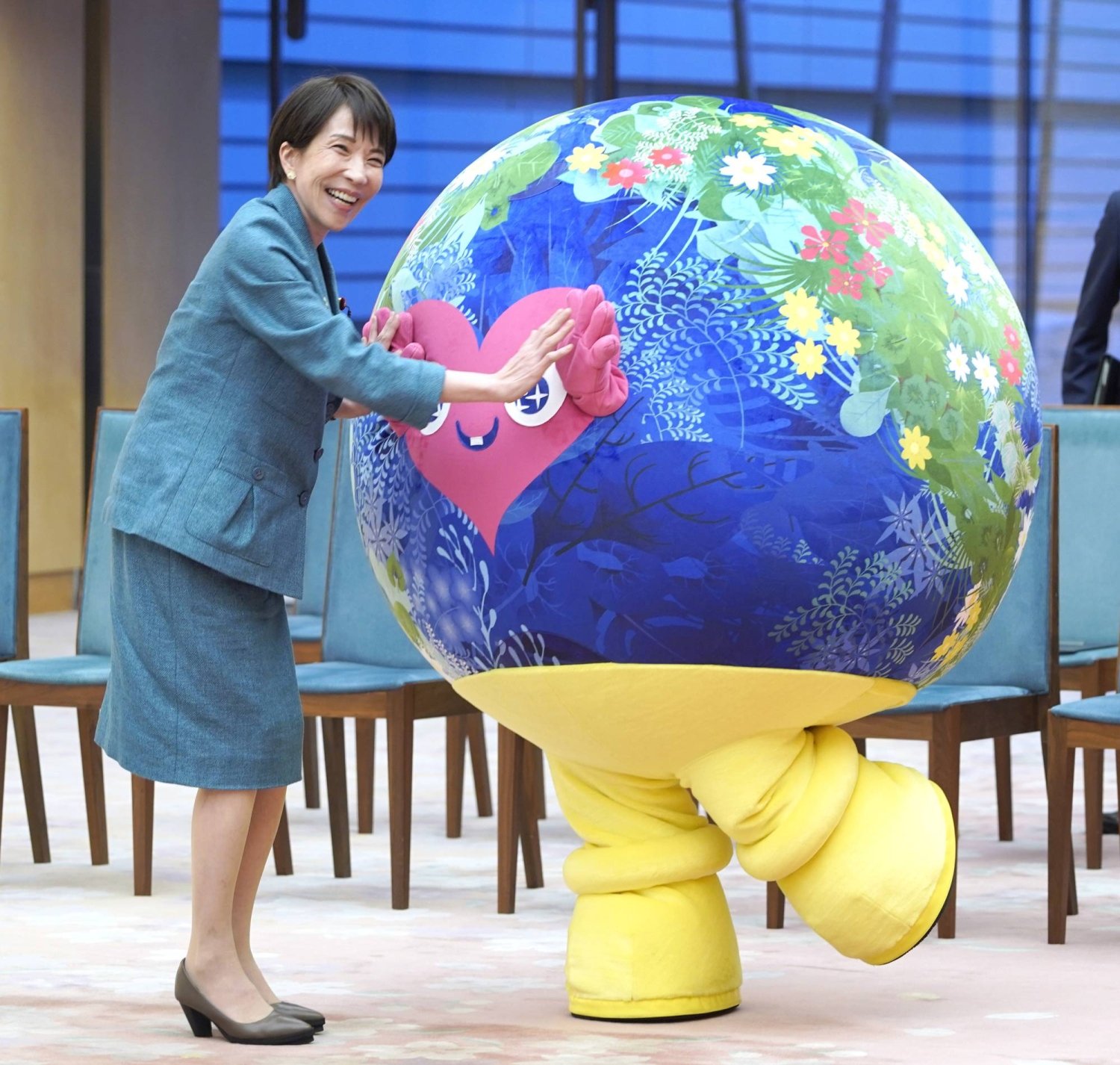
Running until September 26, the expo is centered on the theme “The Blooming Field of Planetary Citizens.” It aims to bridge the gap between cutting-edge technology and human-nature harmony, offering a uniquely Japanese perspective on how to achieve sustainable development goals before the 2030 deadline. To capture public imagination, the event has employed a colorful mascot named Tunku Tunku, an extraterrestrial character fascinated by Earth’s biodiversity. Yet, beneath the mascot’s whimsical exterior lies a rigid commitment to solving modern environmental crises.
Organizers are notably looking to the past to inform the future. A significant portion of the programming will focus on the Edo Period (1603-1867), a time when Japan’s limited resources necessitated a flourishing circular economy. During this era, isolation from international trade forced a domestic culture of extreme conservation. Academics point to the ingrained concept of mottainai—regret over waste—as a driving force for society. Items like kimonos were meticulously deconstructed, washed, and repurposed, while specialized traders known as kamikuzu-kai ensured that waste paper was pulped and recycled.
Kazuko Ishigaki, executive director of the Green Expo’s public relations department and a former U.N.-Habitat regional director, believes these historical lessons remain vital. “There are so many interesting ideas in the Edo Period, some of them maybe we can still utilize,” she says, citing the practice of planting cherry trees on top of river dikes. Beyond the aesthetic value, the weight of visitors enjoying the flowers helped compact and strengthen the soil, providing a natural form of disaster risk reduction.
Modern theorists agree that an “Edo mindset” could reshape current consumption. Social philosopher Roman Krznaric suggests that if society applied these principles today, the disposable nature of technology would be fundamentally challenged. Instead of the current cycle of planned obsolescence, devices might be required to be modular and built from recycled components. The Green Expo aims to put these values into practice by incorporating timber salvaged from the Osaka Expo’s Grand Ring into its own structures, signaling a commitment to a zero-waste society.
Building on the legacy of the Osaka Expo, the Yokohama event aims to attract 10 million visitors. However, organizers are working to avoid the operational hurdles that plagued their predecessor, particularly regarding extreme summer heat. Drawing from the experiences of 2025, the team has integrated comprehensive cooling strategies, including expanded tree canopy cover, advanced misting systems, and dedicated children’s cooling zones.
Despite the grand scale of the event, the organizers face a significant challenge: domestic “climate fatigue.” Recent surveys suggest that public urgency regarding climate change in Japan has waned, with many citizens feeling disconnected from the global crisis.
“They might think this is not related to their life, but that’s not true,” Ishigaki says. By blending historical wisdom with modern technology, the Green Expo hopes to reignite that connection, urging visitors to realize that the path to a sustainable future may be paved with lessons learned centuries ago.
Disclaimer: This content is auto-generated for informational purposes only.
Source: Read Original News