






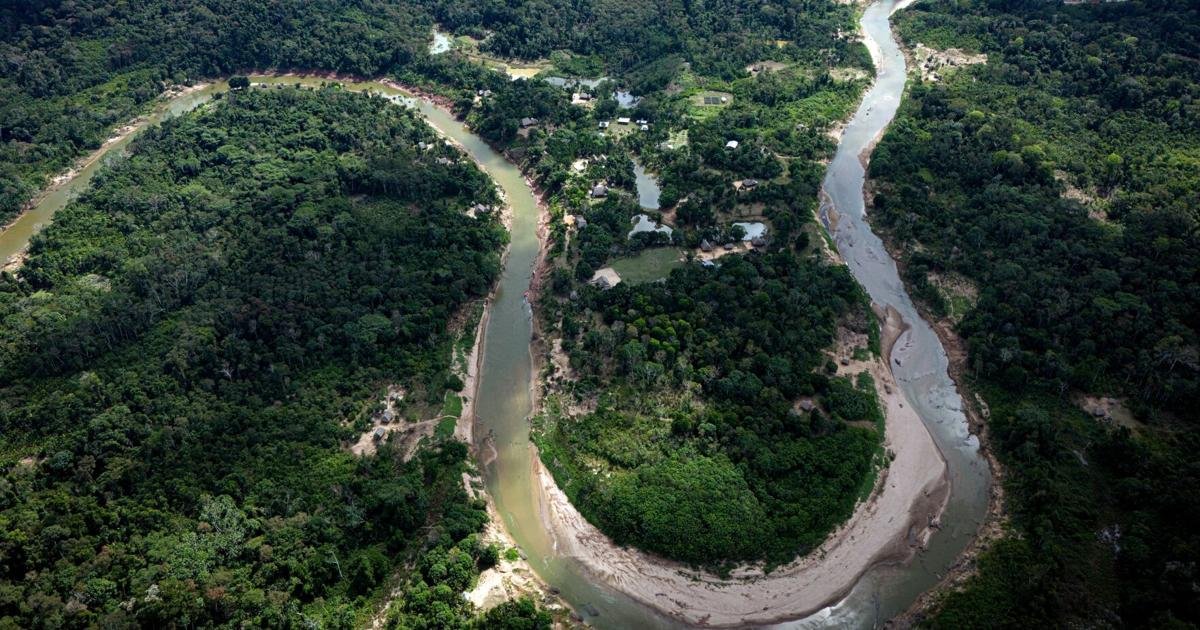
The Amazon rainforest, long recognized as a critical global carbon sink, is currently the stage for a profound transformation in land stewardship. In the remote reaches of the Amônia River, within the Acre state of Brazil, the Ashaninka people are leading a resurgence in environmental restoration that challenges traditional notions of conservation. By integrating ancestral knowledge with modern ecological practices, the Ashaninka are effectively reversing decades of deforestation, offering a blueprint for climate resilience in one of the world’s most biodiverse regions.
The territory surrounding the Amônia River was once subjected to intense pressure from illegal logging and cattle ranching, activities that stripped the land of its primary forest cover and disrupted the hydrological cycles essential to the basin. For years, the Ashaninka faced existential threats as outsiders encroached upon their ancestral borders. Today, however, the landscape tells a different story. Lush, dense canopy has returned to areas that were previously degraded, a result of decades of reforestation efforts that have seen the planting of hundreds of thousands of native trees.
The Ashaninka approach to land management, known as agrofloresta (agroforestry), emphasizes the cultivation of a diverse ecosystem that supports both food security and forest regeneration. Unlike industrial monoculture, which depletes soil nutrients, the indigenous model mimics the structure of the natural forest. By planting a strategic mix of timber, fruit-bearing species, and medicinal plants, the community has created a “living pharmacy” and larder that concurrently restores the soil’s carbon-sequestering potential.
“The forest is not just a resource; it is our ancestor,” said a community leader. “If the forest dies, our culture dies with it. We do not plant to exploit; we plant to heal.”
This restorative process has significant implications for global climate goals. Scientific assessments indicate that the restored regions along the Amônia River have seen a documented increase in biodiversity, with local populations of endangered fauna returning to inhabit the maturing forest. Furthermore, the stabilization of the riverbanks through native vegetation has improved water quality and mitigated the effects of seasonal flooding, which have become increasingly erratic due to broader climate shifts.
However, the Ashaninka’s success is not merely a local triumph; it is a point of contention in broader Brazilian policy. The legal recognition of indigenous territories is increasingly viewed by scientists as the most effective tool for forest protection. Data from satellite monitoring consistently demonstrates that land managed by indigenous groups experiences significantly lower rates of deforestation compared to unprotected state land or private agricultural holdings. Yet, political fluctuations in Brasília continue to pose risks to land rights, keeping the Ashaninka in a state of perpetual vigilance.
The international community has begun to take notice. As global markets seek verified carbon credits and sustainable supply chains, the Ashaninka model provides a high-integrity example of nature-based solutions. Nevertheless, the community remains wary of “greenwashing,” often cautioning that their efforts should not be viewed as a commodity to be traded, but as a fundamental human right to sovereignty and environmental health.
As the world grapples with the accelerating impacts of the climate crisis, the work unfolding along the Amônia River serves as a stark reminder of the efficacy of indigenous-led conservation. The Ashaninka have proven that when provided with the autonomy to manage their traditional territories, indigenous peoples act as the most capable stewards of the planet’s vital ecosystems. Their journey from the precipice of displacement to the vanguard of restoration underscores a simple, yet often ignored, truth: the preservation of the Amazon depends not just on international policy, but on the empowerment of those whose lives are inextricably linked to its survival.
Disclaimer: This content is auto-generated for informational purposes only.
Source: Read Original News