







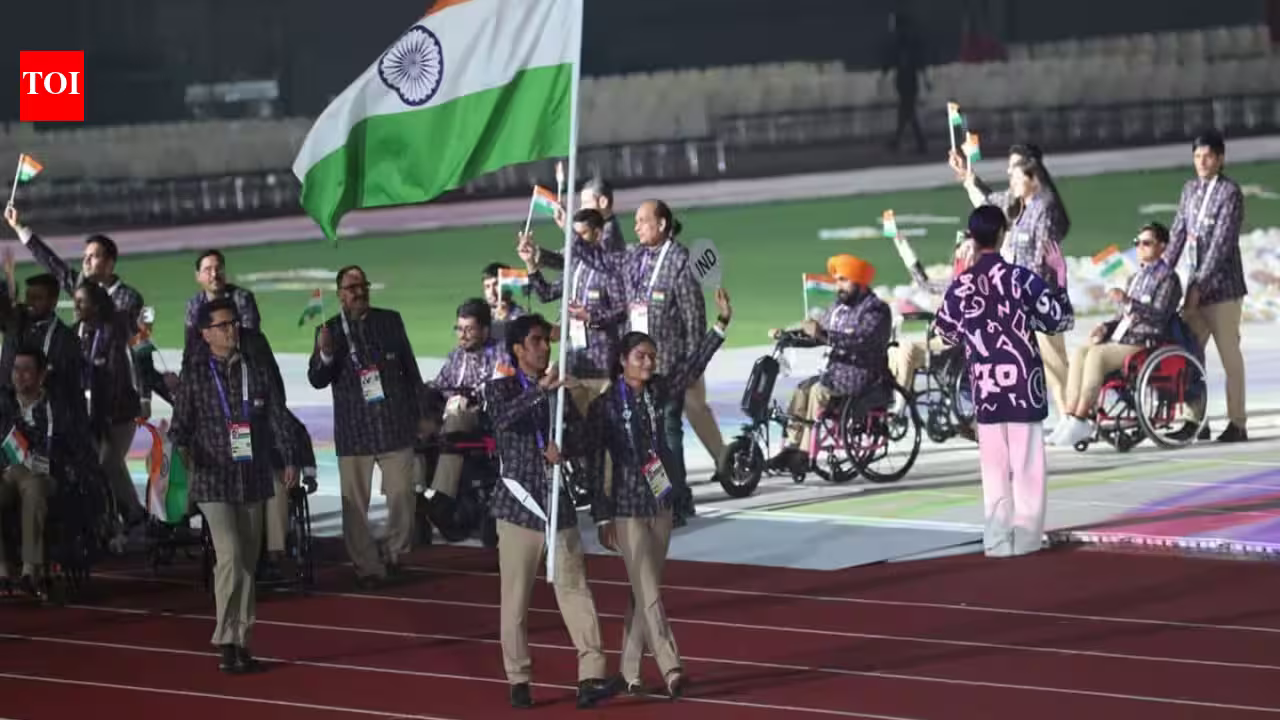
Hangzhou—The spirit of resilience and the weight of history converged on Sunday as the Indian contingent made a poignant and visually arresting entrance at the opening ceremony of the Para Asian Games. While the focus of the night was on the start of a grueling competition, the Indian team ensured that the world took notice of their arrival, not just through their athletic stature, but through a profound homage to the cradle of their civilization.
## A Parade of Heritage
As the athletes marched into the stadium, the eyes of the international sporting community were drawn to the meticulously crafted ceremonial blazers donned by the Indian delegation. In a departure from standard sporting kits, the designers behind these garments looked back 5,000 years, incorporating intricate motifs inspired by the Indus Valley civilization.
The blazers, which served as a bridge between the ancient past and the modern sporting arena, featured stylized prints of iconic seals unearthed from sites like Harappa and Mohenjo-daro. These symbols, representing one of humanity’s earliest urban cultures, turned the parade into a moving museum of national pride. The attention to detail extended to the collar, which bore the inscription “SaptSindhu”—a sacred reference to the land of the seven rivers and the historic, life-giving Saraswati.
“Team India walked out wearing more than just ceremonial dress; they wore 5,000 years of civilization,” the Paralympic Committee of India (PCI) stated in an official release following the ceremony. “The Indian contingent’s ceremonial blazer is a tribute to our heritage, a reflection of the continuity of our spirit that refuses to be sidelined.”
## Icons Leading the Charge
The procession was spearheaded by two of India’s most decorated para-athletes: sprinter Simran Sharma and badminton maestro Pramod Bhagat. As flagbearers, the duo embodied the dual themes of speed and precision that define the Indian para-sports movement today.
Following them were over 100 Indian athletes, carrying the Tricolour with a sense of purpose that resonated across the stadium. The display was a far cry from the periphery of international sports; it was a bold declaration of intent from a nation that has seen its para-athletes rise to prominence with unprecedented speed over the last few years.
## By the Numbers: India’s Sporting Ambition
India’s presence in this year’s games is the largest and most robust in its history. The nation has dispatched a 281-member contingent, which includes 168 highly competitive athletes—112 men and 56 women—across 11 different disciplines. This level of participation underscores the systematic growth in grassroots training and funding for para-sports within the country, a transformation that has yielded undeniable results on the podium.
The competition, which features approximately 3,000 athletes from 45 different nations, is unified under the inspiring motto “Imagine One Heart.” For the Indian team, that heart beats with the rhythm of a recent, historic success.
## Sustaining the Momentum
The pressure to perform is significant, especially given the bar set by the previous edition of these Games. India enters this competition fresh off its most successful Asian Para Games outing ever. In Hangzhou in 2023, the Indian contingent stunned observers by finishing fifth in the overall medal standings with a staggering haul of 111 medals. That record-breaking performance included 29 gold, 31 silver, and 51 bronze medals—a tally that served as a turning point for para-sports in the country.
As the games progress toward their conclusion on October 24, the athletes are not merely aiming to replicate those numbers; they are looking to exceed them. The blend of seasoned veterans and hungry newcomers suggests that India is well-positioned to remain a dominant force in the Asian para-sporting landscape.
## A Symbol of Resilience
The significance of the Indus Valley motifs on the blazers cannot be overstated. By invoking the history of an ancient civilization that mastered water management, trade, and urban planning, the athletes have effectively framed their own sporting journeys as a continuation of human tenacity.
As the games unfold, the world will watch to see if the Indian athletes can pair their historical aesthetic with modern-day glory. For now, however, the message is clear: India has arrived on the global stage with its identity firmly intact, its athletes battle-ready, and a 5,000-year legacy fueling every stride they take on the track and every move they make on the court.
With the Tricolour flying high and the “SaptSindhu” inscribed on their collars, these athletes are proof that even in the face of adversity, they are carrying the weight of history toward a golden future.
Disclaimer: This content is auto-generated for informational purposes only.
Source: Read Original News