







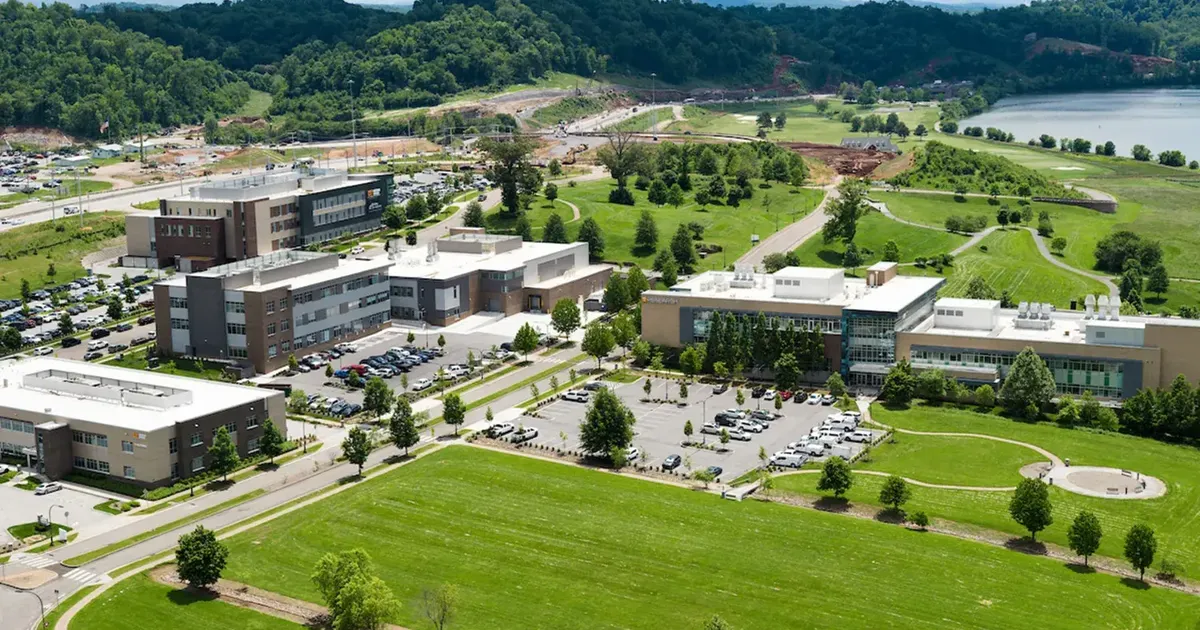
The Peninsula Innovation District, a burgeoning hub for collaborative research and regional economic development in Tennessee, has been honored with the 2026 Emerging Community of Innovation Award. Presented by the Association of University Research Parks (AURP), the accolade recognizes the district’s rapid progress in fostering a sustainable ecosystem where academic research, entrepreneurship, and private industry converge.
The award specifically targets innovation districts that have been operational for less than a decade, highlighting their potential to serve as models for future-oriented economic growth. By connecting the University of Tennessee (UT) and UT Medical with private enterprises, the peninsula is positioning itself as a premier destination for high-level commercialization and interdisciplinary discovery.
Expanding the Frontier of Research and Technology
The district is scaling significantly from its roots as the 60-acre UT Research Park into a massive 300-acre innovation hub. With over $750 million in planned development, the project is banking on a future built upon high-stakes industries, including nuclear energy, quantum computing, and advanced manufacturing.
Technological progress is a cornerstone of this expansion. Upcoming developments include a dedicated “Quantum Foundry” and a state-of-the-art BioSciences and Engineering Building, both slated for completion by 2030. These facilities are designed to serve as multi-user environments where private tech firms can leverage university resources to accelerate product development.
In the tech industry, the integration of these specialized facilities is critical for bridging the “valley of death” between laboratory research and market-ready innovation. By providing the physical infrastructure—and the computational power necessary to fuel quantum and bio-engineering breakthroughs—the district is creating a shortcut for startups and established players alike to refine their technologies in a high-density, collaborative environment.
Bridging Healthcare and Advanced Science through Interdisciplinary AI
The district’s mission extends deep into the life sciences, where the integration of digital tools and clinical expertise is driving new patient outcomes. A notable example of this cross-disciplinary success involved a complex spinal surgery performed on a chimpanzee, which required the combined expertise of specialists from the UT College of Veterinary Medicine and surgeons from UT Medical.
This level of collaboration is a precursor to how the district intends to handle future medical breakthroughs. As AI and machine learning continue to reshape healthcare, the Peninsula Innovation District plans to integrate medical education facilities with cancer research centers. By fostering an environment where data scientists and medical professionals operate in close proximity, the district aims to utilize AI to streamline diagnostics and personalize treatment plans, effectively turning raw data into actionable clinical intelligence.
Infrastructure as an Economic Engine
Real-world impact requires tangible infrastructure, and the district is undergoing significant physical transformations to match its research goals. Beyond the labs and office spaces, the Tennessee Department of Transportation is constructing a new interchange to improve access between the research park, UT Medical, and the nearby regional airport.
This connectivity is vital for attracting global talent and international companies that require seamless access to academic powerhouses. By optimizing the “commute” between researchers and the outside world, the district is lowering the barriers to collaboration.
“The recognition reflects the shared vision and momentum behind the Peninsula Innovation District,” said Deb Crawford, UT’s vice chancellor for research, innovation, and economic development. As the district moves forward, its success will likely hinge on its ability to keep this “connected community” active, ensuring that the physical proximity of its stakeholders leads to the rapid scaling of ideas that improve both regional economic health and global technological standards.
For industry leaders and researchers looking to engage with this evolving ecosystem, the district remains a primary point of contact for navigating the intersection of public research and private investment.
Disclaimer: This content is auto-generated for informational purposes only.
Source: Read Original News