







Supply Chain Adjustments and Early Delivery Estimates
The launch of the iPhone Duo has followed a trajectory common for high-demand hardware, characterized by immediate stock depletion and subsequent backordering. Following the opening of pre-orders last Friday, initial demand proved high enough to push estimated delivery windows into January 2027. However, recent developments indicate that Apple’s logistics and supply chain teams may be optimizing their output faster than anticipated. Numerous customers, particularly those within the Japanese market, have reported that their delivery dates have been pulled forward significantly.
For many users who were initially braced for a multi-month wait, this shift represents a welcome improvement in procurement efficiency. Instances have been documented where customers who were previously scheduled for December arrivals are now seeing expected delivery dates as early as late October. While Apple has remained silent regarding the specific logistical improvements behind these changes, the data suggests that initial supply constraints are being mitigated. It remains to be seen if this trend will expand to other global regions, such as North America or Europe, where demand similarly impacted the original shipment estimates.
The Engineering Behind the iPhone Duo
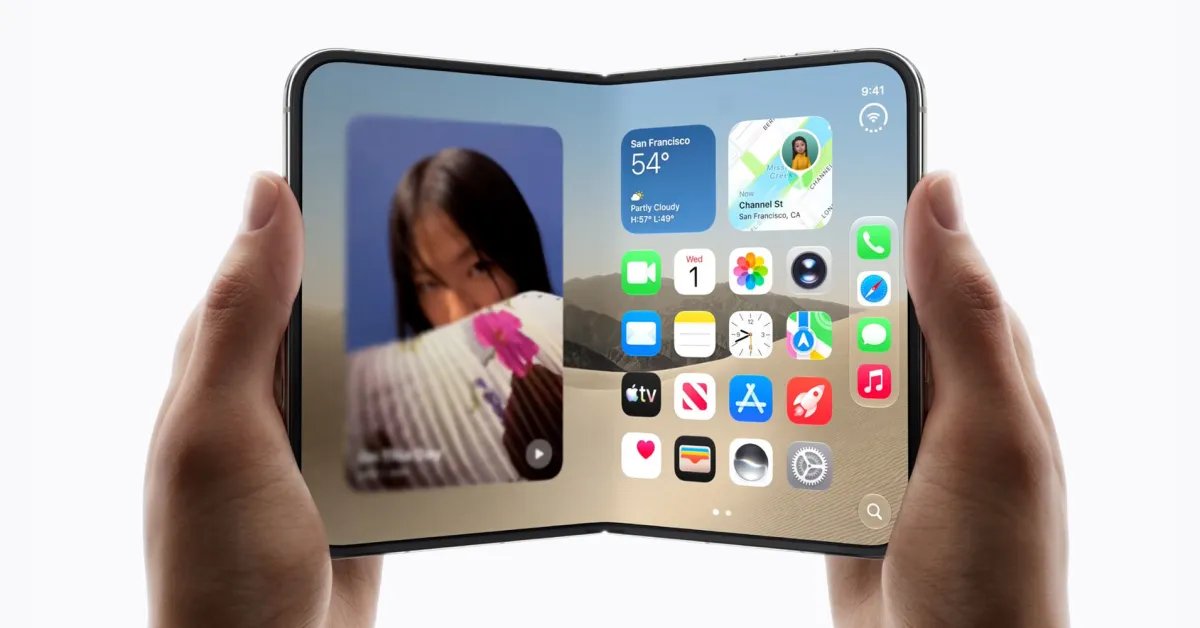
The iPhone Duo represents a significant departure from the traditional rigid slab design that has defined the smartphone industry for nearly two decades. By integrating a foldable display architecture, the device allows for a dual-screen experience that maintains the portability of a standard smartphone while offering the expanded screen real estate of a tablet. The engineering challenge inherent in this design lies in the hinge mechanism and the screen continuity across the fold. Apple has utilized a specialized multi-link hinge that minimizes the crease typically associated with foldable displays, ensuring that the transition between the two OLED panels remains seamless.
The device relies on a highly durable, flexible polymer-based screen protection layer that balances scratch resistance with the elasticity required to withstand thousands of opening and closing cycles. This complexity is likely a primary factor in the initial supply shortages. Manufacturing components that must operate at such tight tolerances requires a slow, precision-focused assembly process. Any fluctuation in the yield rates of these screens can cause ripple effects throughout the shipping timeline, which accounts for the rapid shift from stock availability to backordered status shortly after the launch.
Use Cases for the Foldable Form Factor
The adoption of the iPhone Duo is driven largely by its utility for productivity and media consumption. The primary use case is the “split-view” functionality, which allows users to run two applications simultaneously without the screen real estate trade-offs of a traditional phone. For professionals, this means being able to reference documents or emails on one side of the device while drafting content or managing spreadsheets on the other.
Furthermore, the device offers a unique “laptop-lite” mode. When the phone is folded at a 90-degree angle, the user interface adapts to utilize the bottom half of the screen as a tactile control or virtual keyboard, while the top half remains a dedicated viewing area. This creates a functional desktop environment in a form factor that fits into a pocket. The hardware also benefits creators, as the folding mechanism serves as a built-in stand, allowing for high-quality video conferencing or hands-free photography without the need for additional accessories. The integration of advanced computational photography with this flexible hardware makes the iPhone Duo a versatile tool for both technical work and creative output.
Impact on the Mobile Ecosystem
The introduction of the iPhone Duo signals a strategic shift in mobile computing. By entering the foldable market, Apple has validated the demand for devices that challenge the status quo of fixed-screen hardware. This move is expected to force a rapid acceleration in the development of foldable software optimizations across the broader app ecosystem. Developers are now under pressure to ensure their applications offer fluid scaling and adaptive layouts, which will fundamentally change how software is designed for mobile platforms.
From a market perspective, the early, albeit constrained, success of the device demonstrates that consumers are ready to move beyond the limitations of single-screen devices. While the current delivery volatility is a standard operational hurdle, the underlying technology appears robust enough to sustain interest. If these early shifts in delivery dates are indicative of maturing manufacturing processes, the iPhone Duo may well become a standard-bearer for mobile productivity. The industry is currently watching to see how Apple navigates the next phase of distribution, as high-end foldable devices often encounter early-life reliability challenges that the company must address to maintain user confidence.
Managing Expectations and Future Logistics
For consumers currently holding backordered status updates, the volatility in delivery dates provides a glimmer of hope that the initial estimate is not necessarily the final one. However, industry analysts caution that such shifts can also be the result of system re-calculations based on regional inventory re-allocation. Apple’s distribution network is designed to balance stock levels based on real-time data, and it is possible that Japan’s early receiving of units is part of a broader, phased rollout strategy.
For now, the focus for prospective buyers remains on monitoring account dashboards for direct updates from Apple. Because these changes have been predominantly reported for orders placed directly through official channels, it highlights the importance of using primary retail outlets during high-demand product launches. As the company continues to scale production to meet demand, the gap between the initial order date and the actual shipping date will likely tighten globally. The coming weeks will be critical in determining whether the iPhone Duo can maintain its momentum as it moves from a rare, backordered luxury to a more widely available tool for modern computing.
Disclaimer: This content is auto-generated for informational purposes only.
Source: Read Original News