







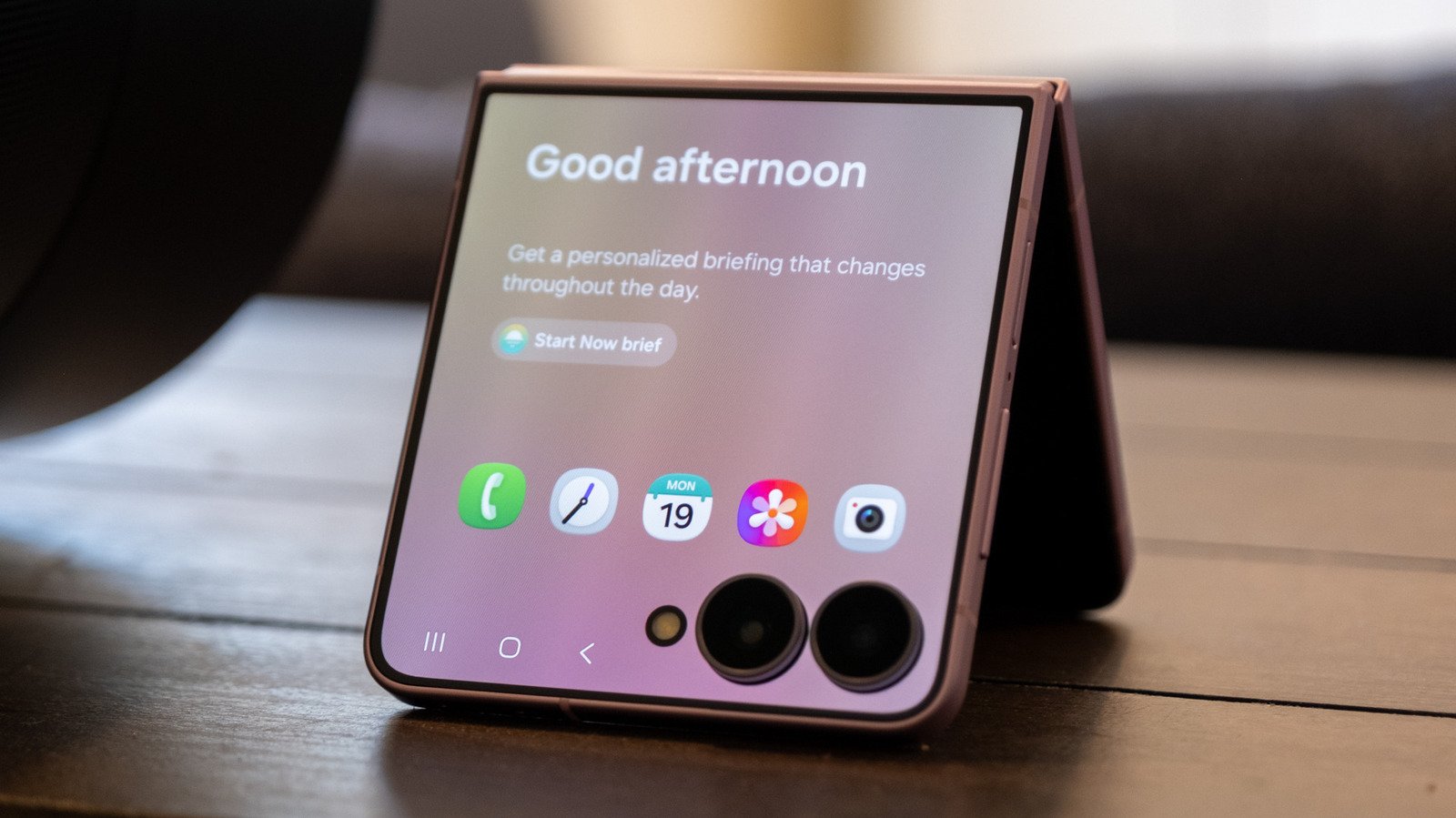
The Samsung Galaxy Z Flip 8 arrives as the latest entry in the company’s long-running series of clamshell-style foldable smartphones. While the broader foldable market has seen radical form-factor shifts in recent months, the Z Flip 8 focuses on refining the established design language rather than reinventing it. Priced at $1,199.99, the device represents an incremental step forward, offering improved build quality and internal hardware at a higher cost than its predecessor.
Hardware and Design Refinements
The Z Flip 8 introduces modest physical changes that contribute to a more premium hand-feel. Measuring 6.1mm when unfolded and 13.1mm when closed, the device is slightly thinner than the Z Flip 7. While the reduction is marginal, the engineering focus has clearly been on the hinge mechanism. Samsung has redesigned the hinge to allow for greater separation between the two halves of the device, paired with a less aggressive magnet system and increased spring tension. These adjustments make one-handed opening significantly smoother.
Despite these tweaks, the device retains an IP48 rating. While this protects against water submersion, it does not provide full resistance against fine particles like sand or dust. The internal screen continues to feature a visible crease, which remains a standard characteristic of the current foldable technology. For durability, Samsung utilizes Gorilla Glass Victus 2 on the exterior and an Advanced Armor Aluminum frame, ensuring the device remains robust for daily use.
Display Performance
Samsung continues to rely on high-quality AMOLED panels for the Z Flip 8. The inner display is a 6.9-inch Dynamic AMOLED 2X screen with a variable refresh rate of 1Hz to 120Hz. The 4.1-inch cover display shares similar adaptive refresh technology and offers high-contrast visuals, though it remains capped at a lower resolution compared to the internal screen.
Brightness metrics remain consistent with last year’s model, with the inner display reaching a peak of approximately 2,600 nits. While this level of luminance is adequate for outdoor visibility, the device still suffers from the reflective nature of its polymer display layers. The absence of an advanced anti-reflective coating is a notable omission, as such technology could have significantly improved clarity in direct sunlight.
Processing Power and Thermals
The performance gap between the Z Flip 8 and its predecessor is defined by the inclusion of the Qualcomm Snapdragon 8 Elite Gen 5 processor, paired with 12GB of RAM. In synthetic benchmarks such as Geekbench 6, the device shows a marked improvement in single-core speeds—upwards of 57% over the Z Flip 7.
Real-world usage remains snappy, with rapid app loading and fluid multitasking. However, the compact, folding chassis imposes physical limitations on heat dissipation. Stress testing reveals that the device undergoes significant thermal throttling under sustained heavy workloads. While the peak performance is higher than previous generations, users should be aware that the device is not designed for prolonged, high-intensity gaming sessions that demand maximum thermal overhead.
Battery Technology and Charging
The Z Flip 8 is equipped with a 4,300 mAh battery, matching the capacity of the Z Flip 7. The primary advancement here is the shift to silicon-carbon battery chemistry, which optimizes internal space. While this change is a positive step toward more energy-dense future hardware, the actual daily battery life remains largely identical to the previous model.
Charging speeds remain a point of contention. The device supports 25W wired charging and 15W wireless charging. While actual lab tests show the Z Flip 8 reaches a full charge slightly faster than the Z Flip 7—clocking in at roughly 75 minutes—it remains behind industry competitors, some of which offer significantly faster charging capabilities.
Software and Future Support
The device ships with Android 17 and One UI 9, supported by a seven-year software update guarantee. This commitment to longevity is a primary advantage for users looking to keep their hardware for a significant period.
The software experience is highlighted by the redesigned FlexWindow interface. Samsung has pushed the cover screen utility, allowing for direct access to notifications, app drawers, and AI-driven features. For power users, the integration of Good Lock and MultiStar tools bridges the gap between basic cover-screen widgets and full-application support, allowing third-party apps to run on the outer display with minimal friction. The inclusion of the full Galaxy AI suite adds automated organizational and media-editing tools, though their utility will depend on individual user workflow preferences.
Market Positioning and Final Verdict
The Galaxy Z Flip 8 sits in a competitive space where it must balance its polished software experience against rivals like the Motorola Razr Ultra. While the Razr series offers faster charging and larger external screens, Samsung provides a superior track record for long-term OS support and a more powerful chipset in the North American market.
For those using a Z Flip 7, the improvements in the Z Flip 8 do not justify a migration, especially given the $100 price increase. However, for first-time buyers of a foldable phone or those upgrading from a significantly older device, the Z Flip 8 offers a highly refined, reliable experience. It remains a top-tier choice for those who prioritize the compact, versatile form factor of a modern clamshell smartphone.
Disclaimer: This content is auto-generated for informational purposes only.
Source: Read Original News